

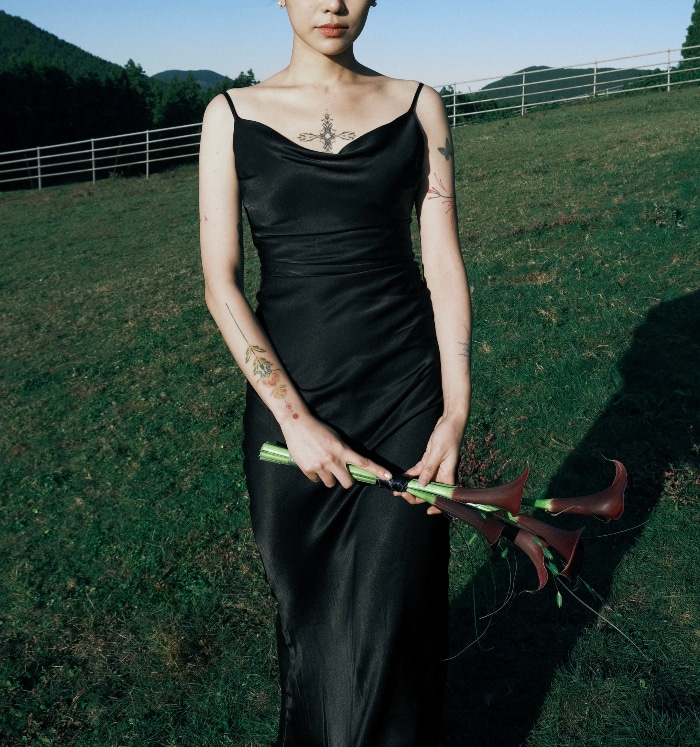
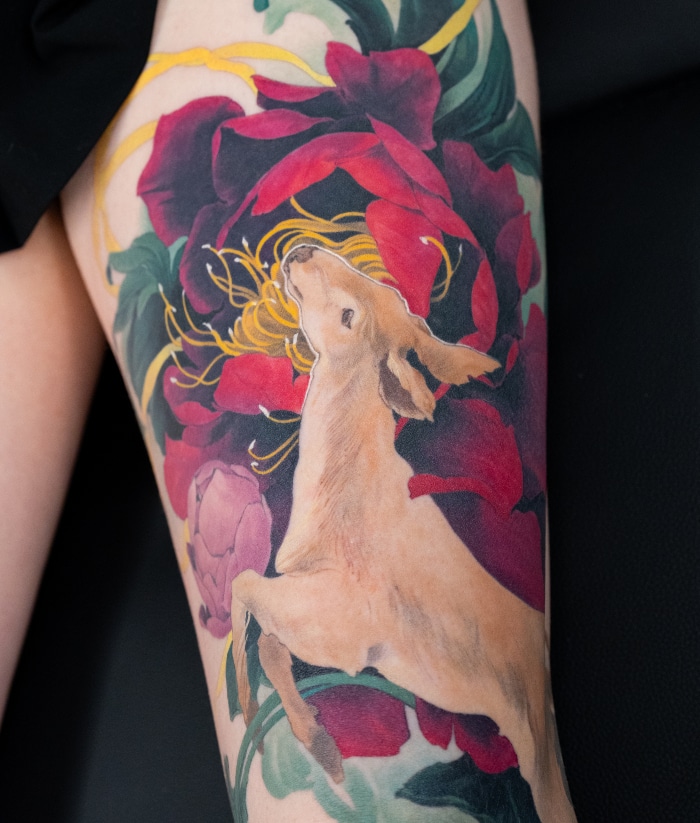
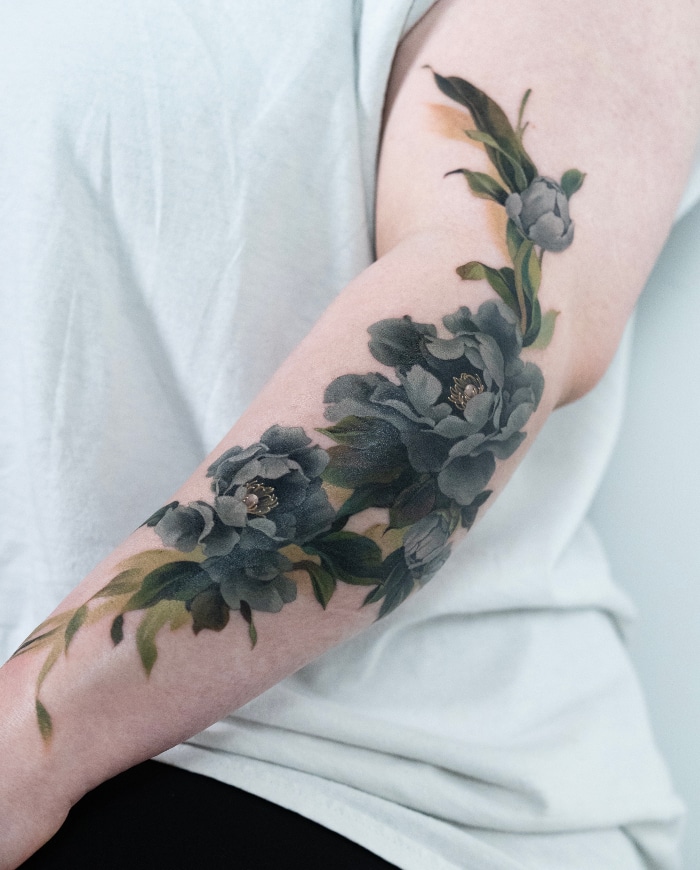
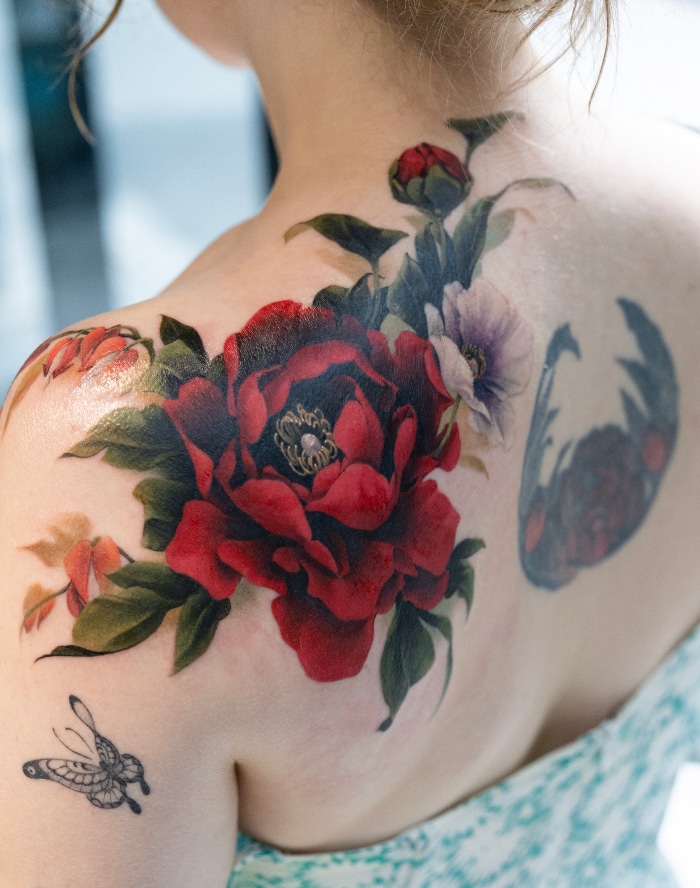
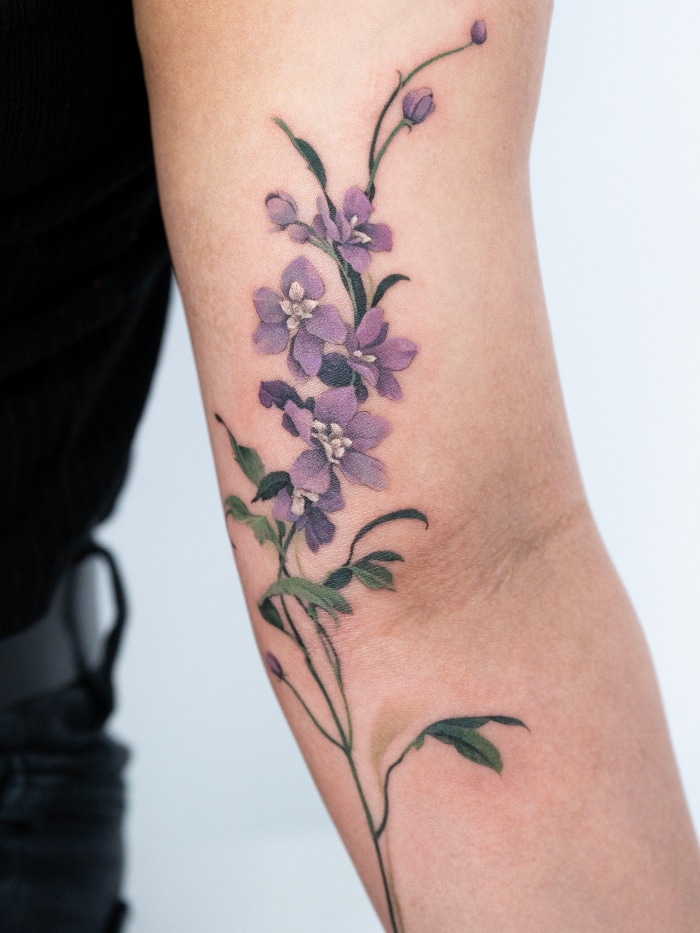
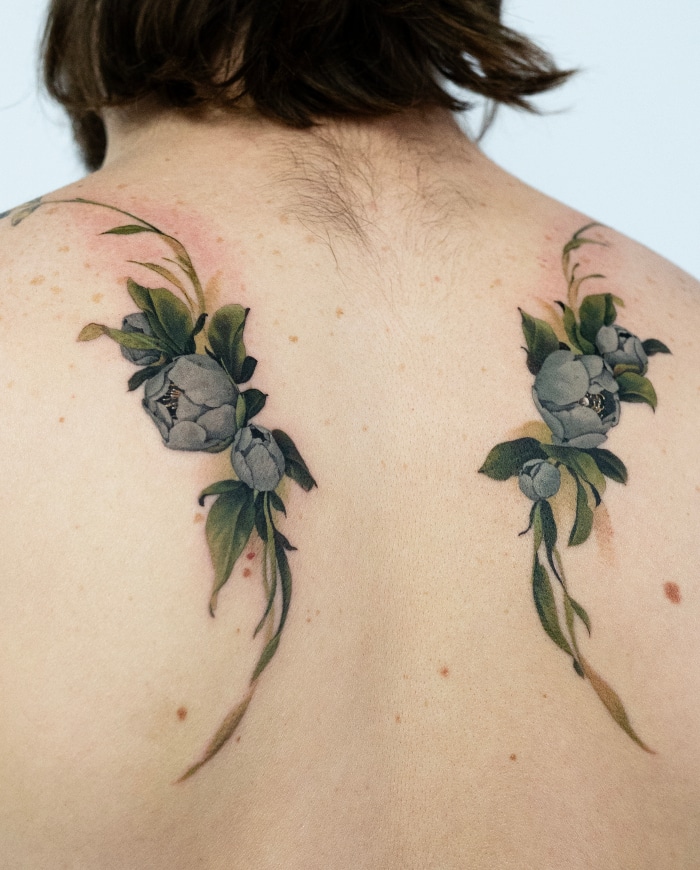
Guppy is a tattoo artist specializing in timeless floral designs and cover-ups, currently based in Melbourne after starting her career in Korea. Her path into tattooing began during university, when the rise of fine line work revealed tattooing as a legitimate artistic medium, leading her to shift away from textile design. For her, tattooing isn’t fixed to one meaning; it moves between self-expression, craft, and profession, which keeps the work dynamic and engaging over time.
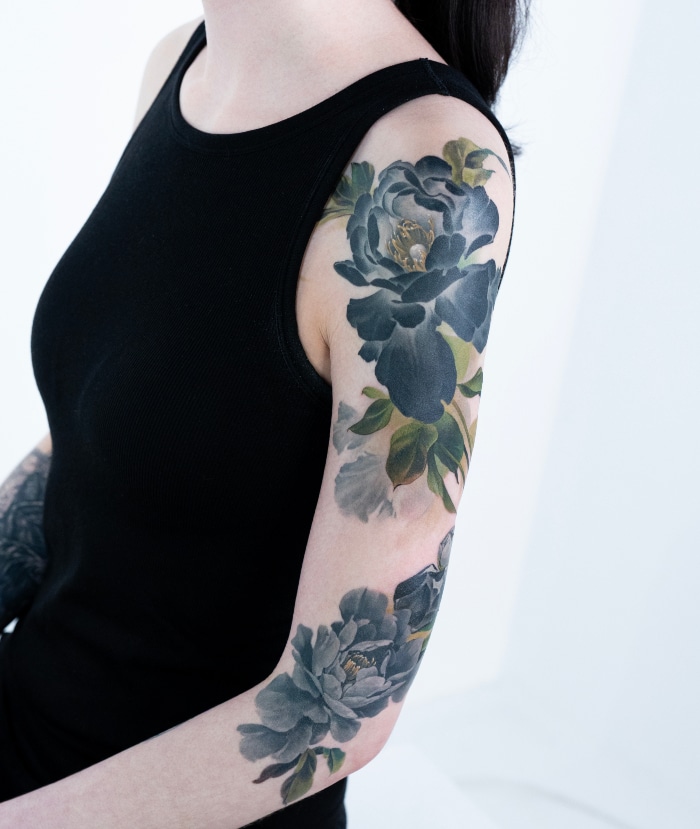
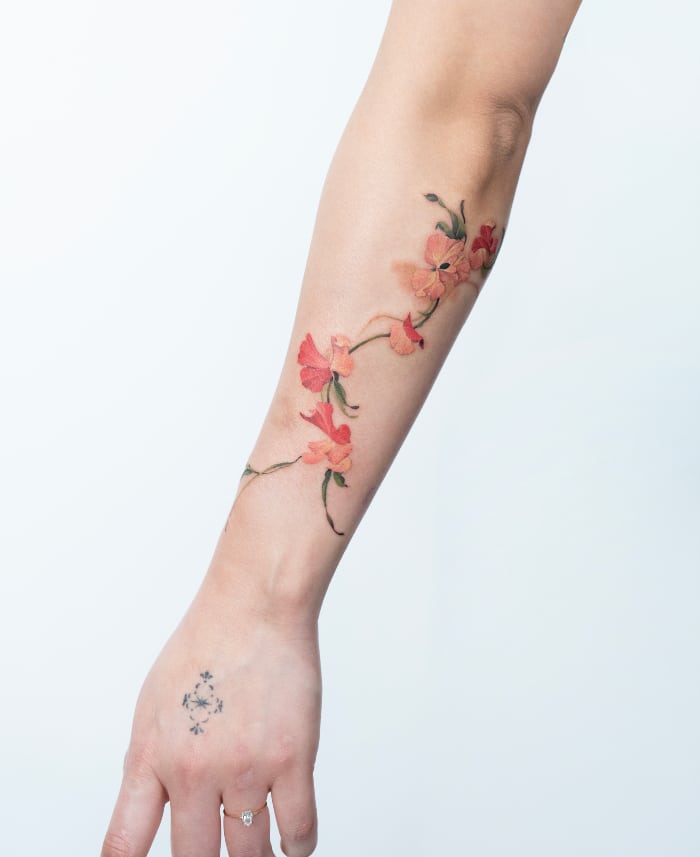
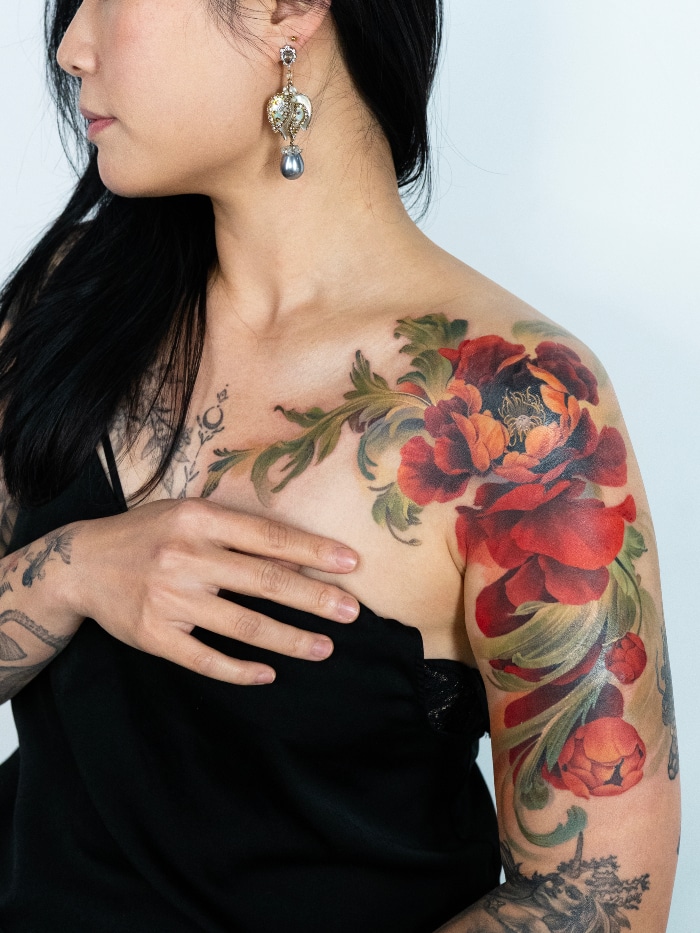
Guppy’s approach centers on creating tattoos that feel personal and age well, with a strong focus on how designs flow with the body rather than just how they look visually. She sees the challenge not just in keeping up but in maintaining individuality, especially as tools like AI make imitation more accessible.
Rather than defining success through external milestones, she views her greatest achievement as simply staying committed to the craft for over a decade, reflecting a steady, disciplined approach to both art and career.
Let’s step into her world.
- How would you like to introduce yourself?
I’m Guppy, a tattoo artist focused on floral work and cover-ups, with a style that continues to evolve toward something more personal and timeless.
- Where can your customers find you?
I previously lived and worked in Korea and am now based in Melbourne, Australia.
- Where did your fascination for tattoos come from?
I discovered tattooing during university when fine line artists were gaining attention in Korea, which made me realize it could be a true art form and inspired me to shift away from textile design toward a more meaningful creative path.
- What does tattooing mean to you personally?
It changes depending on the moment—it can be self-expression, a profession, or pure art, and that flexibility is what keeps it engaging.
- How did your family react when you started a career in tattooing?
They were uncertain at first, but after I explained my decision, they eventually became supportive.
- What’s the most challenging aspect of being a tattoo artist in 2026?
Keeping up with the evolving tattoo scene and broader cultural shifts is one of the biggest challenges right now.
- How would you define your current tattoo style, and how did you end up focusing on it?
My style focuses on creating work that feels personal and ages well over time, with attention to how tattoos sit on the body rather than just how they look as images.
- Are there any tattoo styles you’d like to explore more?
I’m more interested in expanding within my current themes and refining what I already do rather than shifting to a completely different style.
- As a tattoo artist, what kind of tattoo ethics are important to you?
Maintaining good physical and mental condition is essential, as tattooing is demanding, and consistency depends not only on skill but also on overall well-being.
- What’s your favorite way to keep learning?
I focus on staying objective about my work, understanding both my strengths and limitations to improve effectively.
- What’s your view on the rise of AI in tattooing?
AI may lower the barrier to entry, but it also makes it more important to create work that is truly irreplaceable, since originality and subtle human differences still define value.
- Who are the people you admire the most within the tattoo community?
There are many artists I admire, too many to single out.
- What is your greatest accomplishment as a tattoo artist?
Staying committed to tattooing for 10 years, despite having a tendency to lose interest, is my biggest achievement.
- What are your goals or dreams for the near future?
I want to maintain the physical ability and skill to continue tattooing into my 50s, which means taking better care of my health moving forward.
- To close this awesome interview, what’s your last message to our readers?
Thanks for reading.

Leave A Comment