



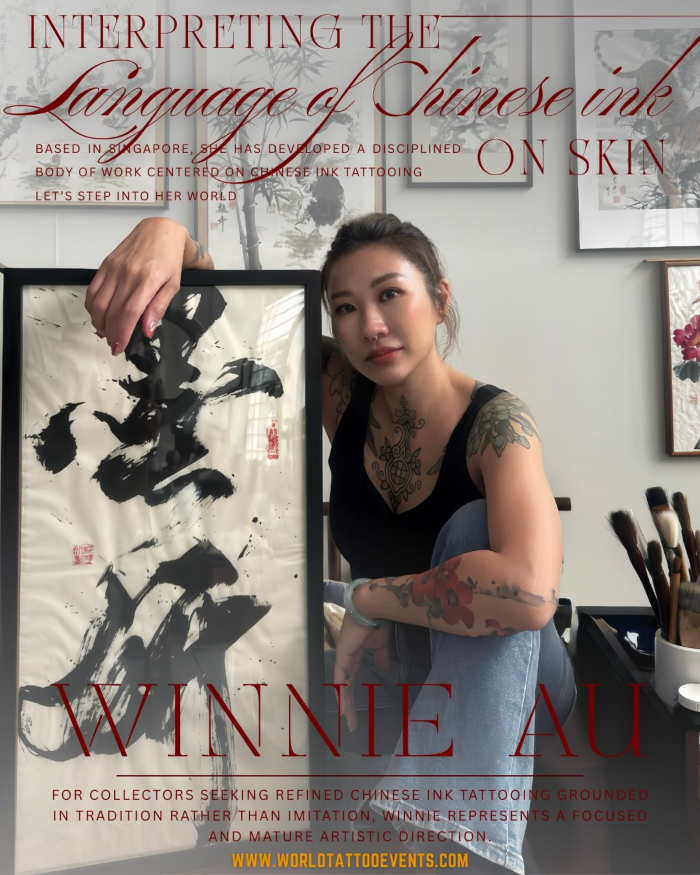
At World Tattoo Events, we are increasingly focused on artists who demonstrate not only technical proficiency, but cultural depth, long-term consistency, and a clearly defined artistic language.
Winnie is one of those artists.
Based in Singapore, she has developed a disciplined body of work centered on Chinese ink tattooing — not as a trend adaptation, but as a deliberate continuation of traditional ink philosophy translated onto skin. Her compositions reflect restraint, intentional negative space, and the controlled fluidity that defines classical brushwork. The result is work that commands presence without excess.
Over the past years, she has represented her work at major conventions in Singapore and across Europe, earning placements in competitive categories including Best Cover-Up, Best Watercolor, and the People’s Choice Award at Mondial du Tatouage. These recognitions reflect not only technical execution but peer acknowledgment within respected international platforms.
For collectors seeking refined Chinese ink tattooing grounded in tradition rather than imitation, Winnie represents a focused and mature artistic direction.
Let’s step into her world.

- For our readers who aren’t familiar with you, how would you introduce yourself?
My name is Winnie, and I’m from Singapore. I specialize in Chinese ink and watercolor–style tattoos.
I began my apprenticeship in 2017. Interestingly, my mentor didn’t focus on teaching me tattoo techniques at first. Instead, he emphasized drawing, life lessons, and mindset. At that time, I was a very rushed person, and he constantly reminded me to slow down. This guidance didn’t just help me create better tattoos—it also taught me to slow my thoughts, reflect, and think twice before taking action. It changed both my work and my personality.
My first tattoo for a client was in May 2018; a panda holding a leaf. My mentor sat beside me the entire two hours, accompanying and supporting me until I finished. Even now, it feels like it happened yesterday. The image is still very vivid in my mind, and I remain deeply grateful for his guidance and encouragement.
I’ve loved Chinese art since I was young. When I first realized that traditional Chinese painting could be translated onto skin as tattoos, it sparked a deep passion in me. That moment shaped my direction, and it has since become my signature tattoo style.
- What does it mean to be a Tattoo Artist for you?
I’ve learned that being a tattoo artist requires much more than just knowing how to tattoo. It involves customer service, design, social media, and photography, as well as understanding basic counselling skills and dermatology. Having knowledge in all these areas helps me communicate better with clients, design tattoos that truly suit them, document my work professionally, and ensure both their physical and emotional well-being throughout the process.
- What’s the most rewarding aspect of being a tattoo artist?
I’m fortunate to have clients who have followed my work and continued to come back for tattoos for more than five years. The trust and friendships that grow from these long-term relationships are truly priceless to me. Seeing their reactions when they look at the finished tattoo—those moments alone already make my day and remind me why I love what I do.
- As a Tattoo Artist, what does your daily working routine look like?
I don’t work on Sundays, so I usually spend that time painting my clients’ designs or working on them whenever I have free moments. As a mother of two, I wake up earlier each day to take care of household responsibilities before heading to the studio. At the studio, I also look after three children (three artists in my team), so my daily routine involves much more than tattooing—it includes teaching, caregiving, and managing both my home and the studio. Sometimes I wish there were more than 24 hours in a day, but I’m grateful for the balance I’ve built between my work and family.
- How would you define your current tattoo style, and how did you end up focusing on it?
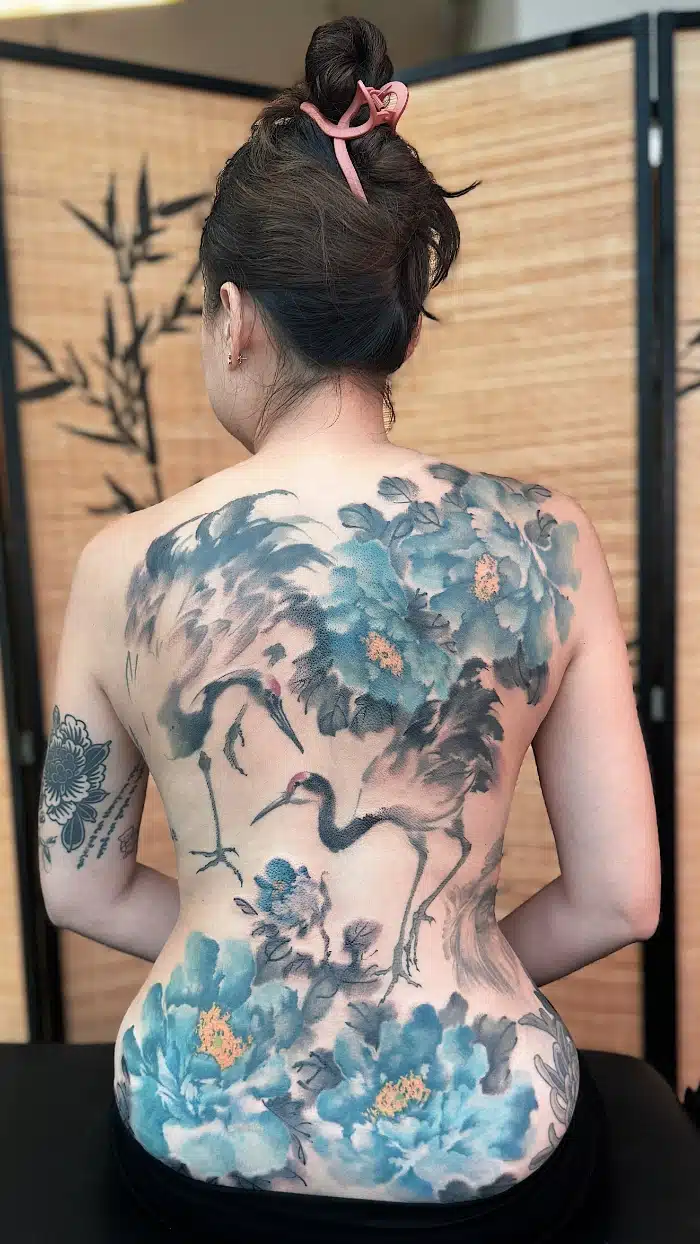
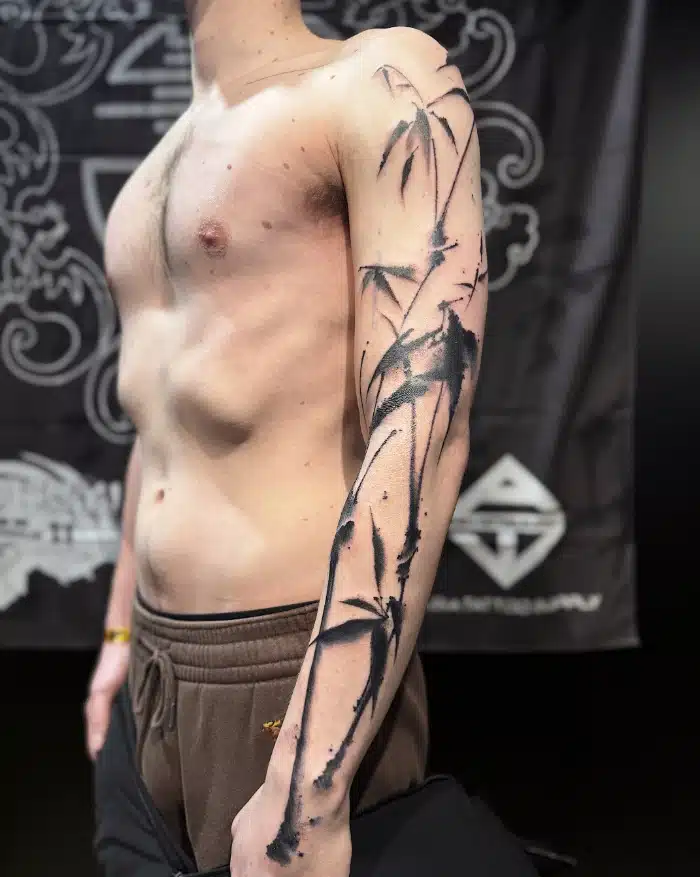
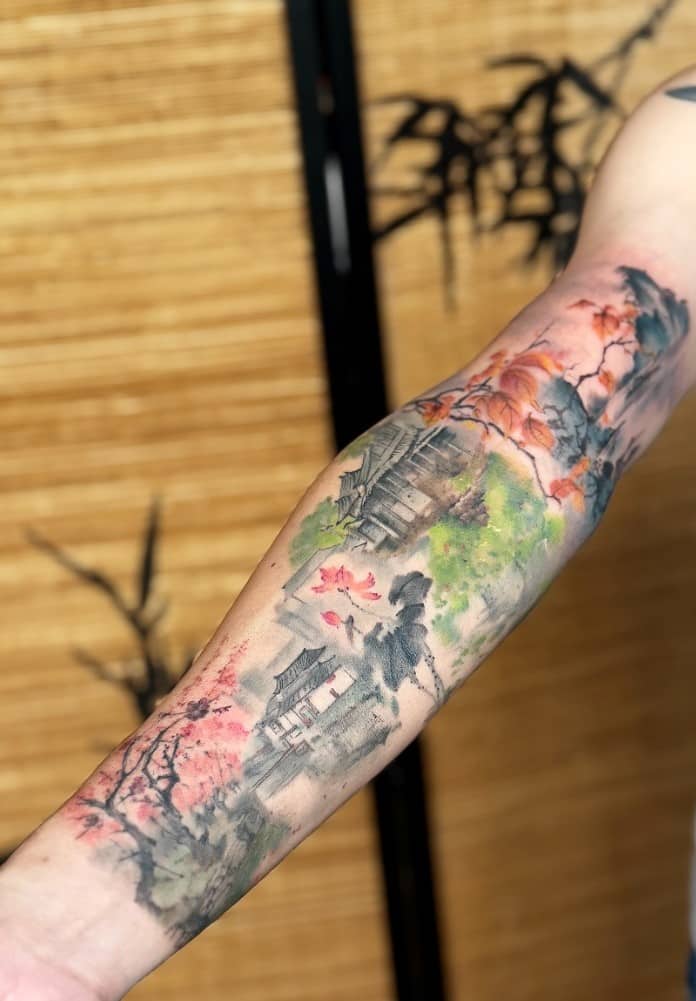
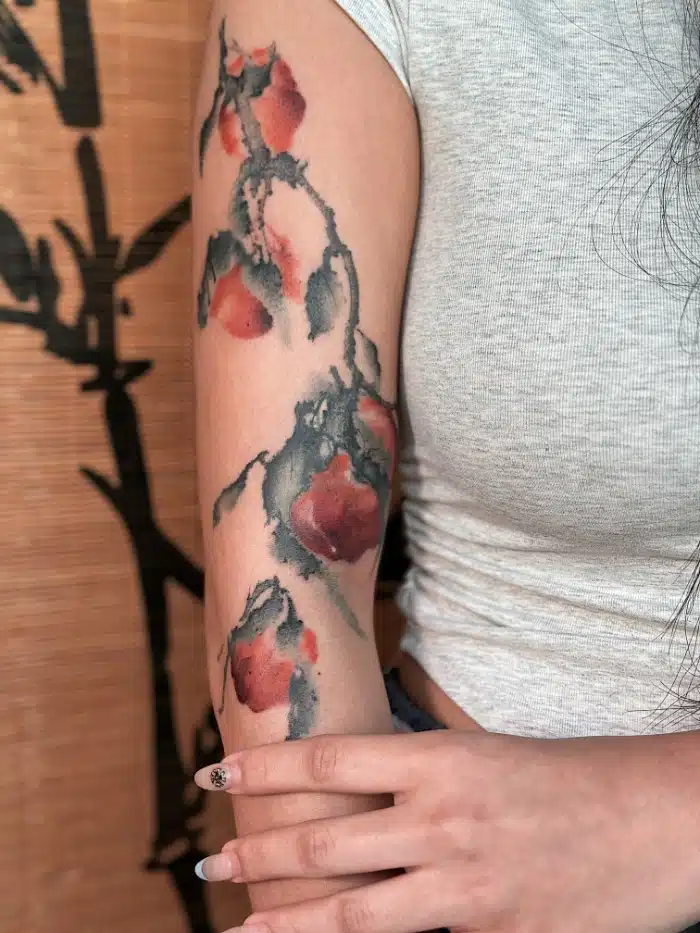
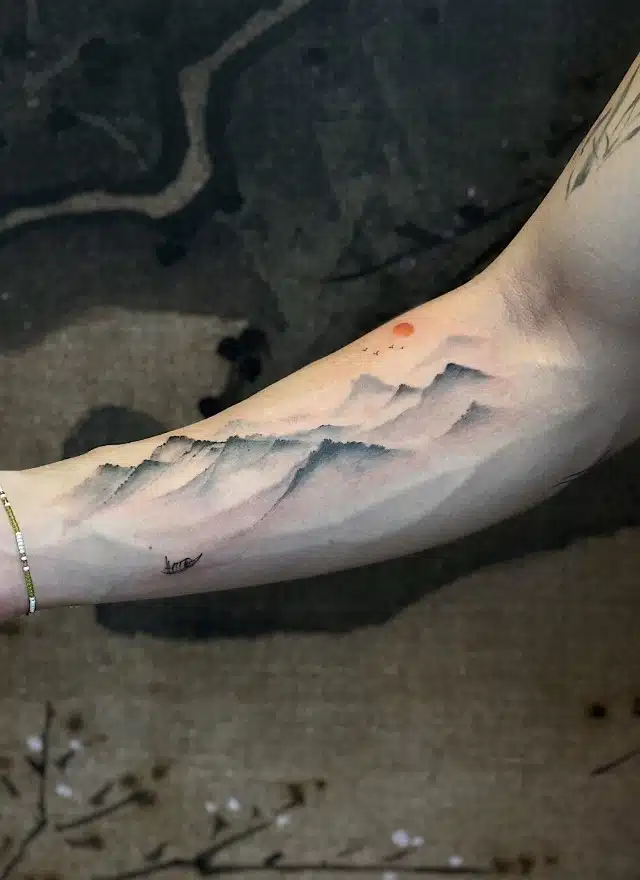
My tattoo style is Chinese Ink. What I find most beautiful about Chinese ink art is the way the ink flows and bleeds on paper—it can feel loose and free, yet also strong and powerful. It can be as simple as soft ink-wash effects, or as bold as expressive brushstrokes with strong visual impact.
I did my first Chinese ink tattoo on a client in August 2019, and I was incredibly happy with the result; more so than with any other style I had done before. That experience made me realize how deeply connected I am to Chinese art and culture. From that point on, I decided to focus solely on Chinese ink tattoos, and it has been my direction ever since.
- How do you stay creatively inspired?
I regularly attend overseas tattoo conventions and guest spots every few months. Watching other tattoo artists work is always inspiring, and through conversations with them, I gain insight into their creative processes and the bold, imaginative ideas they have. These exchanges often spark new inspiration and push us to grow together.
I also travel to China every year to visit museums and explore ancient places and architecture. These journeys always offer a wealth of inspiration—you can find countless interesting details, stories, and visual elements that influence my work.
- Are there any tattoo styles you’d like to explore more?
After working with Chinese ink style for almost seven years, I’m now interested in expanding my work by combining it with other styles, such as realism or neo-traditional. I see this as a way to evolve creatively while still staying true to the foundation of Chinese ink, allowing my work to grow with new depth and possibilities.
- What kind of tattoo ethics is really important to you?
For me, respect is everything. I always believe we should be grateful to the person who taught us tattooing and brought us into this industry — because without them, we wouldn’t be who we are today. Honoring your mentor and remembering where you came from is very important.
Beyond that, respect must also extend to every client. Tattooing is a skill that can be learned, but character and integrity are not something everyone has. To me, being a good tattoo artist is not only about technique, but about how you treat people and carry yourself in this profession.
- Being a successful tattoo artist requires many different skills. What’s your favorite way to keep learning?
My favorite way to keep learning is through constant observation and experience. I learn a lot by watching other tattoo artists work—especially during overseas conventions and guest spots—because seeing different approaches and techniques always expands my perspective. Conversations with other artists are equally important; exchanging ideas often sparks new inspiration and challenges me to think differently.
At the same time, I continue learning through drawing, painting, and studying traditional Chinese art by visiting museums and historical places. Slowing down to study art, culture, and daily life helps me grow not only as an artist, but also as a person. I believe learning never really stops—it evolves with time and experience.
- Do you like to teach or mentor upcoming artists?
If I meet someone who is truly passionate about tattooing and, most importantly, has the right personality and attitude; I’m willing to share everything I know with them. I hope that through teaching, more people can come to understand and appreciate the beauty of Chinese Ink tattoos.
At the same time, I believe mentorship is a two-way process. While they are learning from me, I’m also learning from them—溫故知新, revisiting what I know and discovering new perspectives through teaching. At the moment, I have one mentee-Priscilla, and I’m truly grateful to have her learning and growing alongside me.
- What’s the biggest misconception that customers may have about tattoos?
I feel that nowadays a lot of clients still think every artist can do every style, or that it’s okay to take another artist’s design and ask someone else to do it.
- What’s your view on the rise of AI in tattooing?
It can help with references, composition ideas, or speeding up early concept stages, especially when clients struggle to explain what they want. Used responsibly, it can support creativity — but it can’t replace taste, experience, or accountability.

- Do you do other forms of art besides tattooing?
Yes, I do. Alongside tattooing, I occasionally take on Chinese painting commissions on rice paper, wooden boards, and silk screen boards.
- Who are the people you admire the most within the tattoo community?
Ael Lim from Singapore is my mentor. He is a realism tattoo artist, and I admire not only his work but also his humility as a person. I have worked with him for six years, and being around him constantly inspires me — from his intense creative mindset to his exceptional drawing and tattooing skills. Beyond tattooing, he also teaches us life lessons drawn from his own experiences.
- What’s your experience at tattoo conventions so far?
Tattoo conventions remind me to stay humble. Being surrounded by so many skilled artists pushes me to keep learning, refining my craft, and staying open to different perspectives.
- What’s your primary reason to attend a tattoo convention?
My primary reason for attending tattoo conventions is to travel, meet amazing artists, and experience things you can’t see on social media. It’s a great way to get inspired, learn new techniques, and connect with the tattoo community in person.
- What’s your favorite tattoo convention so far? And why?
My favorite tattoo convention so far is Mondial du Tatouage. The event itself is amazing — the space is huge and full of energy, and although it’s crowded, the atmosphere is really exciting. I also love how friendly and approachable everyone is, from artists to visitors.
- Have you ever had the opportunity to participate in any tattoo contests? You are welcome to specify your awards.
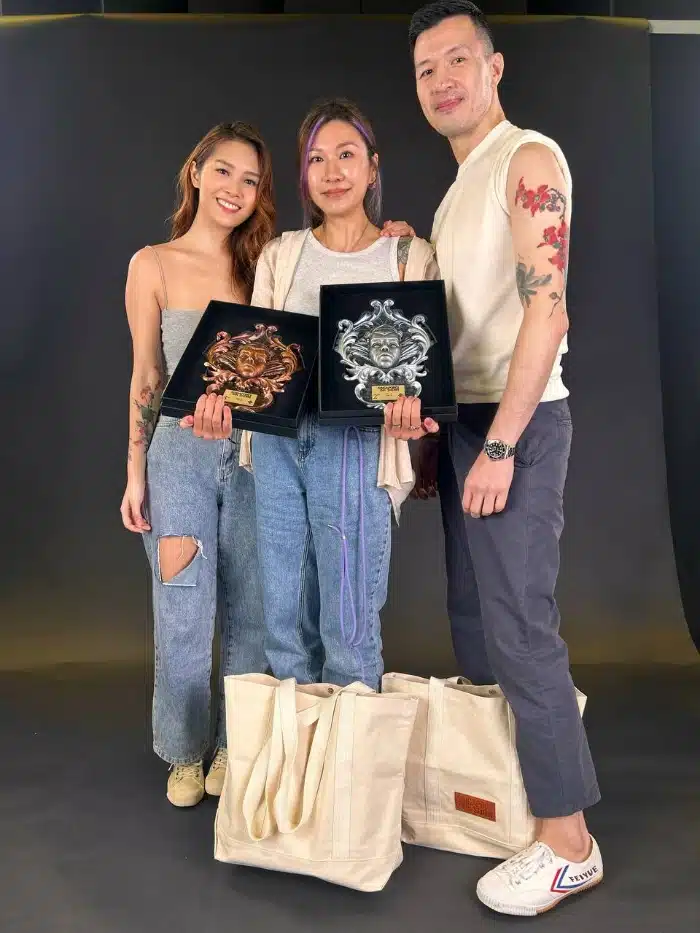
I started participating in tattoo contests over the past two years in Singapore, Paris, London and Italy. It’s been an honor to be recognized — I won 2nd and 3rd place for Best of Cover-Up, and 3rd place for Best Watercolor and the latest I received 3rd place of People’s Choice Award from Mondial du Tatouage. These experiences have been incredibly motivating and have pushed me to keep refining my skills.
- Is there any tattoo that you have created in your career that you are particularly proud of?
I’m especially proud of is the pieces I created using the ink wash technique. Working on peonies and landscapes, I focused on achieving delicate shading and a flowing, painterly effect on the skin, which was very satisfying as an artist.
- What is your greatest accomplishment as a tattoo artist?
Hmmm I believe it is yet to come but I’m so happy to having my own studio and my team so far
What are your goals or dreams for the near future?
This year, I hope to achieve significant growth in both my technical skills and artistic style.
- To close this awesome interview, what’s your last message to our readers?
Thank you for taking the time to read and be part of this journey. I hope something here resonated with you and reminds you that you’re capable of more than you think .
Success isn’t always loud or immediate. Sometimes it’s quiet progress behind the scenes. Keep going — even when no one is watching.


Leave A Comment