

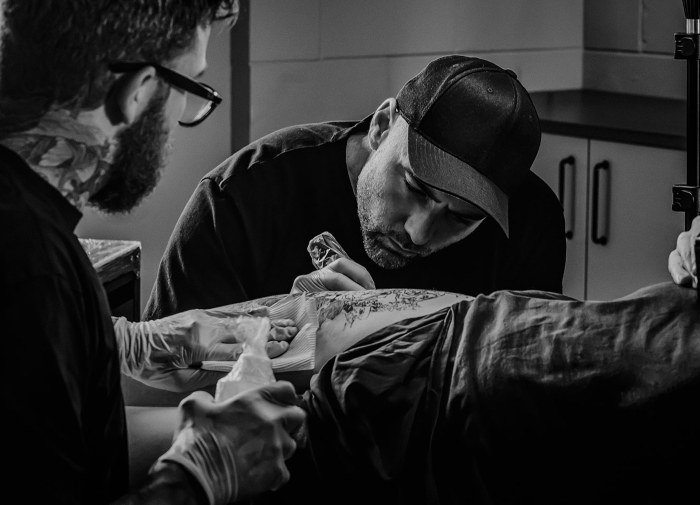
With more than 15 years behind the machine, Ryan Evans has carved out a distinct presence in the realm of Black and Grey tattooing. From his early days apprenticing in Auckland to a six-year chapter in London and guest spots across the United States. Now back in New Zealand and running his own studio- The Brave, Ryan continues to approach tattooing with the same focus that first drew him to the art form: clean execution, thoughtful composition, and the drive to keep learning.
In this interview, Ryan shares his passion for large-scale Black and Grey work, offers a perspective shaped by years of work both abroad and at home, one that speaks to the discipline and longevity behind a career in tattooing.
For the readers who are not familiar with you, how would you introduce yourself?
Hi, my name is Ryan Evans. I’m a tattoo artist from Auckland, New Zealand. I’ve been tattooing for around 15 years, specializing in Black and Grey realism.
Where did your fascination for tattoos come from?
My real appreciation for tattooing as an art form began in my twenties. I started seeing incredible work in Magazines, and I was amazed at how realistic tattoos could be. That shifted my perspective from thinking tattoos had to be simple and limited, to realising that almost anything is possible on skin.
How and when did you start tattooing?
I began tattooing in 2011. I went from shop to shop with a folder of ballpoint pen drawings I had been working on, and was fortunate enough to be offered an apprenticeship at a busy street shop in Auckland.
Where are you based?
I spent nearly six years working in London, UK, and later did a period of guest spots in the US. Now I’m back in New Zealand where I’ve opened my own studio, The Brave, in Warkworth on the northern edge of Auckland.
How would you describe the tattoo scene in New Zealand these days?
New Zealand has a culture that’s very accepting of tattoos. We have one of the highest rates of tattooed people per capita, thanks to both our Māori and Pasifika traditions as well as the rapid rise of western tattooing. It’s a small country, so most artists either know each other or know of each other, and in general the community is quite supportive.
How would you define your tattoo style?
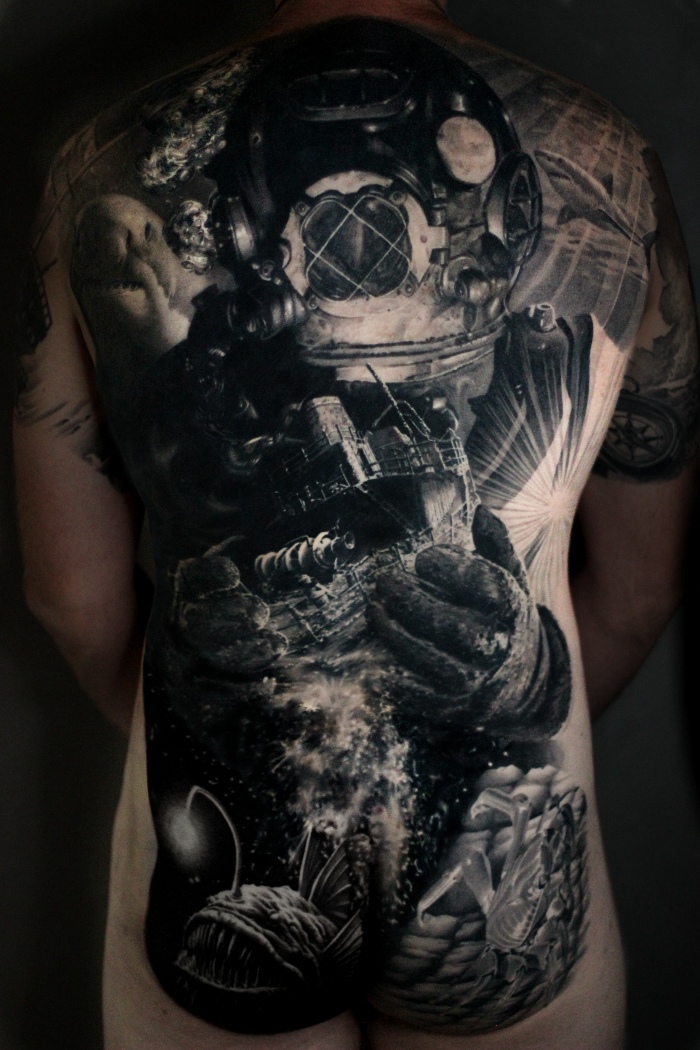
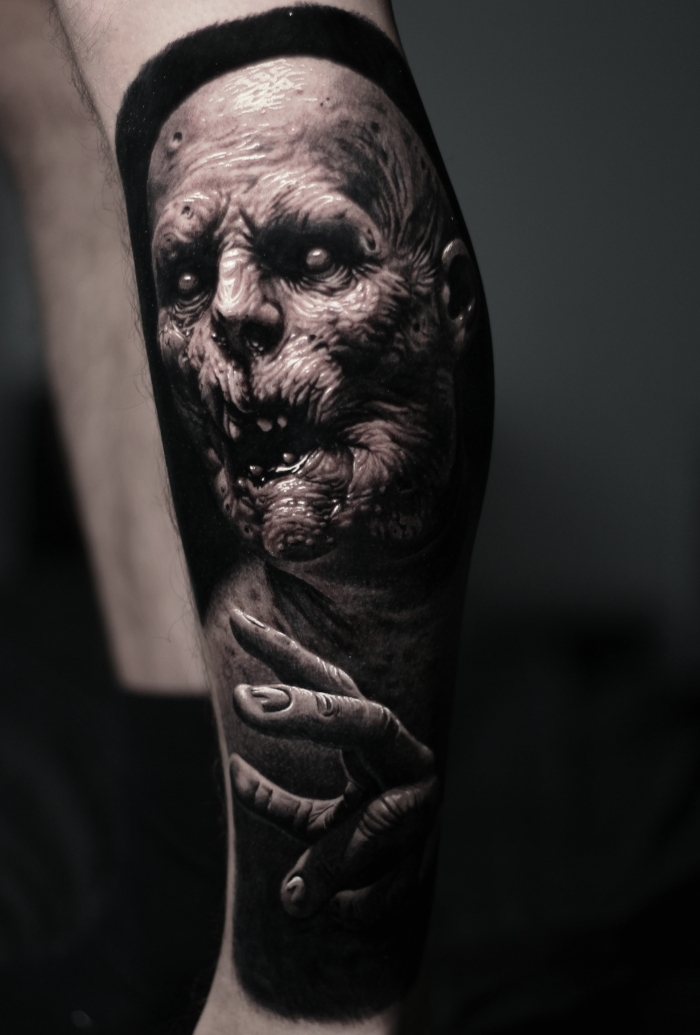
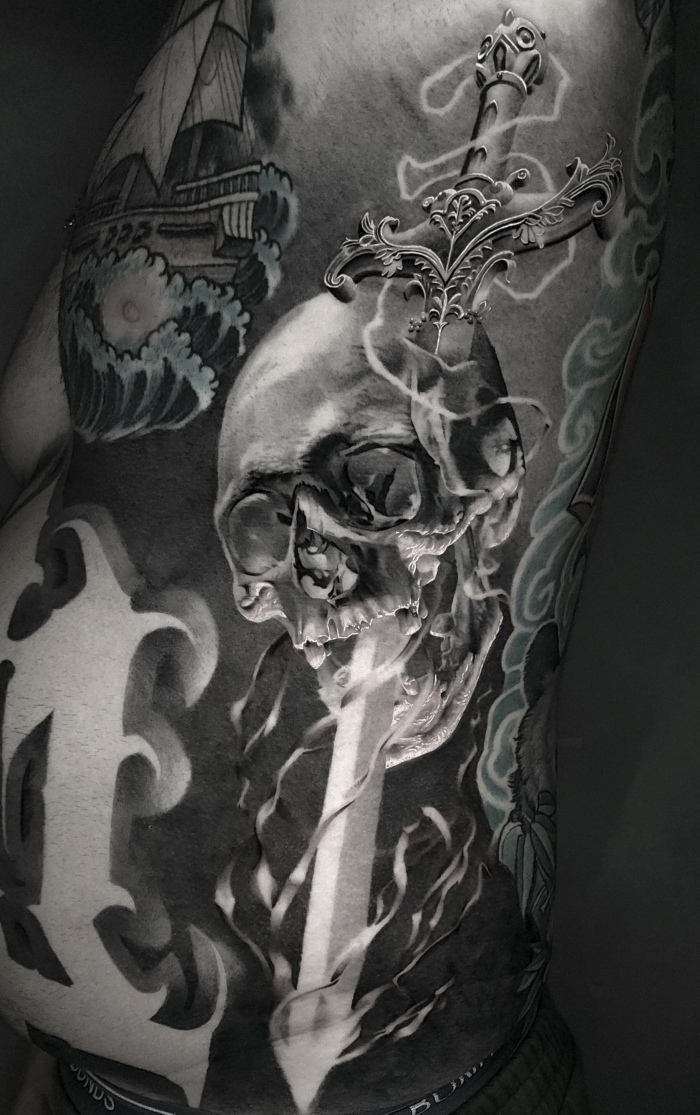
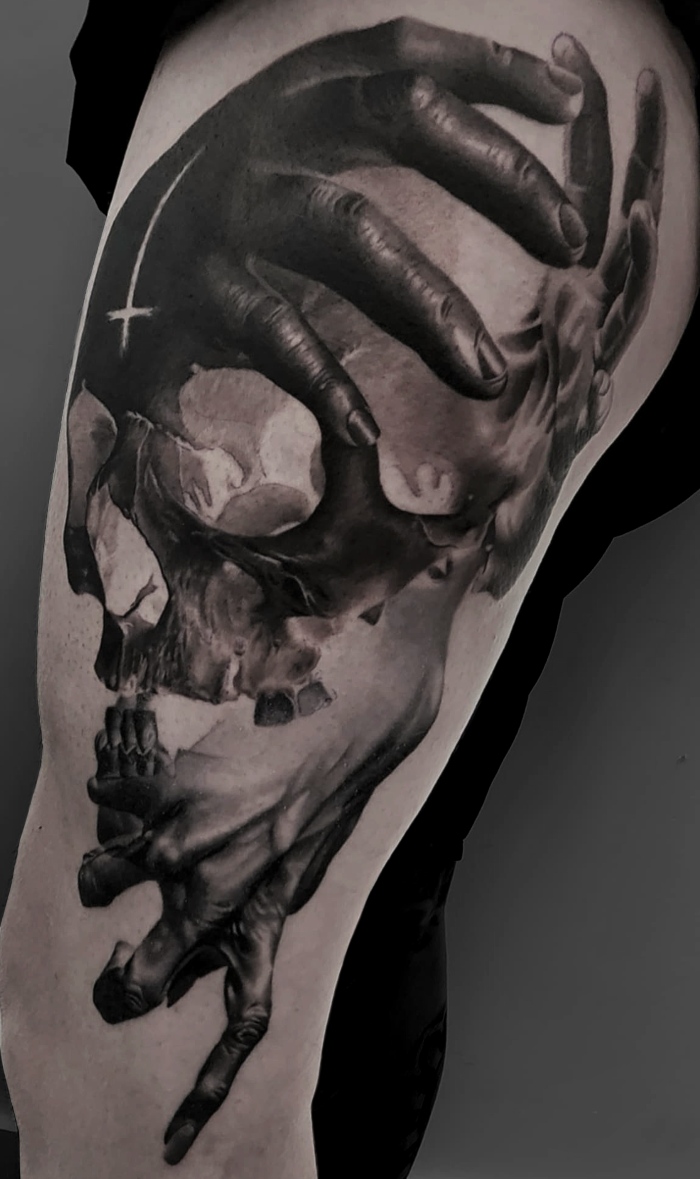
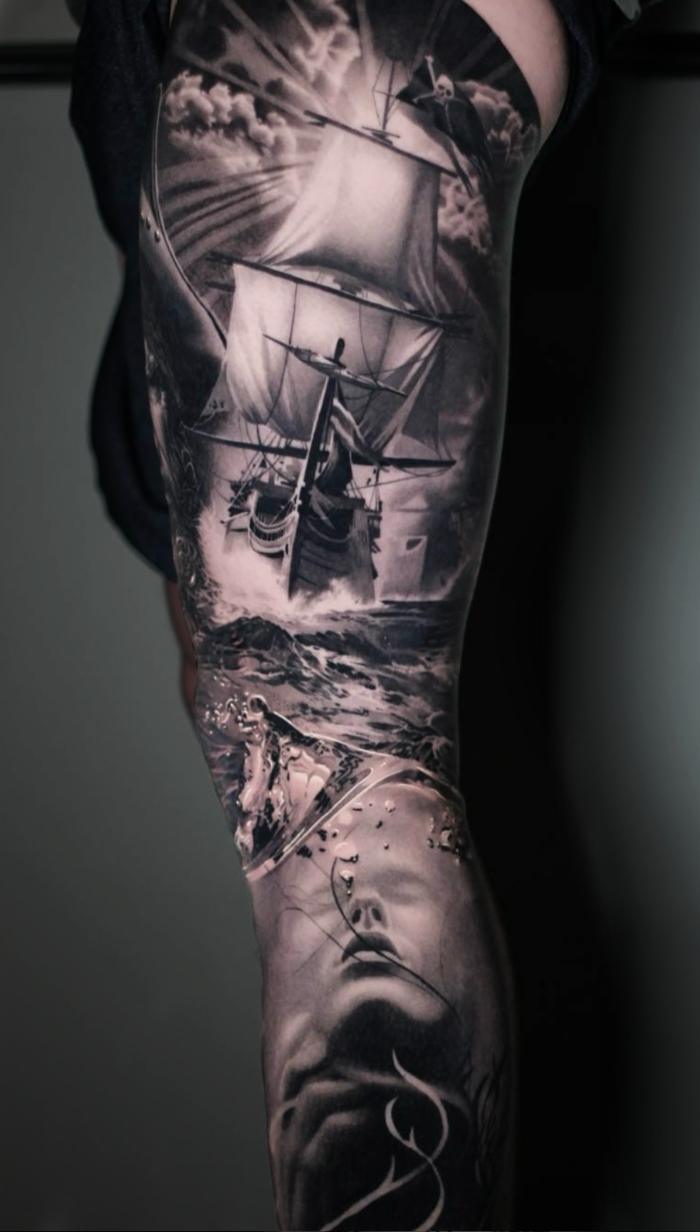
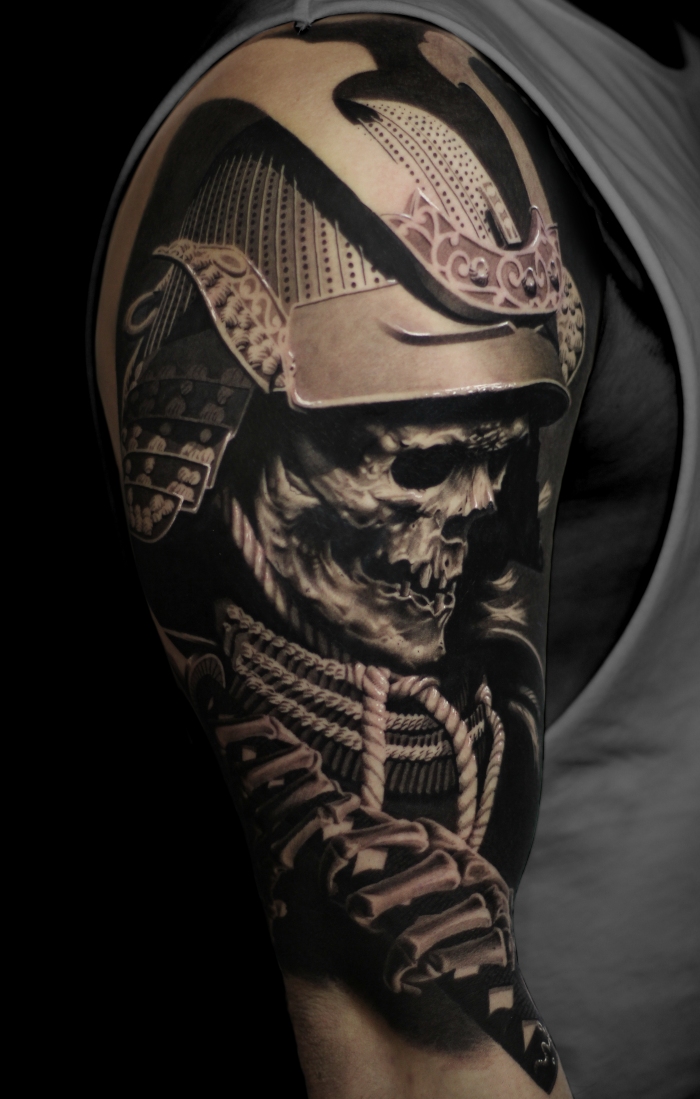
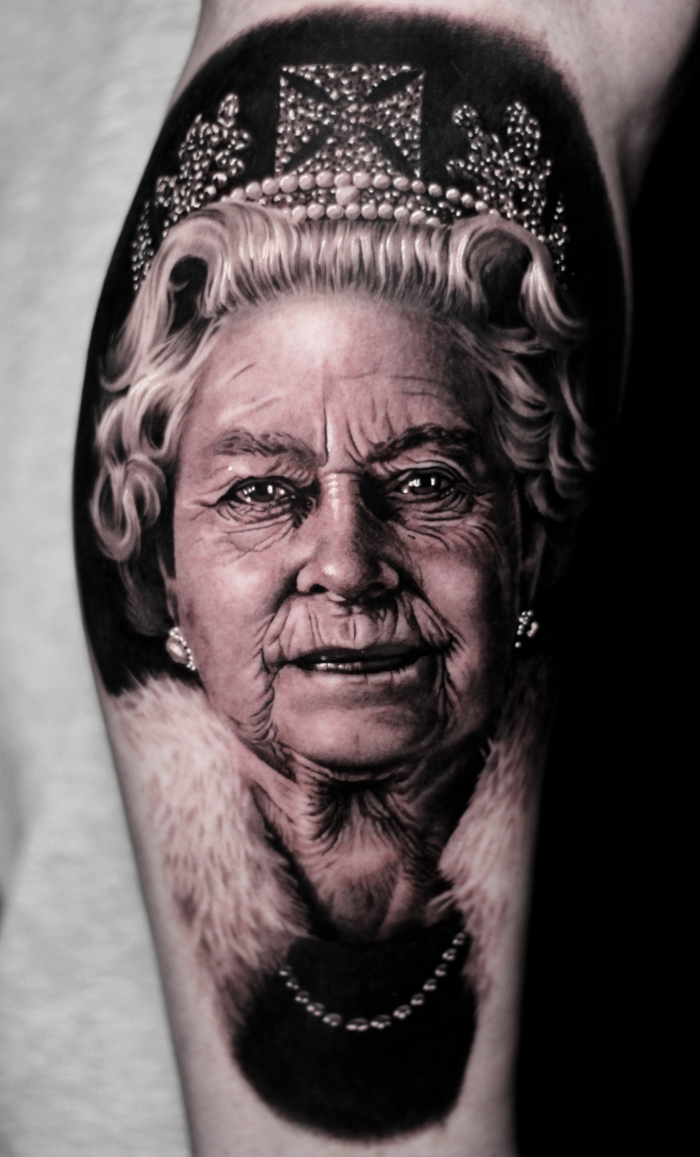
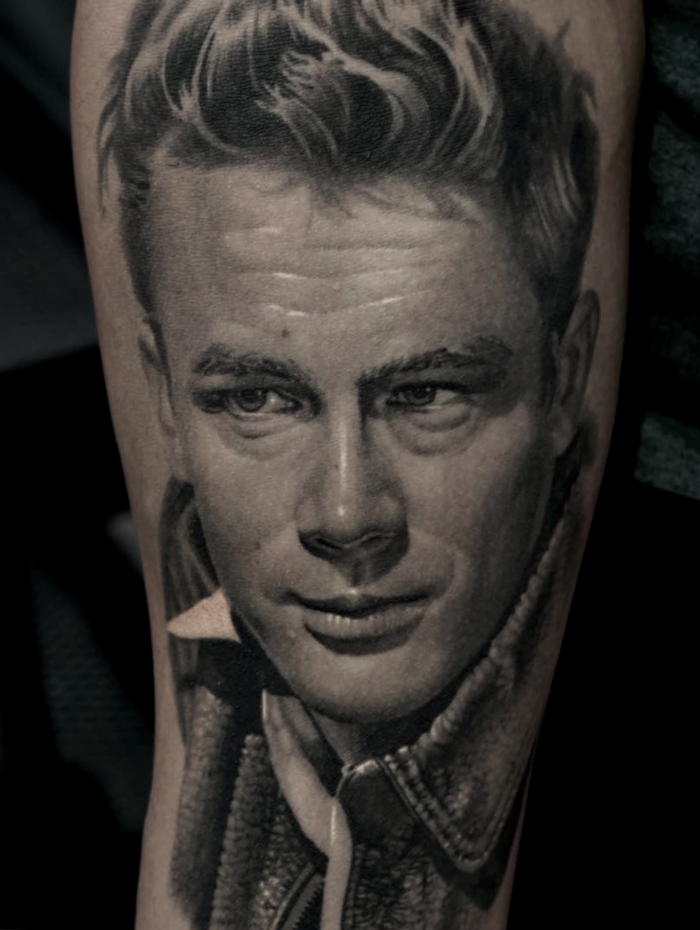
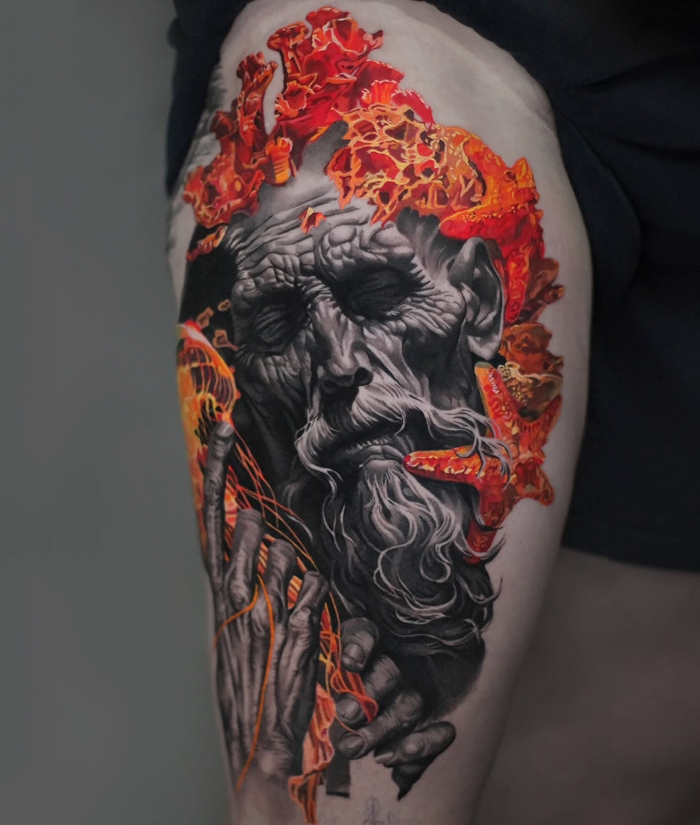
I wouldn’t call it ultra-realistic, I’d describe it more as Semi-realistic Black and Grey.
What kind of tattoo projects do you like most?
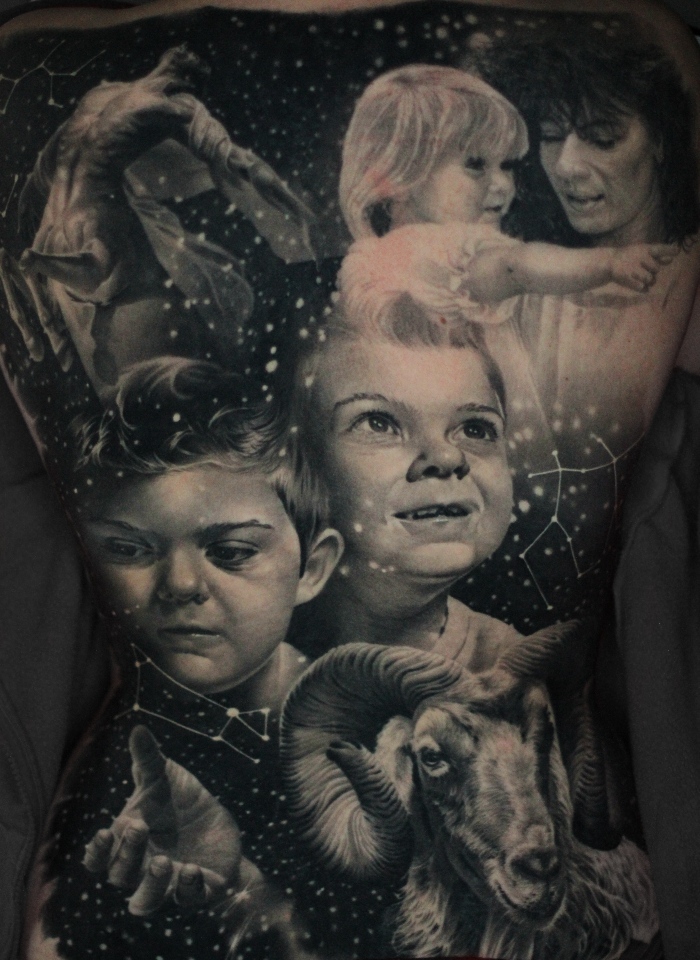
I enjoy projects where clients give me an overall theme and allow me to interpret it in my own way. Large-scale work is my favourite, especially legs, because I like seeing the progress over multiple sessions and having the chance to refine earlier work. Portraits are also something I really enjoy.
What’s the main source of inspiration for your tattoos?
Other tattoo artists, without a doubt. I’m always studying work from others, trying to figure out how and why they approached things in a particular way.
What’s the most challenging aspect of being a tattoo artist in 2025?
At the moment, the economy is tough – people just aren’t spending as freely on tattoos as they once did. There are also more tattooers than ever, so competition is high. On top of that, simply posting quality work online isn’t enough anymore. It feels like you also need to be a social media content creator just to get any traction, and that side of things is the most challenging for me.
What’s the most rewarding aspect of being a tattoo artist?
For me, tattooing is a way to switch off from everything else and focus entirely on the piece in front of me. I enjoy pushing myself to improve with each design, and there’s a real satisfaction in seeing that growth over time.
What’s your experience at tattoo conventions so far?
I’ve always enjoyed conventions. I attended a lot of European shows during my years in the UK, and I loved seeing artists work in person and meeting people in the community. These days I don’t attend as often, but when I do, like at the New Zealand Tattoo Festival, it’s always a great experience.
Do you remember the first tattoo convention you attended?
Yes – it was a smaller show in Hamilton, New Zealand in 2012, just over a year into my career. I remember being extremely nervous about tattooing in front of people, but it was an important learning experience.
What’s your primary reason to attend a tattoo convention?
When I was younger, it was all about exposure and networking. These days, it’s more about the social side and connecting with other artists and friends.
What’s your favourite tattoo convention so far, and why?
The London Tattoo Convention that Miki Vialetto organised was my favourite. It was such a large, well-run show in an amazing venue, with many world-class artists. I also really enjoyed the Brighton Tattoo Show and the Big North Tattoo Show in Newcastle.
What advice would you offer to someone considering a career as a tattoo artist?
I’d encourage anyone serious about tattooing to seek out a proper apprenticeship. Tattoo academies are becoming more common, but I don’t think they offer the same grounding. An apprenticeship teaches you what you can’t learn elsewhere. My advice is to absorb as much information as possible, work hard, and be patient with the process.
Who are the people you admire most within the tattoo community?
There are too many to list, but as a fan of black and grey realism, some of my favourites are David Vega, Ralf Nonnweiler, Noah Bissi, Victoria Lee, Miguel Natan, Carlos Torres, and Tomas Carli Jarlier.
What’s your biggest accomplishment as a tattoo artist?
Being able to travel overseas and have people there who want to get tattooed by me still feels surreal. I never imagined that would be possible when I started out.
Do you do other forms of art besides tattooing?
Not as much as I’d like to. I enjoy painting, but between tattooing, running a studio, and raising young children, I don’t get much free time. Painting is something I’d like to come back to when I can.
What are your goals or dreams for the near future?
My studio is still fairly new, so I’m focused on building its reputation and growing our local following. Looking ahead, I’d like to resume travelling again next year, I miss catching up with a lot of friends abroad.
Is there anything else you’d like to tell our readers?
Just a big thank you for taking the time to read this, and for the support. It means a lot.

Leave A Comment