

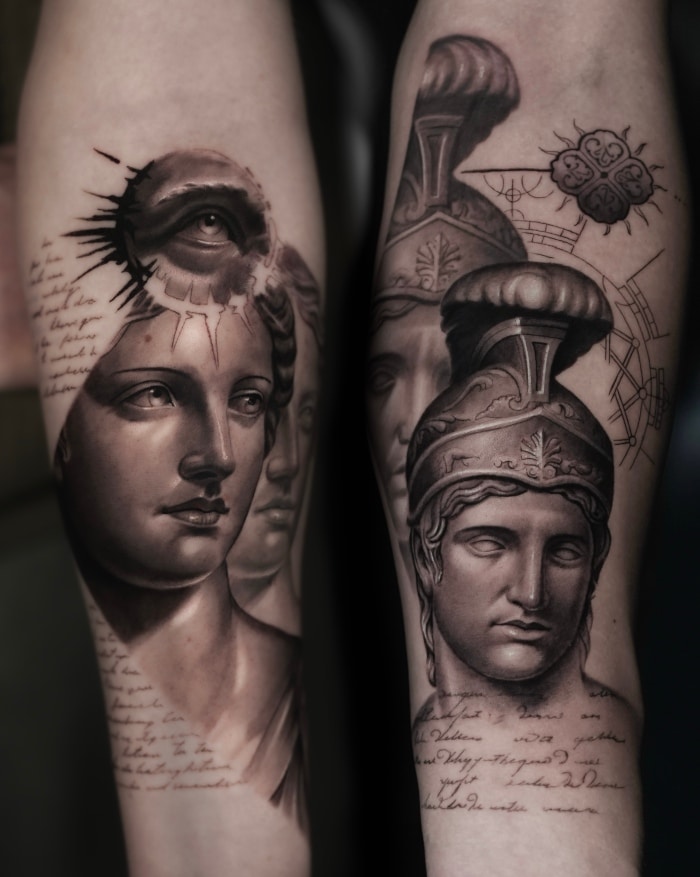
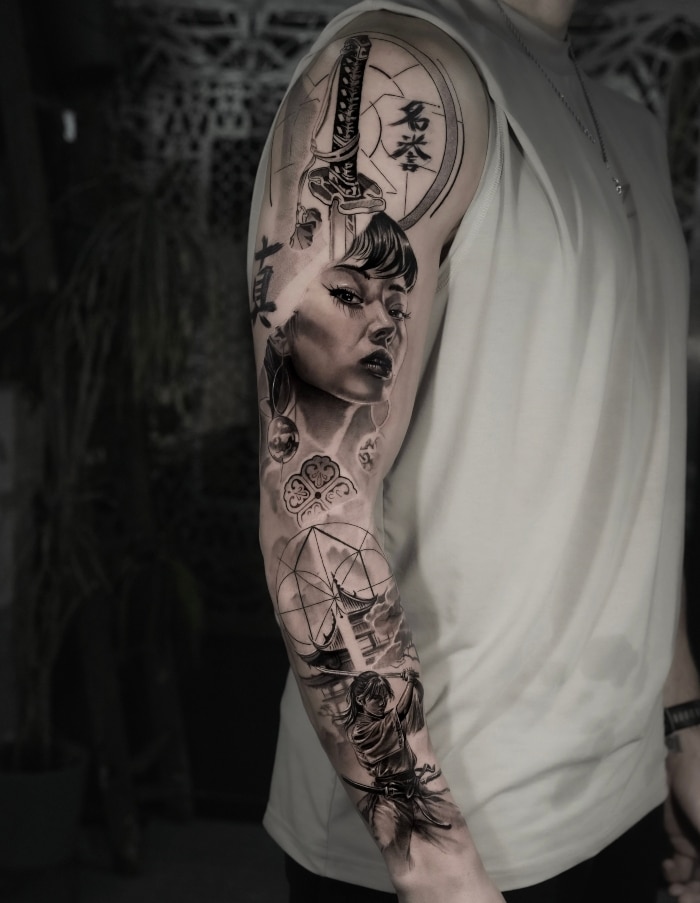
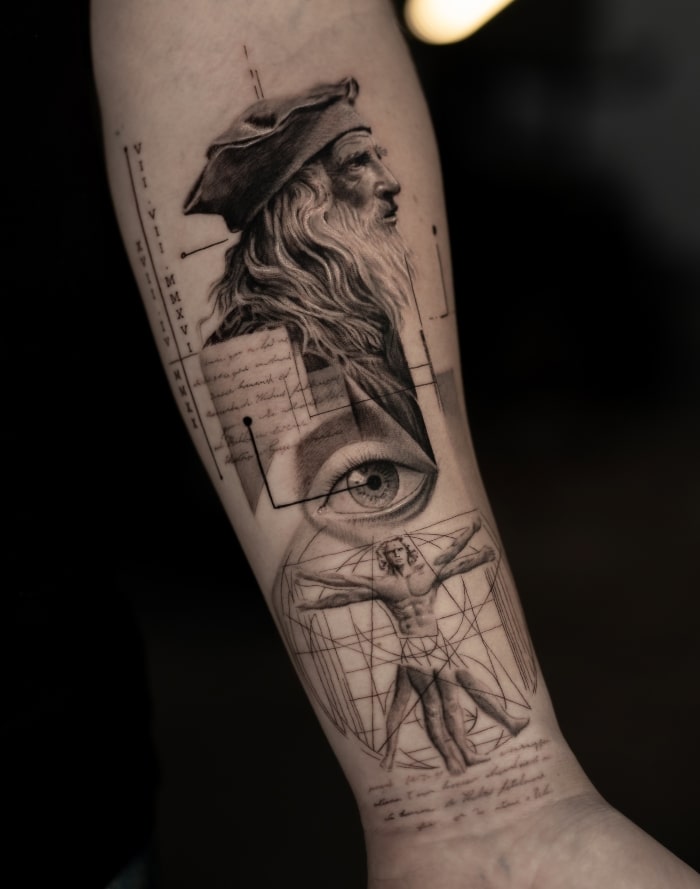
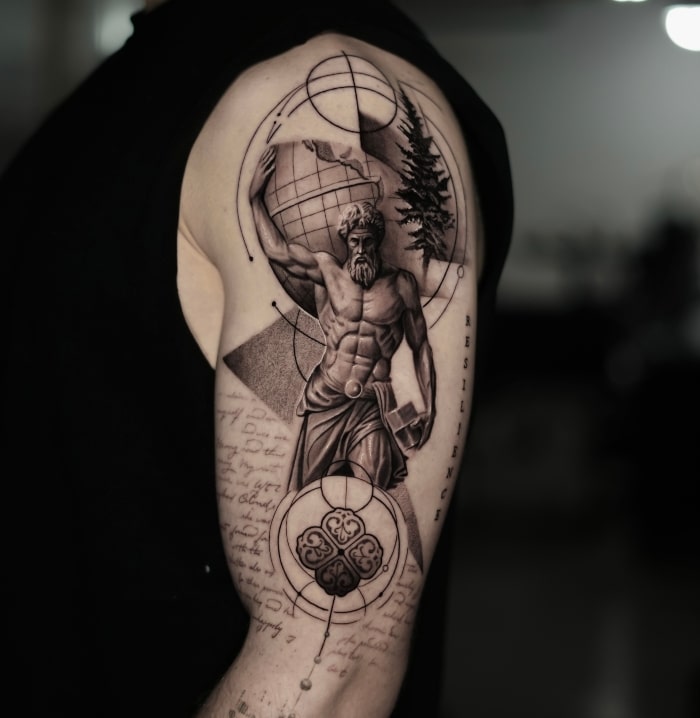
Working out of London since 2016, Tolga Temirlenk represents a disciplined, long-term approach to contemporary tattooing, grounded in composition, anatomy, and responsibility rather than speed or trends. Specializing in fully custom black & grey projects, his work is defined by natural body flow, strong contrast, and a clear understanding of how tattoos evolve over time. Drawing inspiration from mythology, history, and classical visual traditions, Tolga approaches each tattoo as a permanent collaboration between artist and client. Every design is carefully structured to feel balanced on the body, readable from multiple angles, and visually strong long after it heals. For him, tattooing is not only an artistic pursuit, but an ethical one.
In an industry that moves fast, Tolga emphasizes the importance of mastering fundamentals and respecting process. His perspective reflects an artist committed to consistency and longevity, creating tattoos not for instant impact, but for a lifetime of wear.

How would you like to introduce yourself?
I’m Tolga Temirlenk, a tattoo artist based in London. I’ve been working professionally since 2016, focusing on fully custom tattoo projects. My work is rooted in timeless composition, natural body flow, and high-quality black & grey execution. I often draw inspiration from mythology and history, but I don’t limit myself to specific themes, what matters most to me is creating tattoos that feel balanced on the body and remain visually strong for years to come.
Where can your customers find you?
I’m based in London, United Kingdom, and currently work at No Regrets Tattoo Studio.
How would you describe the tattoo scene in your country these days?
The UK tattoo scene, especially in London, is extremely diverse and very quality-driven. Standards are high, clients are more educated, and artists constantly push themselves to improve their craft. At the same time, I also see strong development in Turkey, where more artists are reaching an international level of professionalism and recognition.
Where did your fascination for tattoos come from?
It started during childhood. I was always drawn to art, symbolism, and visual storytelling. Later, during my university years, I spent a lot of time drawing and developing my understanding of form and composition. That long-standing interest naturally evolved into tattooing, where art becomes permanent and deeply connected to the human body.
What does tattooing mean to you personally?
Tattooing is both a responsibility and an honor. Whether a client comes with a deeply personal story or simply wants a strong aesthetic design that fits their body perfectly, my goal remains the same: to create high-quality work they can wear with confidence for life. Trust, longevity, and respect for the skin are central to everything I do.
At what point in your life did you decide to become a professional tattoo artist?
During my university years, I realized I wanted to build a serious and long-term career through art. That realization pushed me to fully commit to tattooing, and I began working professionally in 2016.
How did your family react when you started a career in tattooing?
Like in many families, there were mixed feelings at first. Tattooing wasn’t immediately seen as a stable profession. However, once they saw my discipline, consistency, and professional growth over time, their perspective changed. Today, they are supportive and proud.
Do you usually do guest spots? If yes, what’s your experience in doing them?
Yes, when the opportunity feels right. Guest spots are valuable because they allow me to meet new clients, exchange knowledge with other artists, and stay inspired by different studio cultures and working environments.
As a Tattoo Artist, what does your daily working routine look like?
My day usually starts with client communication, planning, and preparation. A large part of my time goes into custom design work. On tattoo days, I focus on preparation, clean execution, and creating a calm, professional experience for the client. After each session, I make sure to provide clear aftercare instructions and follow up when necessary.
How do you determine the price of a tattoo?
Pricing depends on several factors, including size, placement, complexity, level of detail, and the time required. Since every tattoo I create is custom, the design process itself is also part of the value.
What’s the most challenging aspect of being a tattoo artist in 2025?
Maintaining top-level quality in an industry that moves extremely fast due to social media. Real mastery still requires time, patience, discipline, and consistency, things that can’t be rushed.
What’s the most rewarding aspect of being a tattoo artist?
Seeing clients genuinely happy and knowing they’ll carry the tattoo with pride for many years. That long-term satisfaction is what makes the work meaningful.
What tools and machines do you prefer to use?
I prefer reliable and precise equipment that supports clean details and smooth black & grey shading. Consistency during long sessions is essential for me. I also enjoy working with pen-style machines, as they offer great control and a comfortable workflow.
What’s your number one aftercare advice for clients?
Keep the tattoo clean, avoid over-handling it, and be patient. Simple, consistent aftercare and allowing the skin to heal properly makes the biggest difference in long-term results.
How would you define your current tattoo style, and how did you end up focusing on it?
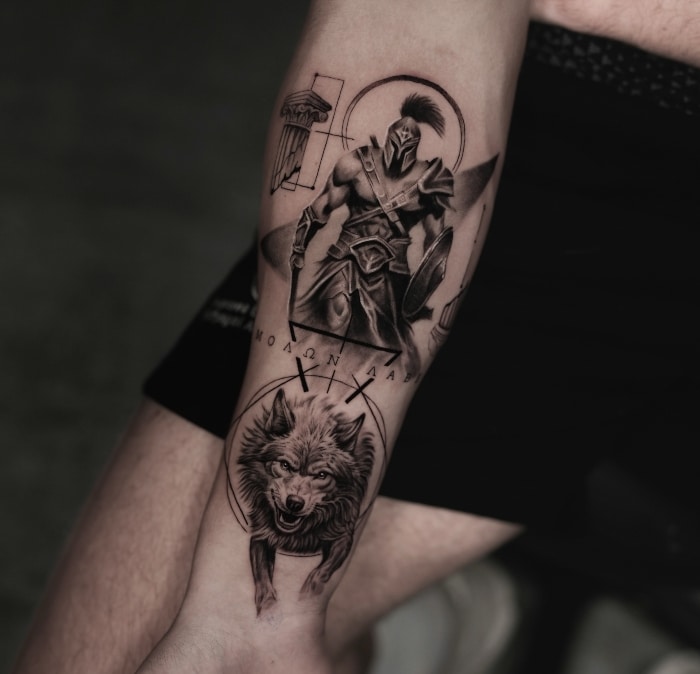
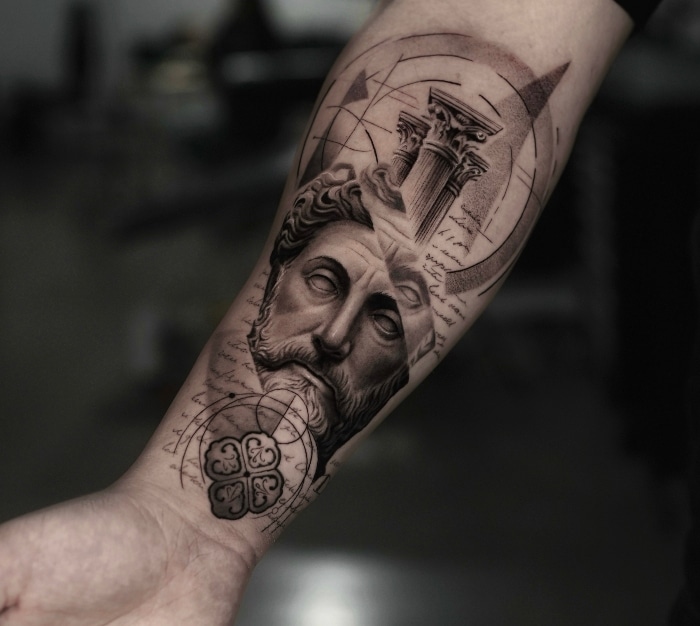
My style is primarily Black & Grey, built around strong contrast, clear readability, and designs that flow naturally with the body. Mythology and history are major influences, but I also enjoy purely aesthetic compositions when they suit the client and placement. This focus developed naturally through experience and understanding what ages best on skin.
Please walk us through your process when you start a new tattoo for your customers.
I begin by understanding what the client wants, sometimes it’s a personal story, sometimes a purely aesthetic direction. From there, I gather references, design a composition that fits the body properly, and refine it until it feels balanced, readable, and built to age well. During the session, I focus on flow, contrast, and consistency.
How do you stay creatively inspired?
I study mythology, history, painting, sculpture, and photography. I’m also constantly inspired by great tattooing itself, observing artists I respect and refining my own fundamentals.
How do you balance client requests with your artistic vision?
I respect the client’s direction, then guide the design using my experience so it works best on skin long-term. The strongest results come from collaboration, their idea combined with my responsibility for the final outcome.
Are there any tattoo styles you’d like to explore more?
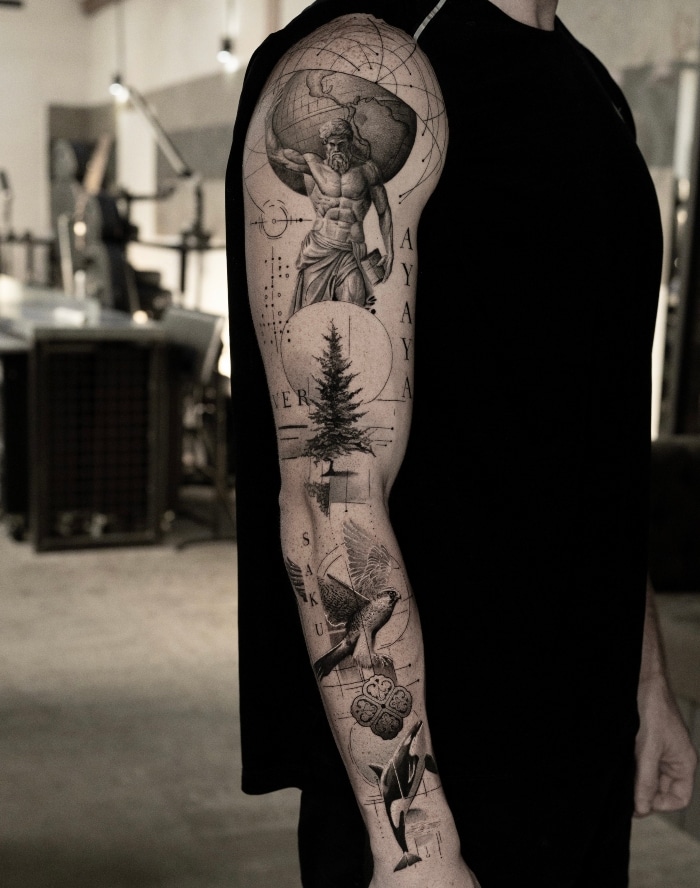
I’m always open to expanding, especially larger-scale projects that combine realism with strong symbolic elements or clean, body-flow-focused compositions.
What’s the most underrated tattoo style?
Well-executed Black & Grey that prioritizes composition, contrast, and aging. It may not always be the loudest style, but it often holds up the best over time.
What’s the most overrated tattoo style?
Trends that prioritize quick visual impact over long-term readability. Some designs look impressive on day one but don’t age as well.
Are there any tattoos you prefer not to do?
I avoid designs that don’t meet my standards or won’t age well. If something isn’t right for the skin or placement, I’ll always be honest and suggest a better approach.
Do you have sponsors? If yes, what could you tell us about your sponsors?
Yes. I’ve signed an international sponsorship with Killer Ink, followed by sponsorships with Tattoo Spray, Inkeeze, and BigWasp. I’m grateful to work with brands that genuinely support artists and uphold professional standards.
As a Tattoo Artist, what kind of tattoo ethics is really important to you?
Honesty, hygiene, and responsibility. Clients trust us with their skin, so clear communication and long-term thinking are essential at every stage.
Being a successful tattoo artist requires many different skills. What’s your favorite way to keep learning?
Studying strong work, refining fundamentals, and staying consistent. Tattooing is a craft, you never truly stop learning.
Do you like to teach or mentor upcoming artists?
Yes. I enjoy sharing knowledge, especially when it comes to discipline, design thinking, and professionalism.
What’s the best piece of advice you ever received to improve your tattooing technique?
Slow down and master the fundamentals. Clean lines, smooth shading, and solid contrast will always matter.
How do you stay at the top of your game?
By keeping my standards high, remaining self-critical in a healthy way, and treating every tattoo as a piece that represents my name.
What do you think separates a good tattoo artist from a great one?
Consistency and long-term thinking, creating designs that fit the body, age well, and deliver a strong client experience from start to finish.
How do you feel about the growing acceptance of tattoos in society?
It’s very positive. Tattoos are increasingly recognized as art and personal expression, which raises respect for the craft and pushes overall standards higher.
What’s the biggest misconception that customers may have about tattoos?
That tattoos can be copied and pasted exactly. A great tattoo must be designed specifically for the individual body, placement, and skin.
What’s the biggest trend in tattooing you have noticed in the last 5 years?
More clients are valuing custom work and originality. Whether driven by personal meaning or purely aesthetic goals, long-term quality matters more than ever.
What’s your view on the rise of AI in tattooing?
AI has become a useful support tool for many professional artists. While I mainly draw my own designs, I sometimes use AI to explore variations or generate elements I can integrate into custom compositions. It’s not a replacement, the final concept and execution are always fully my responsibility.
Do you work on other projects within the tattoo industry?
I focus on developing my work internationally, building collaborations, and creating larger-scale projects that continue to push my style forward.
Do you do other forms of art besides tattooing?
Yes. Drawing and design are a major part of my daily practice, and constantly creating art feeds directly into my tattoo work.
Who are the people you admire the most within the tattoo community?
Artists who remain consistent over many years, maintain high standards, and inspire others through quality rather than trends.
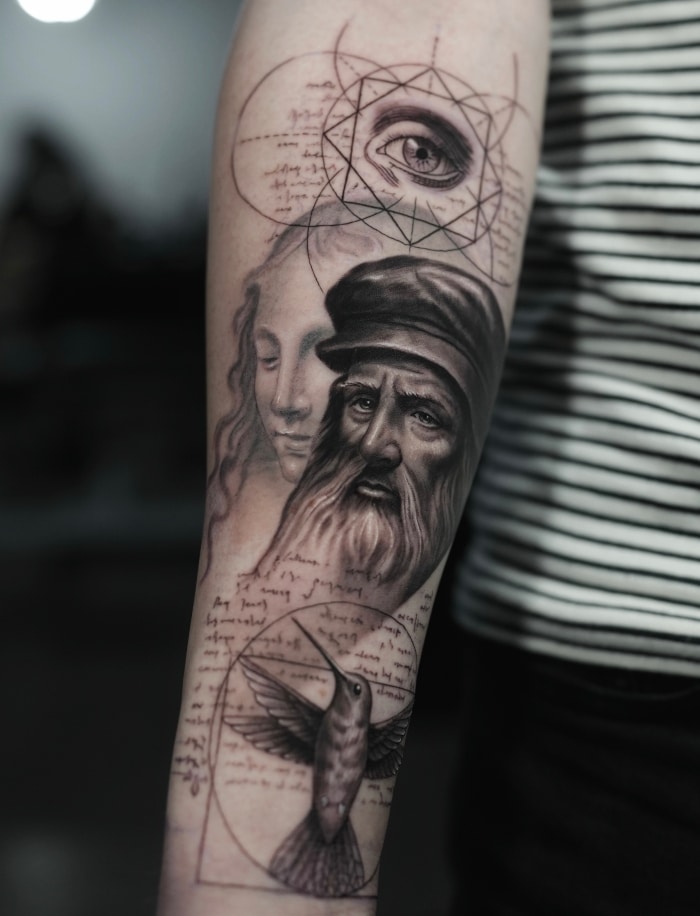
What’s your experience at tattoo conventions so far?
Conventions have been a major point of growth. Meeting international artists, competing, learning, and experiencing different standards up close.
How do you usually prepare for a tattoo convention?
I plan strong designs, manage my time carefully, and focus on pieces that represent my work at the highest level. Preparation is essential.
What’s your primary reason to attend a tattoo convention?
To challenge myself, connect with the tattoo community, and continue evolving creatively and professionally.
What’s your favorite tattoo convention so far? And why?
The Big London Show, because it’s one of the biggest stages in the UK, and receiving an award there was a proud moment for me.
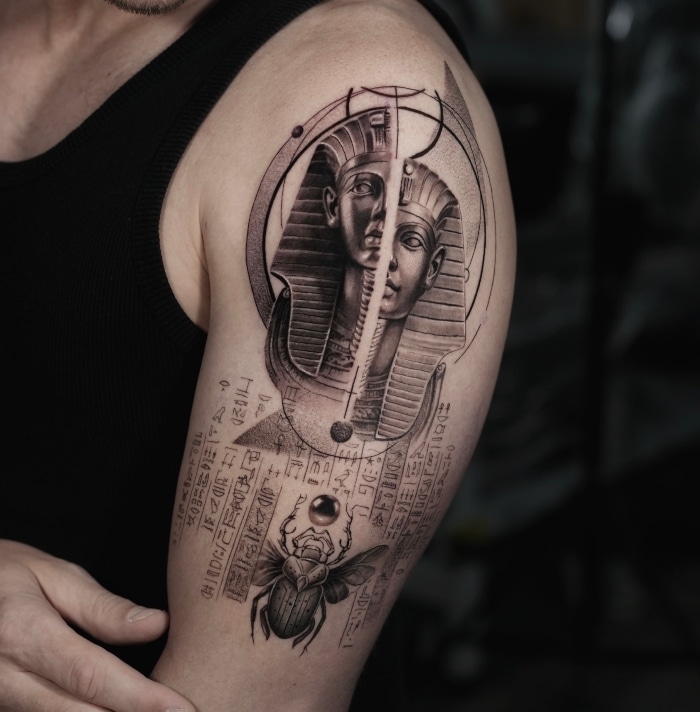
Have you ever had the opportunity to participate in any tattoo contests? You are welcome to specify your awards.
Yes. In 2025, I received:
- Big London Show – Best of Friday (2nd Place)
- Marmaris Tattoo Fest – Small Black & Grey (2nd Place)
- Marmaris Tattoo Fest – Best of Saturday (Award)
- Winter Tattoo Fest (UK) – Best of Small Black & Grey (Award)
How do you think there are ways tattoo conventions could improve for both artists and the public?
More public education about quality and choosing the right artist, along with better logistics for artists so the focus remains on the craft.
Was there any event in particular that really boosted your career?
Yes. 2025 was a turning point. The awards, exposure, and international connections helped elevate my career to a new level.
Is there any tattoo that you have created in your career that you are particularly proud of?
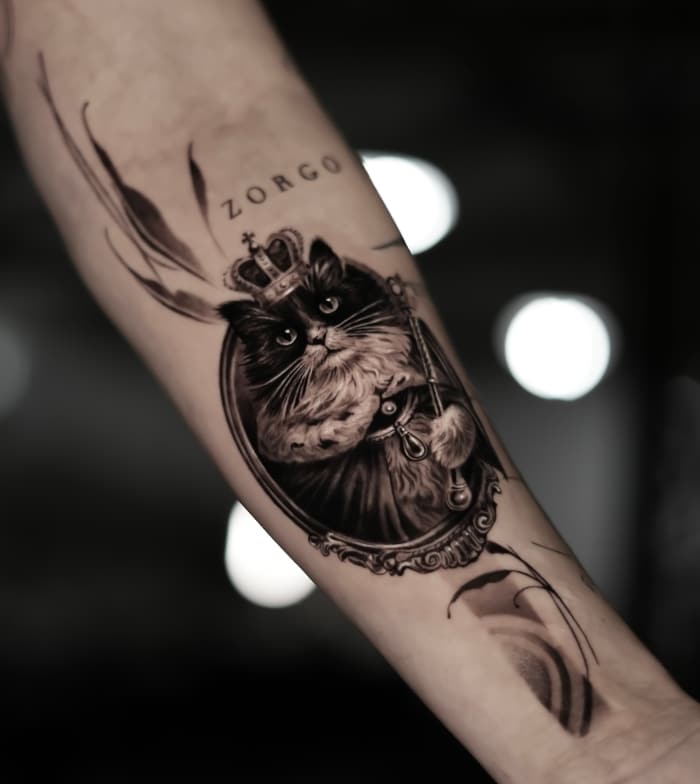
I’m especially proud of pieces where composition and technical quality come together at a high level, black & grey tattoos that feel timeless and fit the body perfectly.
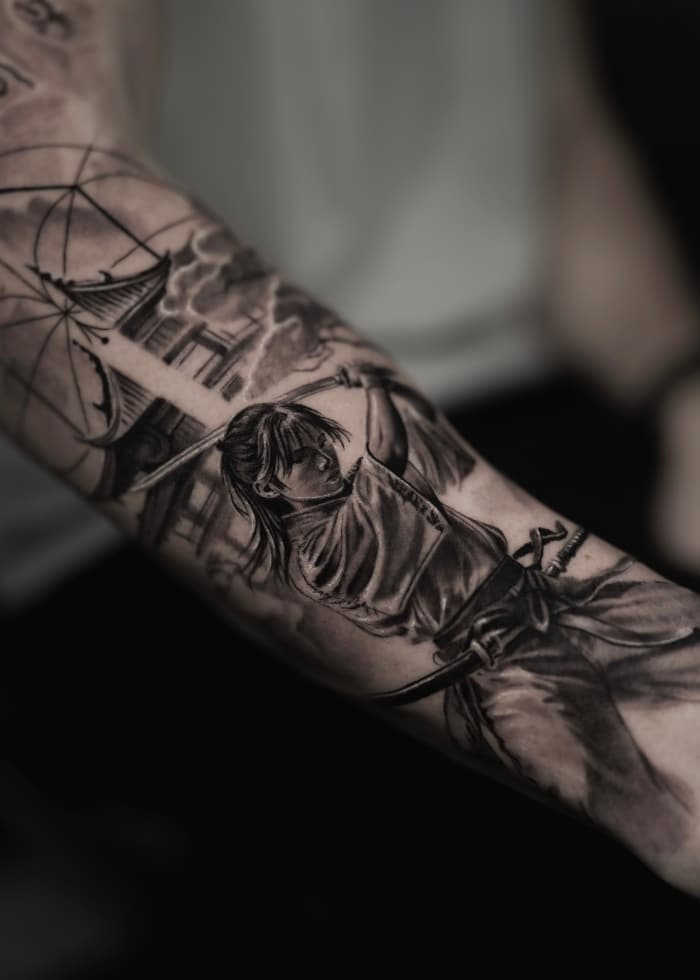
What advice would you offer to someone considering a career as a tattoo artist?
Treat tattooing as a real profession. Master the fundamentals, learn hygiene and ethics properly, stay disciplined, and be patient. True quality takes years to develop.
What are your goals or dreams for the near future?
To continue growing internationally, work on larger custom projects, and strengthen my reputation as an artist known for high-quality black & grey tattoos and strong design.
What legacy do you want to leave as a tattoo artist?
I want to be remembered for tattoos that are well-crafted, timeless, and built to age beautifully, work people are proud to wear for life.
To close this awesome interview, what’s your last message to our readers?
Choose the right artist, respect the process, and be patient. Whether a tattoo carries deep personal meaning or is purely aesthetic, what matters most is quality work and a tattoo that will look great for years to come.
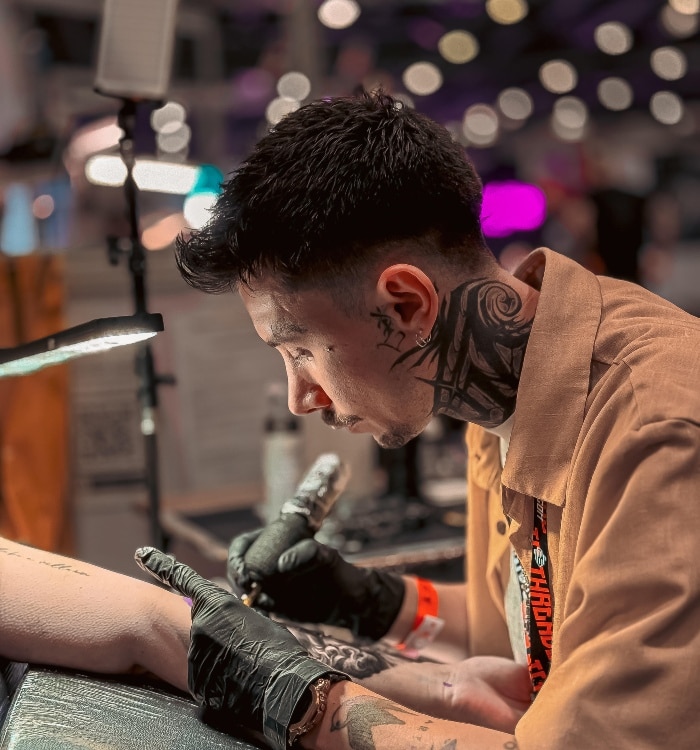

With the increasing popularity of flexible workspaces, cleaning companies have started providing cleaning services not only in offices but also in co-working spaces. In such places, it is important to keep workstations in order, as well as break areas, kitchens and restrooms. If you want, you can read about Kenmore house cleaning services. Cleaning should be done quickly and efficiently so that employees can work in a comfortable and clean environment.