

“Tattoos felt like a way to bring that visual language into the real world, to wear the emotion and fantasy on your skin.” For Tania, tattooing became more than a medium, it became a way to build a life. From leaving Russia and navigating different tattoo scenes, to eventually finding a sense of belonging in Los Angeles, her journey reflects both movement and intention.
In this conversation, she opens up about what tattooing means to her beyond technique: a creative language, an emotional exchange, and a responsibility built on trust between artist and client. She speaks candidly about the constant pressure of social media, and the challenge of staying inspired in an industry that never slows down.
What comes through clearly is an artist who values connection as much as craft, someone who believes the best work happens when vision, emotion, and human energy align. This interview offers a thoughtful look into the mind of an artist who continues to evolve while staying grounded in what made her fall in love with tattooing in the first place.
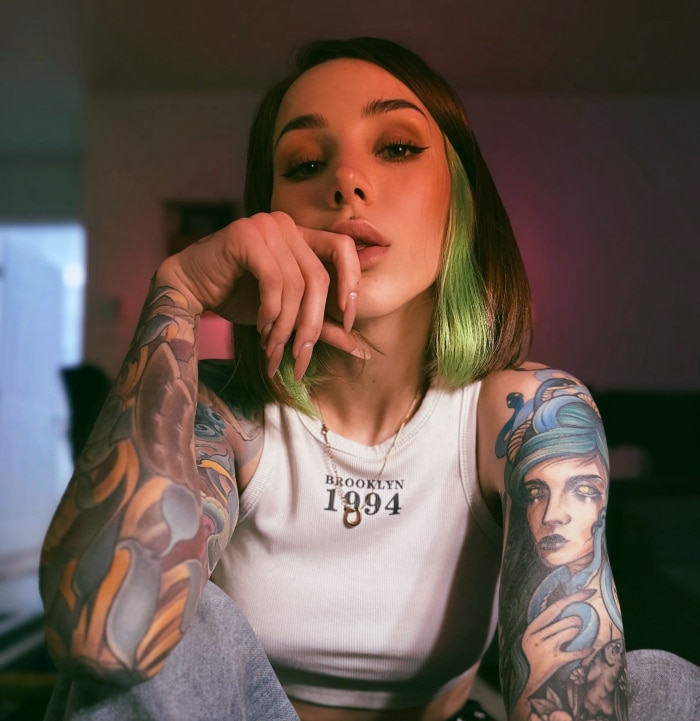
How would you like to introduce yourself?
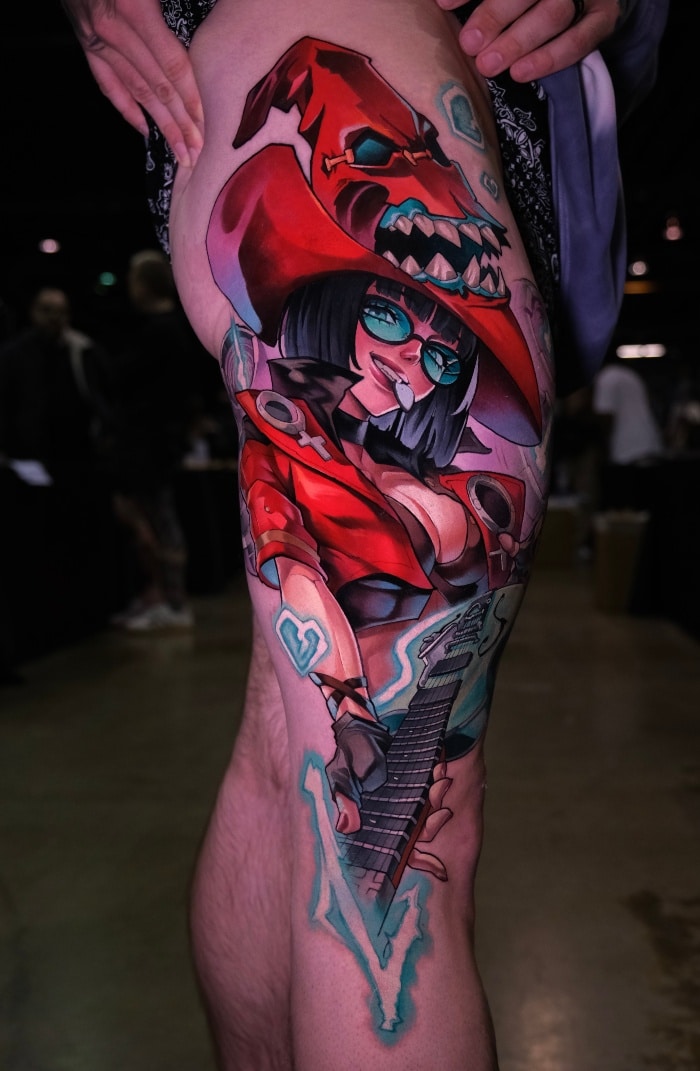
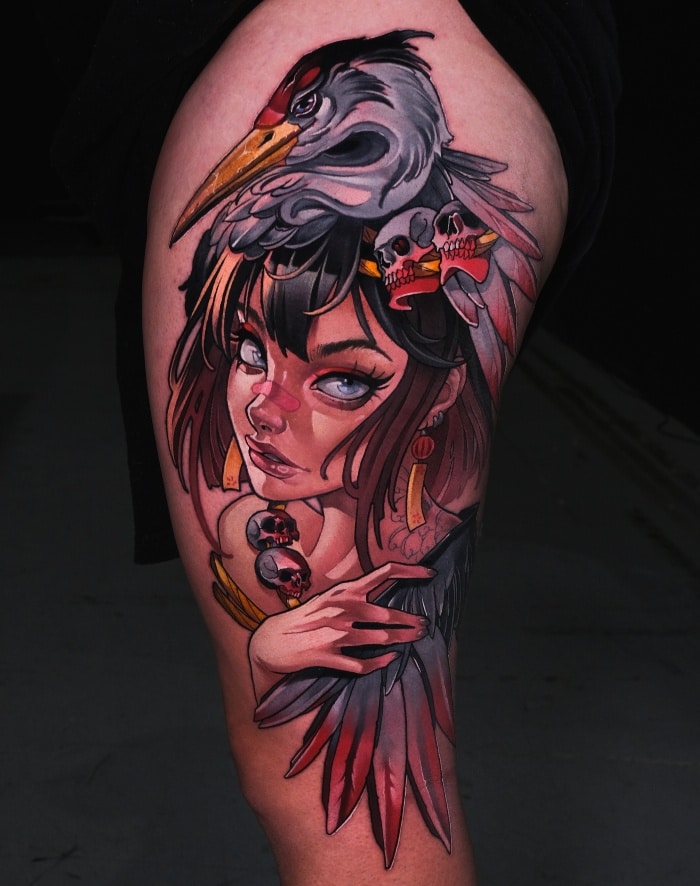
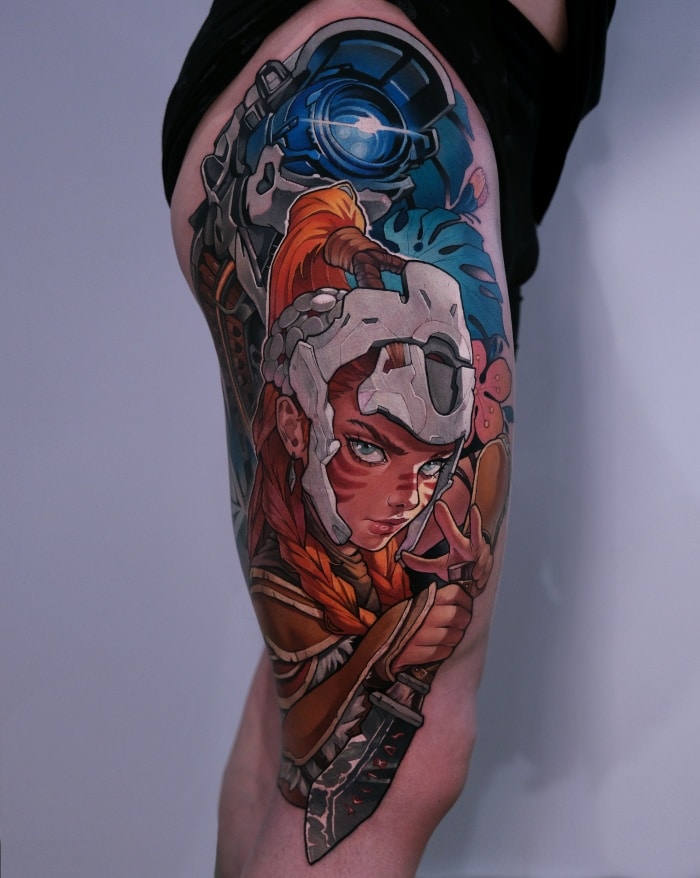
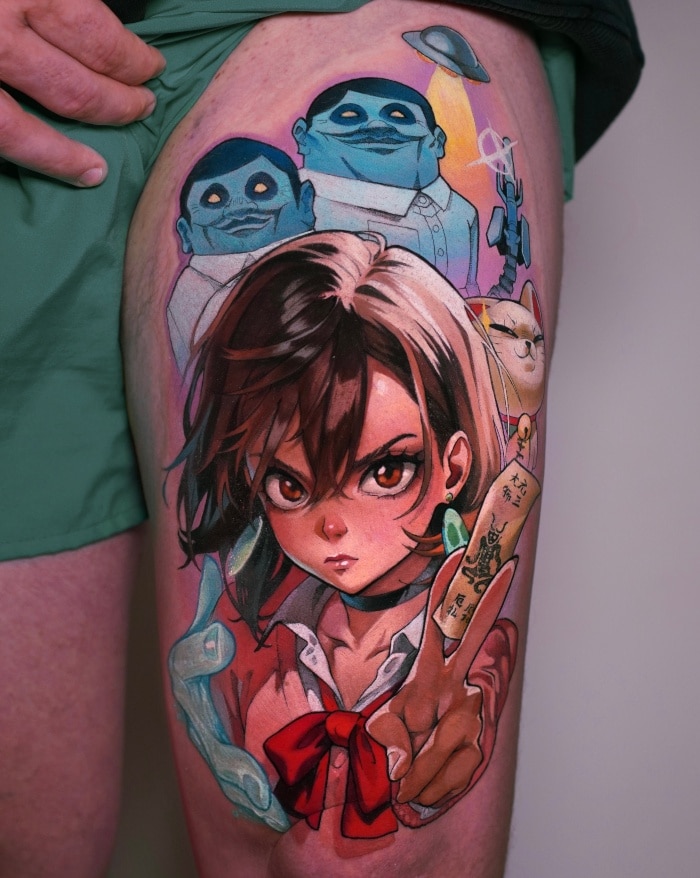
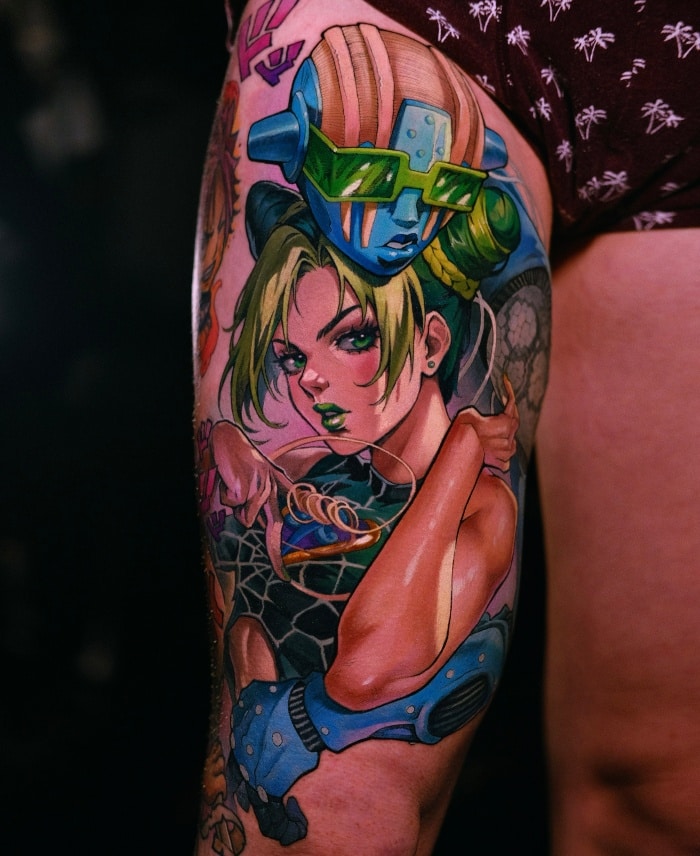
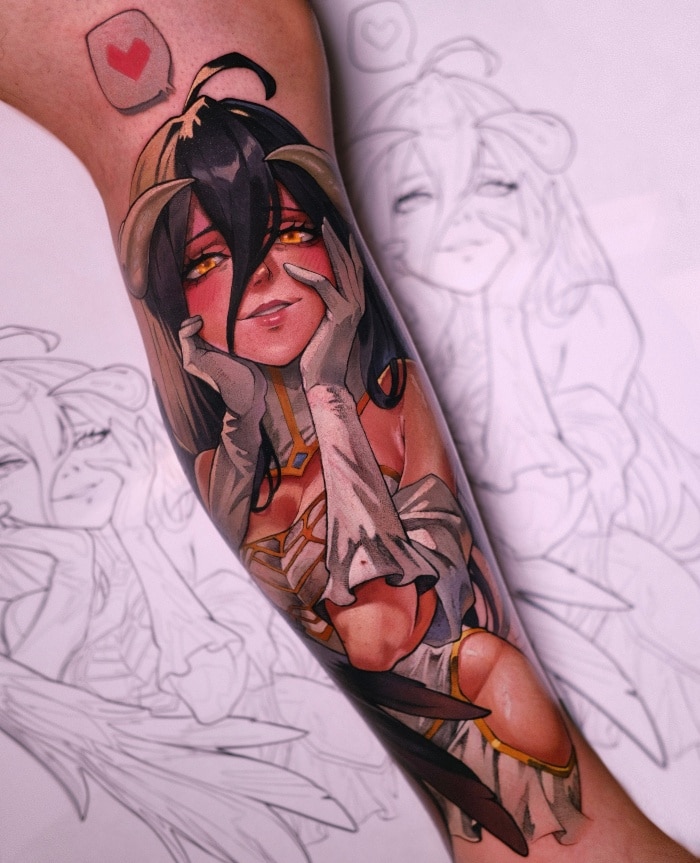
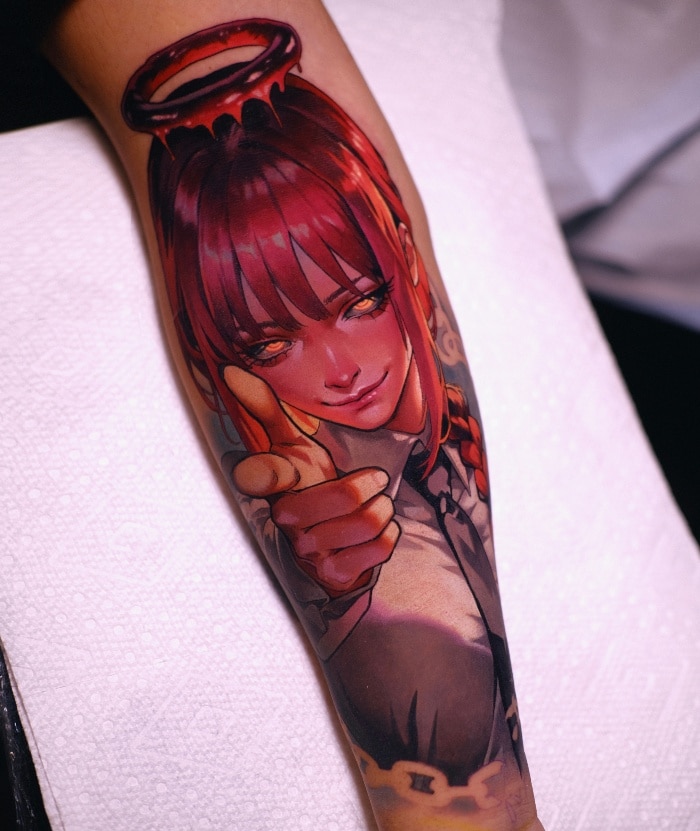
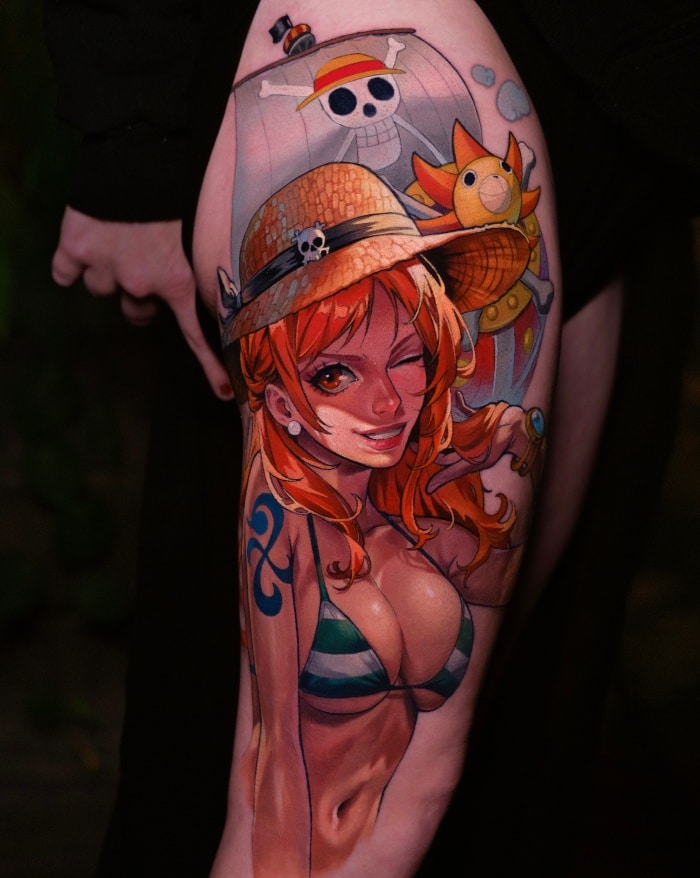
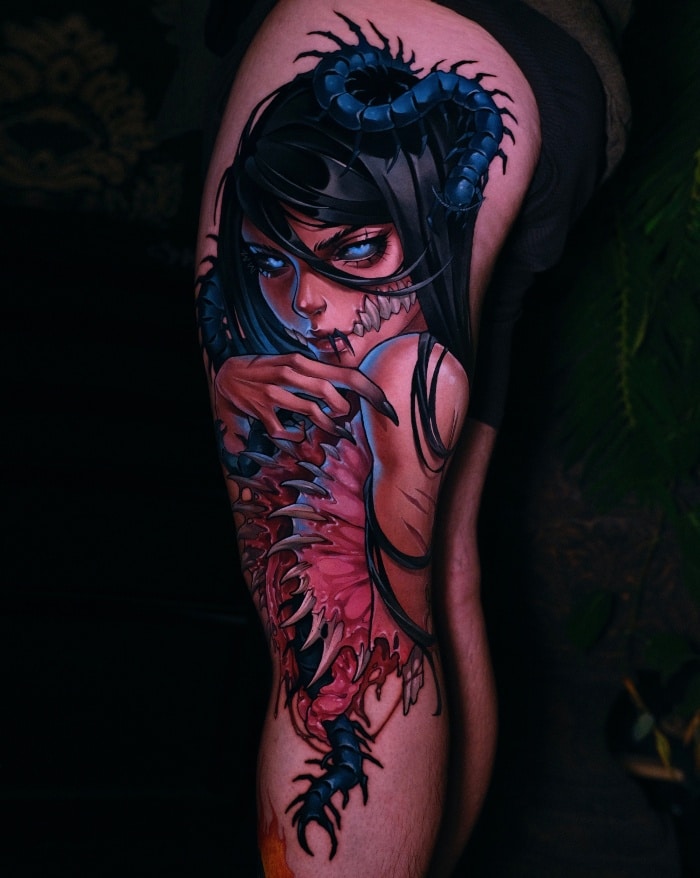
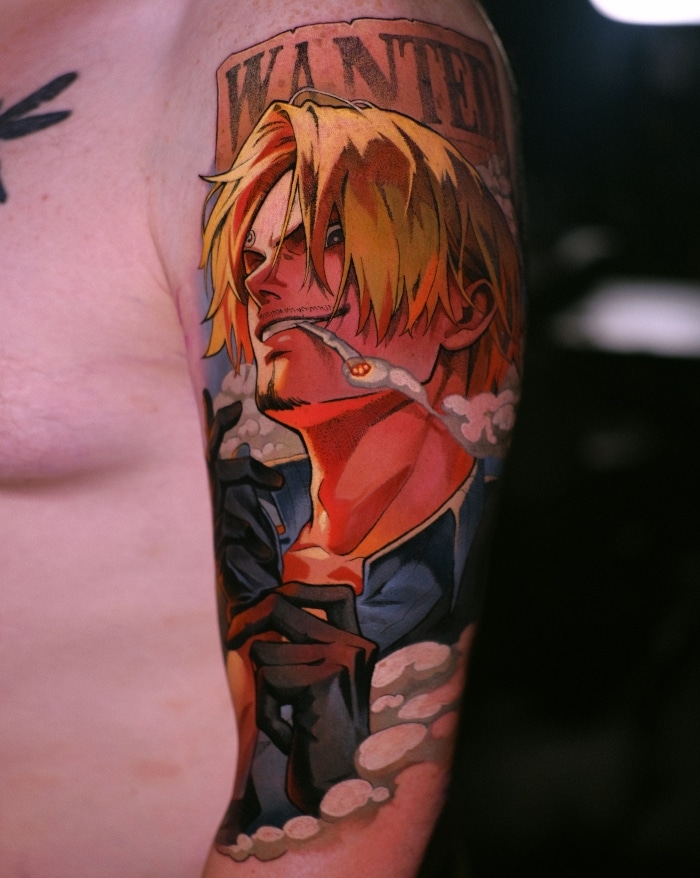
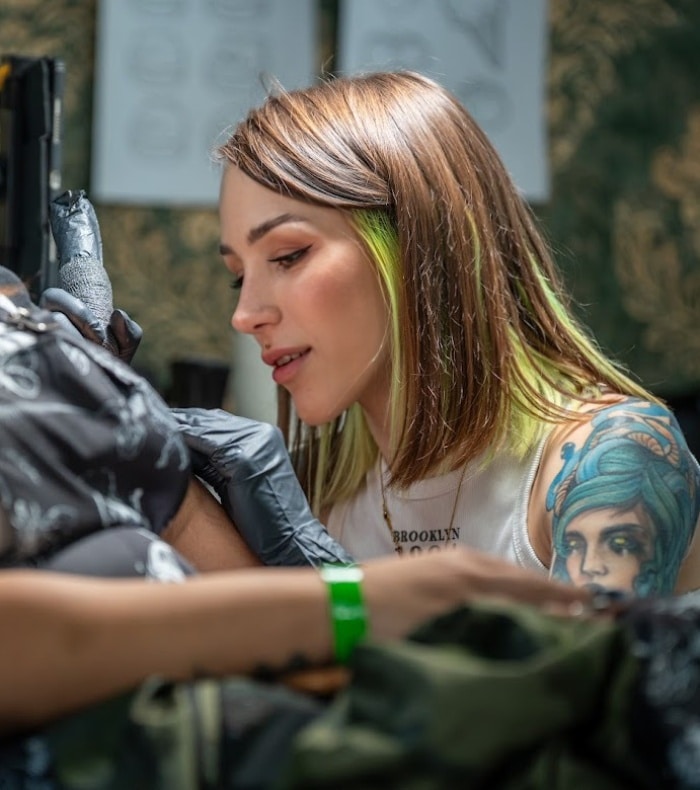
Hi, I’m Tania, or you also know me as Green Vesper, a color tattoo artist working mostly in neotraditional style with a love for anime/games characters, flowy compositions, and bold, dreamy palettes.
Where can your customers find you?
Right now I’m based in Los Angeles, California. I work in studio named Inkology.
How would you describe the tattoo scene in Russia these days?
If we’re talking about Russia, the scene has grown a lot – there’s so much raw talent and experimentation happening. But unfortunately, it’s also becoming more closed off due to politics and censorship, which pushes many artists to leave and search for freedom elsewhere. In contrast, being in the U.S., especially in Los Angeles, feels like I’m exactly where I’m supposed to be. There are so many people with similar vibes, tastes, and artistic vision. I finally feel like I’m surrounded by “my people” – and that’s super motivating.
How would you define yourself in one word?
Responsible.
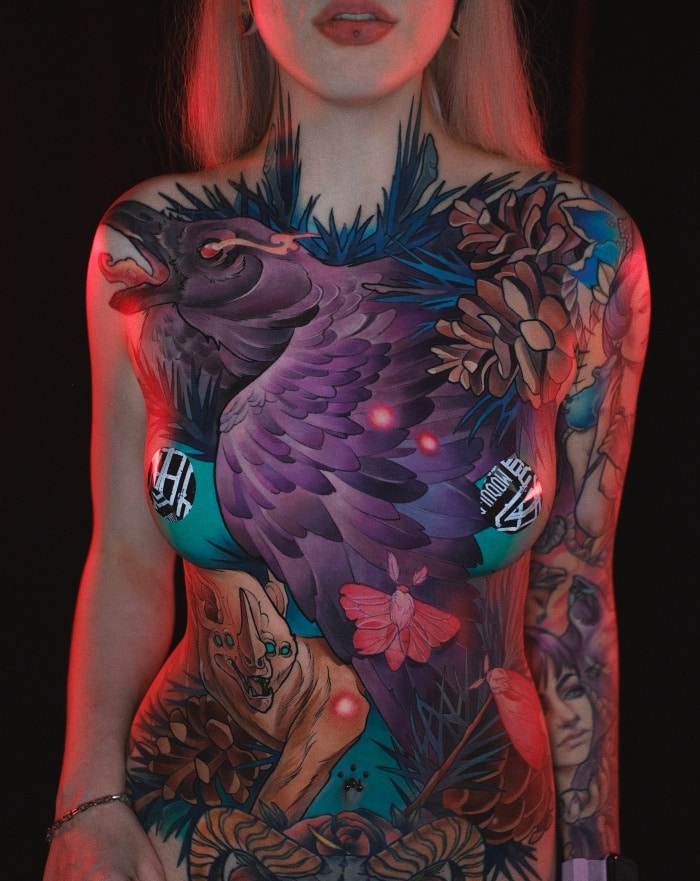
Where did your fascination for tattoos come from?
A big part of it came from illustration and character design, but also from anime. I’ve watched tons of it, and I get inspired by the way characters look, their stories, their lore. Tattoos felt like a way to bring that visual language into the real world, to wear the emotion and fantasy on your skin.
What does tattooing mean to you personally?
It’s my creative expression, my language. I love when my taste aligns with my client’s, it’s the best feeling when we both geek out over the same references or ideas. It becomes more than just a session, it’s a connection. And when the visual vibe matches the human one – that’s the magic.
At what point in your life did you decide to become a professional tattoo artist?
Right after graduating from university. I studied art and design, and tattooing was a natural next step for me. I’d already gone through art school a bit earlier, so everything was leading me in this direction.
How did your family react when you started a career in tattooing?
They were a bit skeptical at first, typical story. But once they saw I was serious and actually building something real, they started to support me.
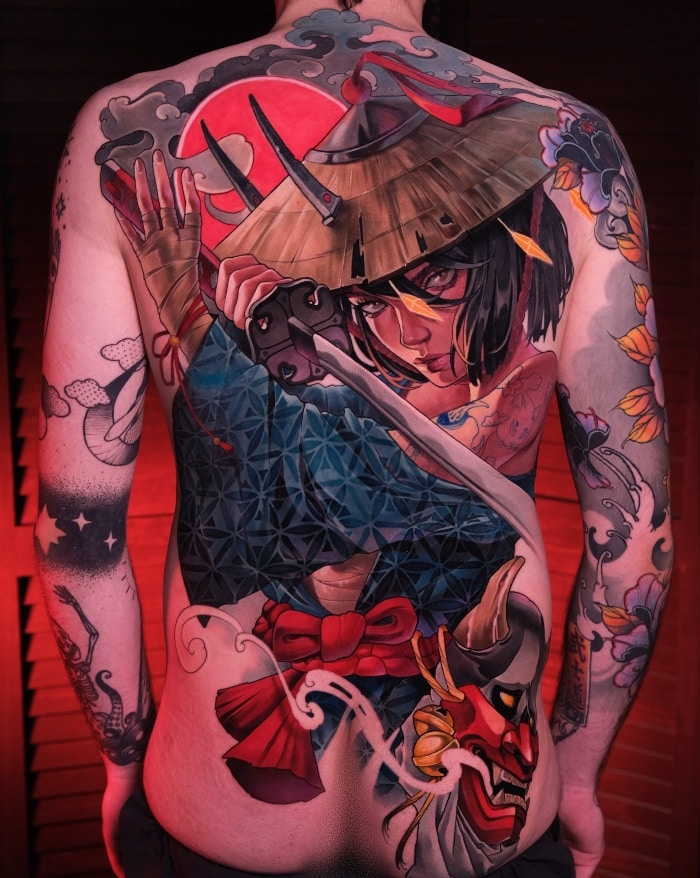
Did you go through an apprenticeship? How was that experience?
It wasn’t a formal apprenticeship, but I did learn under the guidance of a few talented artists. It was a lot of observation, trial and error, and drawing non-stop. The tough love kind of learning.
What did your first tattoo look like?
It was a simple black line design – something small and very safe. I was way too careful! Nothing like what I do now, but I’m still weirdly proud of it.
Do you usually do guest spots? If yes, what’s your experience in doing them?
I do enjoy guest spots, they’re fun and a great way to meet new people. But since I’m pretty busy in Los Angeles, I feel most comfortable working here. Plus, I’m super picky about my setup – not every studio offers the kind of equipment or environment I’m used to. So while I’m open to traveling, it has to be the right vibe and conditions.
As a Tattoo Artist, what does your daily working routine look like?
It really depends on the day, but usually I start by checking messages and planning the upcoming session. I work only with pre-approved designs, so I already know what I’m doing. Then I prep the workplace myself, once again: I’m pretty strict about setup. Then it’s tattoo time for hours straight. After that, I do photos, aftercare talk, cleanup, and maybe digital sketching in the evening. And somewhere in between – coffee. Lots of coffee.
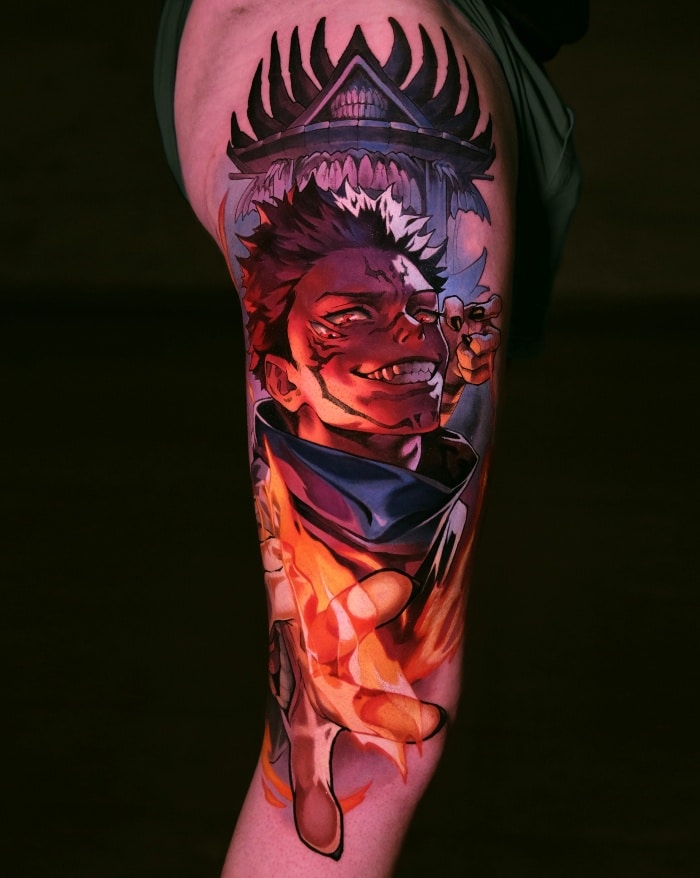
What is one surprising aspect of being a tattoo artist?
How much of it is not about tattooing. You have to be your own manager, designer, photographer, social media person, therapist… and still stay creative on top of that. It’s a lot more multitasking than people think.
How do you determine the price of a tattoo?
It’s a mix of factors: size, complexity, time, sometimes placement. I also take into account how much prep is needed and how complicated the design is. I usually work with fixed prices for clarity, not hourly rates – it’s easier for both me and the client.
What’s the most challenging aspect of being a tattoo artist in 2025?
Staying inspired while balancing burnout. There’s so much content and competition online – it’s easy to fall into the trap of comparison. Also, navigating social media changes, visa issues, and rising costs of equipment adds pressure too.
What’s the most rewarding aspect of being a tattoo artist?
When a client looks in the mirror after the session and just lights up. When someone says “this is exactly what I wanted – or even better.” That shared emotion is priceless. And also – the freedom to create, grow, and meet amazing people through my work.
Do you have sponsors? If yes, what could you tell us about your sponsors?
Yes! I work with Hustle Butter, FK Irons and Radiant Colors Ink. These brands I genuinely love and use daily. I wouldn’t promote anything I don’t believe in
What tools and machines do you prefer to use?
I use a wireless machine – the FK Irons Flux Max 5.0 is my current favorite. For needles, I like Kwadron cartridges. Inks – Radiant Colors. And I’m super loyal to Hustle Butter for prep and aftercare.
What’s your number one aftercare advice for clients?
Don’t overdo it. Keep it clean, moisturized, and let it breathe. No aggressive washing, no tight clothes, no sun. And most importantly – Trust the process. Even if it gets a little ugly during healing. Your skin knows what it’s doing.
How would you define your current tattoo style, and how did you end up focusing on it?
I’d call it Neotraditional with a twist – it’s anime/games character-based, detailed, and super colorful, with soft gradients and a dreamy palette. I naturally gravitated toward this style after years of loving illustration, anime, and fantasy art.
Please walk us through your process when you start a new tattoo for your customers.
I start by locking in the idea with the client – usually through DMs or emails. Once the theme and general direction are set, I sketch digitally. Then we accept the final result and prep everything for the session. I’m very detail-focused, so each step is intentional.
How do you stay creatively inspired?
Anime, games, comics, Pinterest, weird dreams, random color palettes… Anything can spark an idea. Oh, and I save way too many reference folders.
How do you balance client requests with your artistic vision?
I’m lucky that most of my clients come to me for my style, so we’re usually on the same page. But even when a client has a very specific request, I try to rework it in a way that still feels authentic to me. It’s about trust and communication, and knowing when to say “No” if it’s not the right fit.
Are there any tattoo styles you’d like to explore more?
I’ve been dreaming about doing a full-body Ornamental/Floral piece, something really flowy, elegant, and bold, with patterns and organic shapes wrapping around the body. But it’s a long-term vision. I’m still waiting to find the perfect blank canvas for it.
What’s the most underrated tattoo style?
Maybe traditional Japanese when it’s done right.
What’s the most overrated tattoo style?
I’d say Super minimal micro-tattoos. Some look great in photos, but don’t hold up long-term.
Are there any tattoos you prefer not to do?
I don’t do cover-ups unless it’s something very light and easy to work with.
As a Tattoo Artist, what kind of tattoo ethics is really important to you?
Respect to the client, their body, and the craft itself. I believe in being honest about what will work and what won’t, even if it means saying no. I also think it’s crucial to not trace or steal other artists’ work – inspiration is fine, but copying is lazy and disrespectful.
Being a successful tattoo artist requires many different skills. What’s your favorite way to keep learning?
Watching other artists work in person, on video, anywhere. I’m very visual. I also learn a lot through experimenting with personal pieces, pushing myself into uncomfortable zones just to see what happens.
Do you like to teach or mentor upcoming artists?
I’m open to it, but I wouldn’t say I’m a full-time mentor. I prefer sharing knowledge naturally – through conversation, feedback, or just showing how I work. I still feel like I’m learning myself, so it’s more of a mutual exchange than a teacher–student vibe.
What’s the best piece of advice you ever received to improve your tattooing technique?
Slow down. That’s it. Everyone’s obsessed with speed, but clean work takes time.
How do you stay at the top of your game?
By constantly checking in with myself. Am I still excited? Am I proud of what I’m doing? If not, I step back, recharge, and shift gears. I also surround myself with other passionate artists, and that energy always pushes me to do better.
What do you think separates a good tattoo artist from a great one?
It’s not just about drawing well. A great artist is someone who can handle a hundred things at once and just being emotionally present. It takes a lot of responsibility, discipline, and long-term thinking. And of course, taste. I feel like a sense of style is something you’re either born with or not. You can improve your technique over time, but that inner visual compass? That’s harder to teach. Great artists just know when something looks right.
How do you feel about the growing acceptance of tattoos in society?
Honestly, it’s cool to see. I remember when tattoos still had that “bad girl/boy” reputation. Now you see full sleeves in banks and tech companies – love that for us. But at the same time, I hope tattooing doesn’t lose its soul just to become “trendy.”
What’s the biggest misconception that customers may have about tattoos?
That it’s fast and easy. Or that they can just bring me someone else’s tattoo and ask for the same thing. Good tattoos take time, trust, planning – and they should be custom.
What’s the biggest trend in tattooing you have noticed in the last 5 years?
A huge shift to iPad sketches and digital prep, which I love.
What’s your view on the rise of AI in tattooing?
AI can be a cool reference tool, but nothing beats the human eye, especially for flow and emotion. Good to use as a part of the whole art, rather than 100%.
What would you change about the tattoo industry?
More transparency and support for young artists. Less gatekeeping, more sharing. And more attention to mental health – this job can be isolating and draining. We need better conversations around that.
Do you work on other projects within the tattoo industry?
Right now, I’m focused mostly on tattooing, but I’m always sketching side ideas – merch, maybe educational stuff one day. I just need more hours in the day.
Do you do other forms of art besides tattooing?
Right now, I’m fully focused on tattooing – it takes up pretty much all of my time. But I’ve been wanting for a long time to try something completely different. I used to do sculpture back in the day, and I’ve been really curious about getting back into 3D modeling.
Who are the people you admire the most within the tattoo community?
At the beginning of my career, I could name specific artists who inspired me – and I still appreciate them deeply! But now, it’s less about names. I get energy and inspiration from everyone I connect with in the industry. I’m naturally very selective about who I keep close, so the people around me all bring something good into my life – and that’s what matters most.
What’s your experience at tattoo conventions so far?
I’ve had mostly good experiences. Conventions are intense, loud, a bit chaotic, but also super energizing. You meet so many artists and clients in such a short time, it’s like a creative overload (in a good way).
How do you usually prepare for a tattoo convention?
I just brace myself for the noise, adrenaline, and zero time to eat properly lol. Just kidding, I actually prepare very thoroughly. From equipment to the design, model, and every little item I might need. I always show up 100% ready. Honestly, I can’t even remember a single convention where I forgot something or had to run around looking for supplies.
What’s your primary reason to attend a tattoo convention?
To connect – with artists, clients, brands, and just like-minded people. It’s also a chance to push myself out of routine and try something new under pressure. I always leave inspired (and exhausted).
What’s your favorite tattoo convention so far? And why?
One of my absolute favorite experiences was at a convention in Mexico. I honestly didn’t expect much. I went there thinking, “Who even knows me over there?”
But the vibe and energy were unreal. People were so kind, welcoming, and supportive. I felt genuinely valued – like I mattered. The organizers took care of everything, so the only thing I had to worry about was the tattoo itself. No stress, just pure focus and good energy. It left such a warm impression on me.
Another standout for me was Anime Ink in Richmond. From a design perspective, it was hands down the most well-organized and visually thoughtful convention I’ve attended. Everything, from the typography, branding, and venue setup… felt super polished. It also had a really clear stylistic direction, which, as the name suggests, was very anime-inspired. Because of that, I was surrounded by people whose interests, aesthetics, and energy matched mine 100%. It felt like the perfect environment to connect and grow. On top of that, the competition was tough, which I love. There’s something motivating about being among strong artists and knowing you have to earn your place. Winning easily among beginners might feel good for five minutes, but it doesn’t help you evolve. Anime Ink challenged me (in the best way).
Have you ever had the opportunity to participate in any tattoo contests? You are welcome to specify your awards.
Yes, I usually enter tattoo contests at pretty much every convention I attend. My go-to categories are Neotraditional, Large Color, Anime, Pop Culture, and Best of Show. And while I don’t do it for the prizes, it’s always nice when the effort gets noticed. I’ve been lucky to win at most of the events I’ve participated in, and it’s a good reminder to myself that I’m doing something right.
Do you collect tattoos from artists you meet at conventions?
Not yet! I usually get so busy working that I barely have time to eat, let alone get tattooed haha.
How do you think there are ways tattoo conventions could improve for both artists and the public?
From the artist’s side, I really wish conventions had proper rest zones. Every time, I find myself trying to escape the loud music or shows that I’m not interested in, just to take a quiet break, and there’s never a comfy place to sit. I usually end up outside, eating under a tree, which… isn’t ideal.
Lighting is often a problem too. Sometimes, it feels like I’m tattooing in a nightclub. And don’t get me started on food: it’s almost always fast food, and rarely anything healthy or energizing. On top of that, schedules tend to be chaotic, with delays and miscommunication being the norm.
I can’t really speak from the visitor’s perspective, since I’ve never attended a convention as a guest, only as an artist.
Was there any event in particular that really boosted your career?
It’s hard to name one single event, but moving to the U.S. definitely gave me a strong boost. A big part of my audience is based here.
If we’re talking numbers, the biggest spike in followers I ever had actually happened right after the convention in Mexico, which was a bit unexpected, but super motivating. So I’d say it’s been a mix of the right moments and the right energy in the right places.
Is there any tattoo that you have created in your career that you are particularly proud of?
It’s never just one tattoo. I only take on projects that I’m fully confident in – ones I know I’ll enjoy from the design stage to the final session and result. If I say yes to something, it means I already see the potential in it. My goal is to enjoy the process, not just the result, and because of that I genuinely feel proud of every piece I’ve done. Each one starts as a “yes, I want to do this,” and that makes all the difference.
What is your greatest accomplishment as a tattoo artist?
Probably the fact that I’ve built a career where people travel across the world to get tattooed by me. That still feels surreal. And even more that they trust me not just as a tattooer, but as a person and storyteller. That’s what makes it feel meaningful.
What advice would you offer to someone considering a career as a tattoo artist?
Find your taste, stay curious, and be patient.
What are your goals or dreams for the near future?
I definitely want to keep traveling, learning, and meeting inspiring people. That always fuels me. But if we’re talking about something more tangible, I’d love to create my own art space. Not just a tattoo studio, but something bigger, a place that reflects all the parts of me. Somewhere I can escape to on weekends, where I don’t have to stay home to recharge. A space where I can be not just a tattooer, but also a designer, an organizer, a business owner. I feel like that kind of project would let me fully explore and express my ideas, and become my own little place of power.
What legacy do you want to leave as a tattoo artist?
I don’t think about legacy in a big, dramatic way. I just want people to remember how my work made them feel – both visually and emotionally. If I helped someone see themselves in a new light, feel stronger, or just smile every time they look at their tattoo,… that’s more than enough.
To close this awesome interview, what’s your last message to our readers?
Support the artists you love. Be kind. And if you ever see someone doing something cool, tell them. We all need that little push sometimes. Oh, and drink water. Especially if you’re getting tattooed.


Leave A Comment