

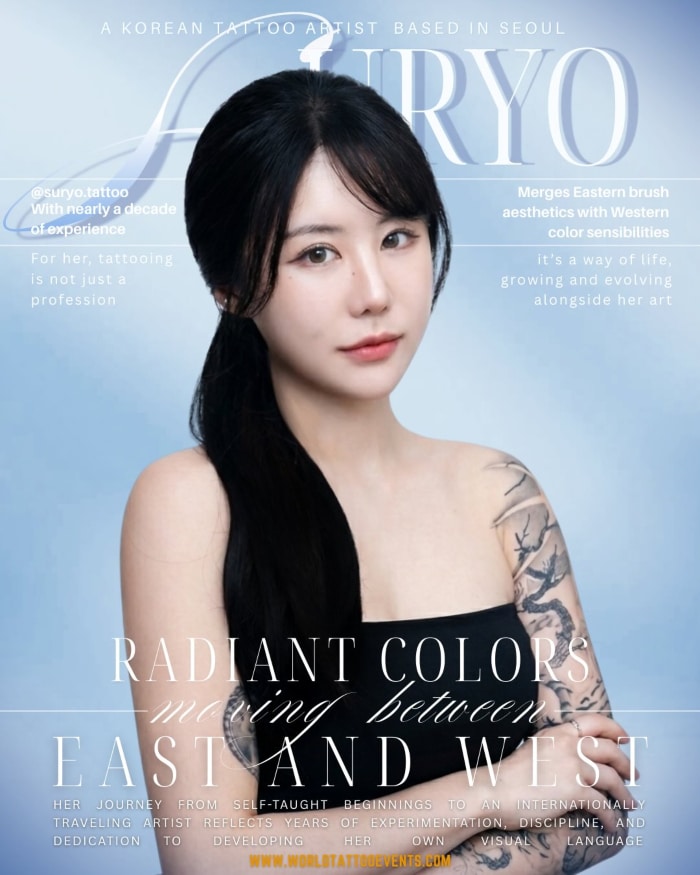
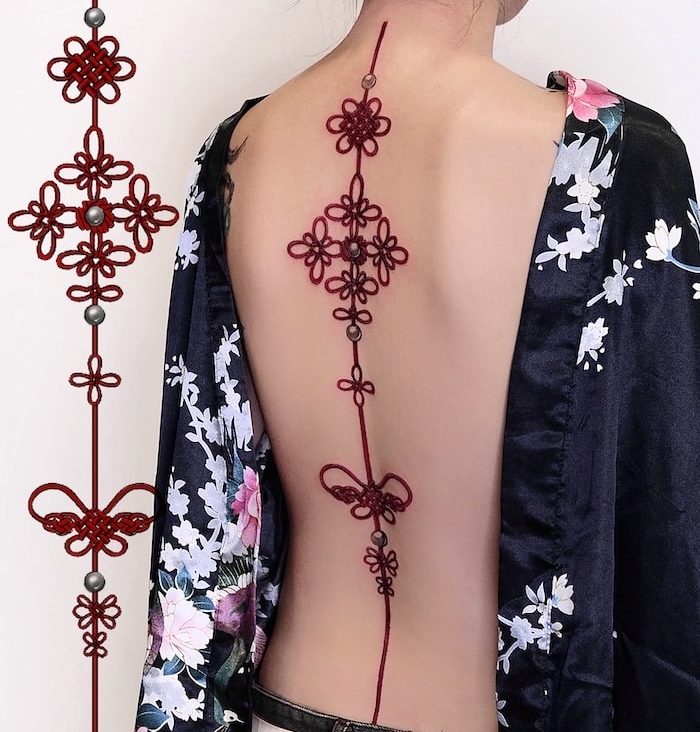
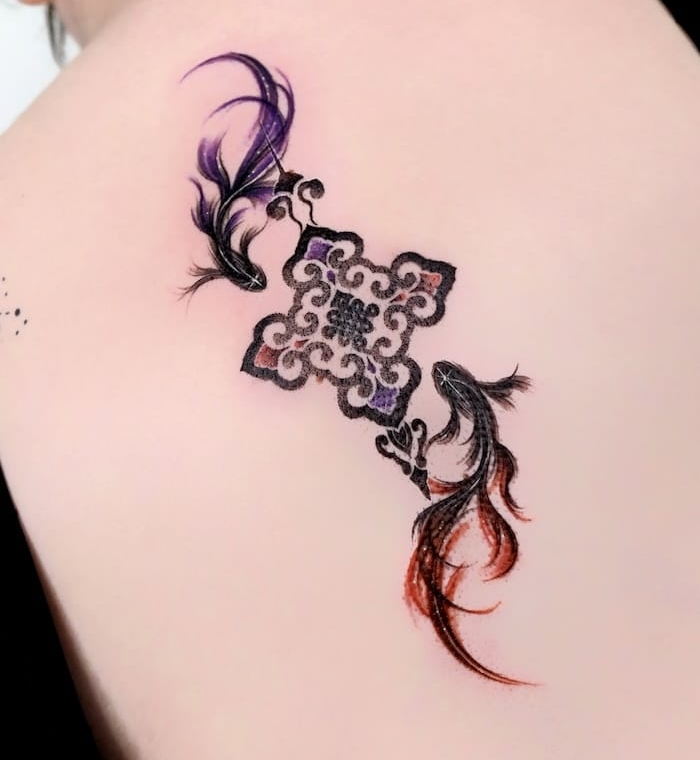
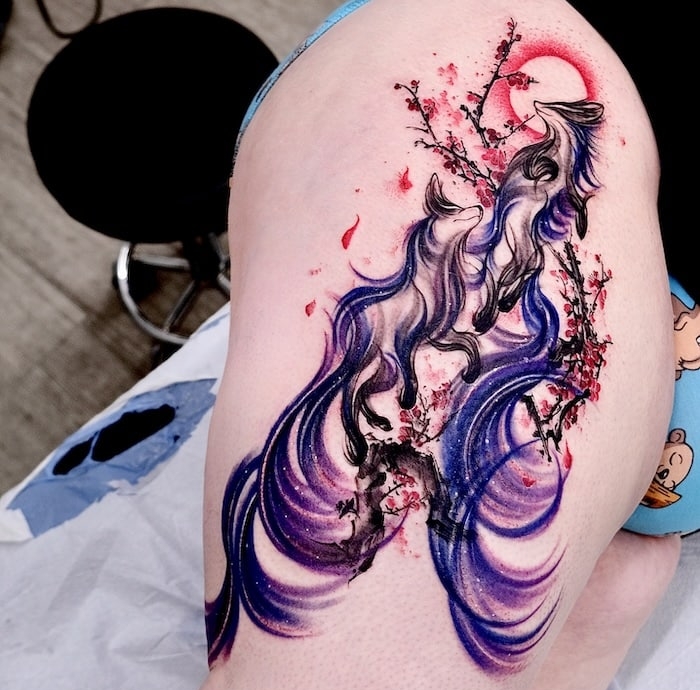
SURYO is a Korean tattoo artist based in Seoul whose work merges Eastern brush aesthetics with Western color sensibilities. With nearly a decade of experience, she has developed a distinctive style that blends movement, harmony, and bold color into modern tattoo compositions. Her approach reflects both artistic exploration and a desire to connect cultural influences within a single piece.
Originally trained in fashion design, SURYO was drawn to tattooing by the idea that an artist’s work could become a lasting part of someone’s life. Over time, tattooing evolved from a creative interest into something much deeper. For her, it is not simply a profession but a way of living and growing alongside her art.
Today, SURYO works from her private studio in Seoul while traveling frequently across Europe and Asia for guest spots. Her journey from self-taught beginnings to an internationally traveling artist reflects years of experimentation, discipline, and dedication to developing her own visual language.
Let’s step into her world.
- How would you like to introduce yourself?
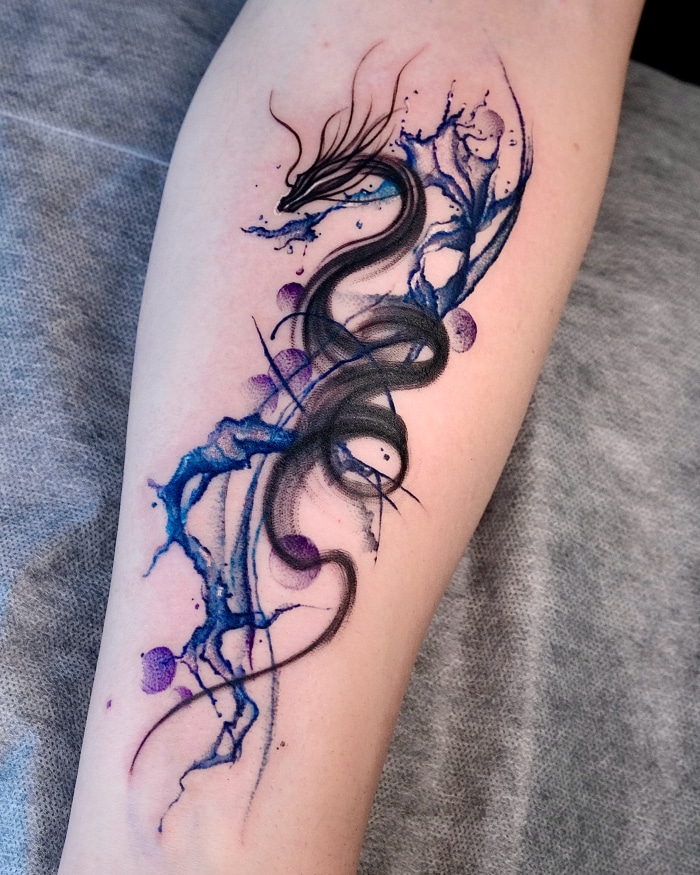
My name is SURYO, a Korean tattoo artist with 9 years of experience. My work blends Eastern brush aesthetics with Western color sensibilities to create harmonious and unique designs.
- Where can your customers find you in Seoul?
I’m currently based in Seoul, South Korea, where I work from my private studio. I also regularly travel across Europe and Asia for guest spots and tattoo projects.
- How would you describe the tattoo scene in your country these days?
As many people may know, South Korea has been one of the few countries where tattooing has not been fully legalized. Recently, however, a legalization bill finally passed, which has created a somewhat chaotic but hopeful atmosphere within the tattoo community.
- How would you define yourself in one word?
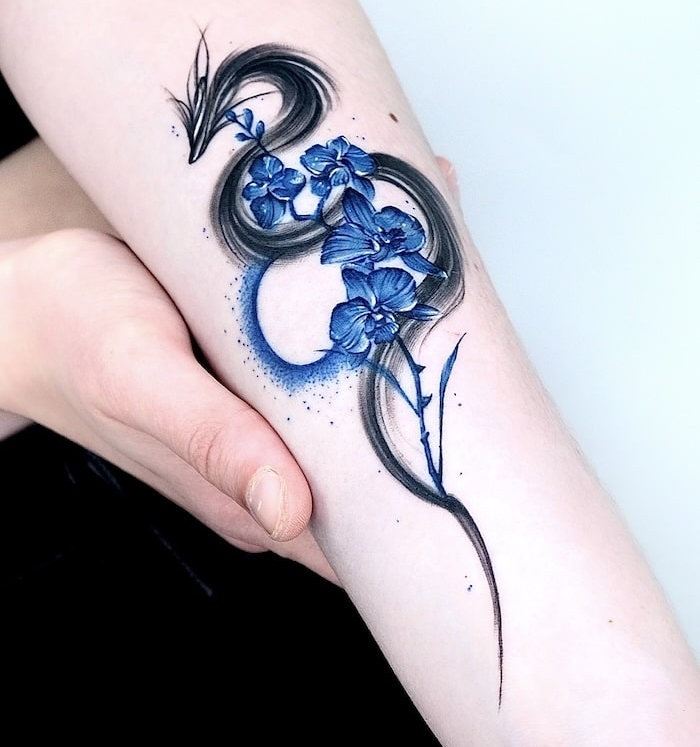
Radiant. I try to carry positive energy both in my life and in my work, and I believe that energy naturally reflects in my tattoos. Just like my work is colorful, I hope to bring bright energy to the people around me.
- Where did your fascination with tattoos come from?
I originally studied fashion design. What fascinated me about tattooing was the idea that a unique design I created could become a permanent part of someone’s body. It goes beyond simply drawing an image—it becomes something that stays with a person for their entire life. That idea deeply drew me into tattooing.
- What does tattooing mean to you personally?
For me, tattooing is not just a job or a culture—it’s life itself. It’s hard to describe my life without tattooing, because my life has flowed alongside it.
- At what point in your life did you decide to become a professional tattoo artist?
After studying fashion design, I worked at a women’s clothing brand. However, I gradually became tired of the copy culture that was often taken for granted in the industry, and the feeling that I could never truly be the author of my own designs.
When I was twenty, I received my first tattoo, which I had been looking forward to for a long time. That experience became a very special memory for me, and from that point on, I began to seriously think about pursuing tattooing as a career.
- How did your family react when you started a career in tattooing?
I actually told my parents after I had already established myself to some degree. Until then, they believed I was still working at a company, so they were initially surprised and a little disappointed.
However, they soon understood that I had chosen a more independent and self-directed path in life. They congratulated me and supported my decision. Now they continue to encourage me as they see how much I enjoy my work and how I continue to grow through it.
- Did you go through an apprenticeship? How was that experience?
I didn’t go through a formal apprenticeship. Most of what I learned came from teaching myself and developing my skills independently. It wasn’t an easy process, and it took a long time, but because of that, I believe I was able to build a strong foundation and develop my own convictions about my work.
- What did your first tattoo look like?
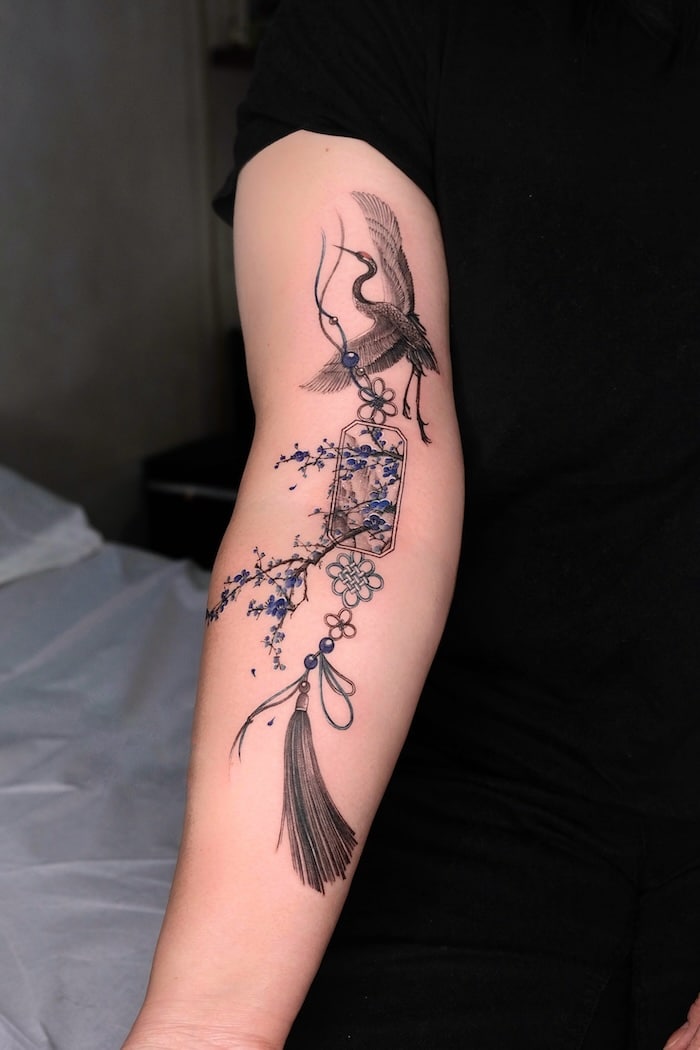
My first tattoo was done on a close friend. I practiced extensively on fake skin before doing it, so when I look back at it now, I’m still fairly satisfied with the result. Because of that experience, that friend jokingly became my lifetime free tattoo client.
- Do you usually do guest spots? If yes, what’s your experience in doing them?
Over the past two years, I’ve spent less than six months in Korea because I’ve been traveling so frequently for guest work.
Meeting people from different countries who love my work—regardless of nationality, language, or background—still feels like a small miracle to me. I’m always grateful for it. Because of the clients who seek me out, my life has become much more colorful.
- As a tattoo artist, what does your daily routine look like?
When I’m doing guest work, my entire day revolves around tattooing—from the moment I wake up until I go to sleep. I spend my time drawing, consulting with clients, and tattooing.
When I’m back in Korea, I try to balance preparing for upcoming projects with time for self-development and personal care. One thing that never changes, wherever I am, is exercise. I believe it’s an essential routine that allows me to continue doing what I love in a healthy way for a long time.
- What is one surprising aspect of being a tattoo artist?
Many people imagine tattoo artists as free-spirited illustrators, but in reality, the job involves much more. Beyond designing and tattooing, we also manage consultations, hygiene, photography, marketing, and many other aspects of the process ourselves. In many ways, it often feels like running a one-person freelance business.
- How do you determine the price of a tattoo?
I usually begin by considering the pricing standards within the local market of the country I’m working in. From there, I adjust the price to reflect the value of my work and the quality I provide.
- What’s the most challenging aspect of being a tattoo artist in 2026?
There are now more tattoo artists than ever, and with the rise of AI and the rapid sharing of information and styles, the industry moves very quickly. Because of that, being technically skilled alone is no longer enough.
The biggest challenge is continuing to develop your own style and artistic direction. I try to constantly experiment with new ideas while maintaining my identity and allowing my work to evolve naturally over time.
- What’s the most rewarding aspect of being a tattoo artist?
It may sound simple, but seeing a client’s happiness immediately after finishing a tattoo is always incredibly rewarding.
- What tools and machines do you prefer to use?
I really like the pen machines from FK Irons and continue to use them in my work.
- What’s your number one aftercare advice for clients?
The most important thing I tell clients is not to worry too much. If you simply follow the basic aftercare instructions, the skin naturally heals well on its own. Rather than over-managing it, it’s better to allow the healing process to happen comfortably—just avoid the things you absolutely shouldn’t do.
- How would you define your current tattoo style?
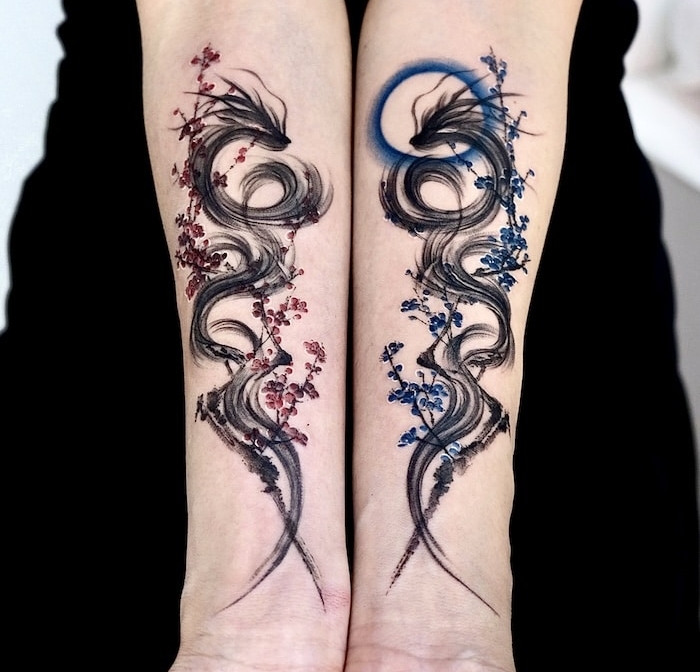
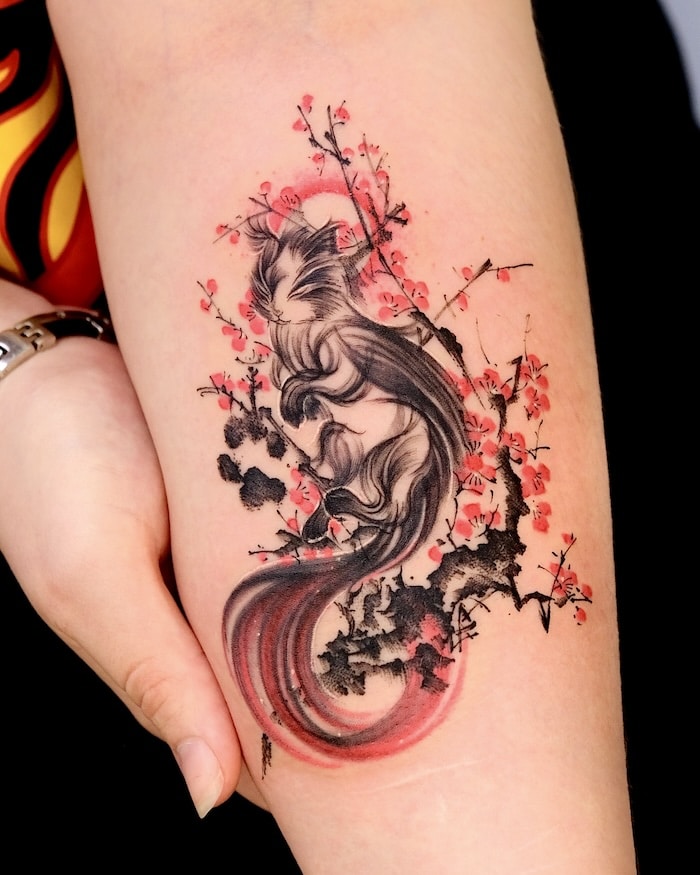
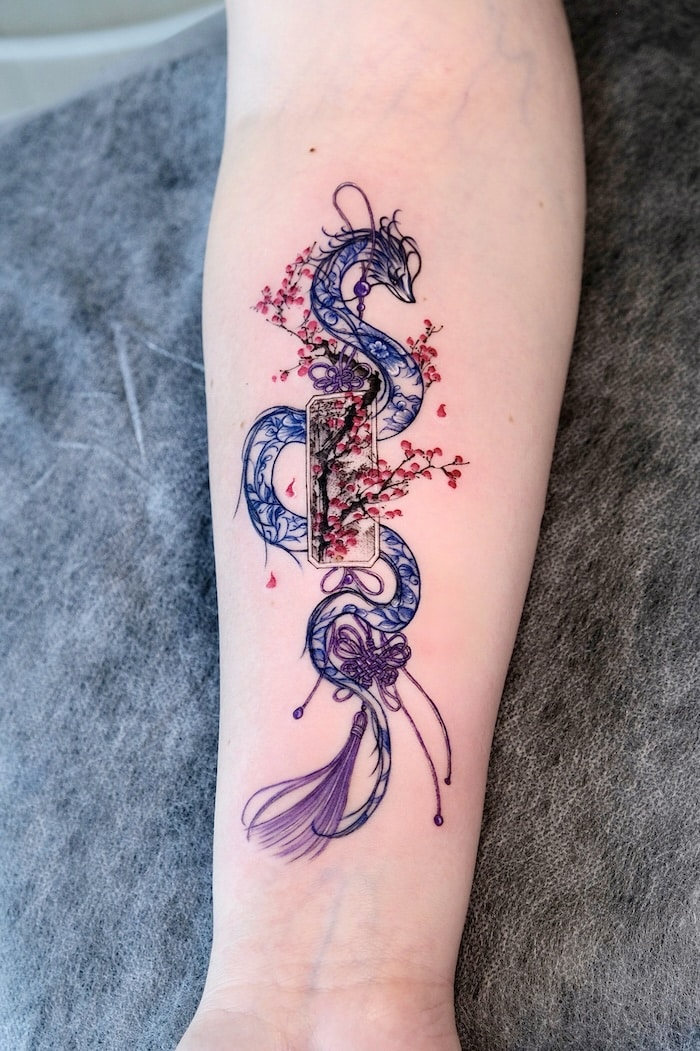
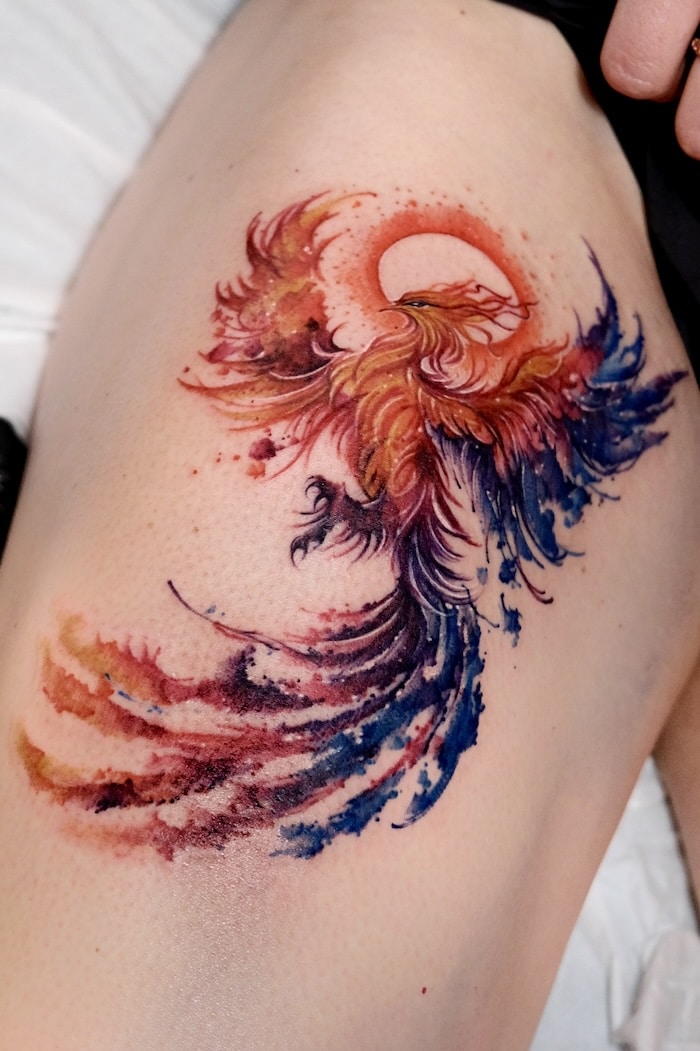
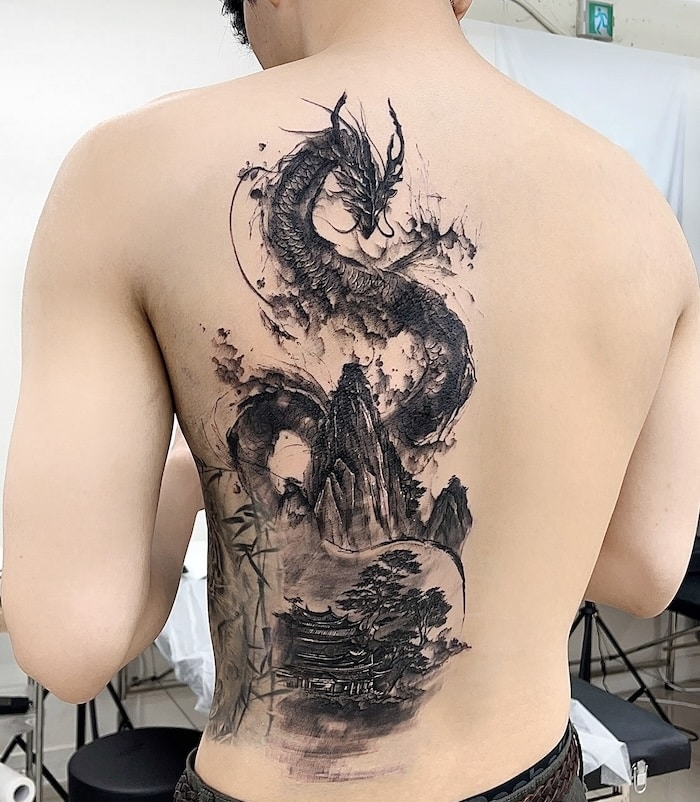
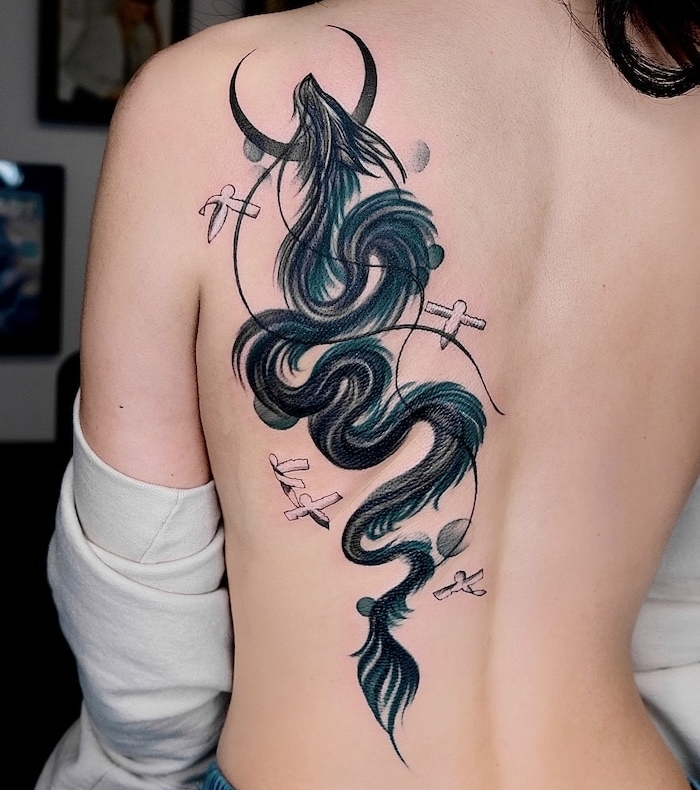
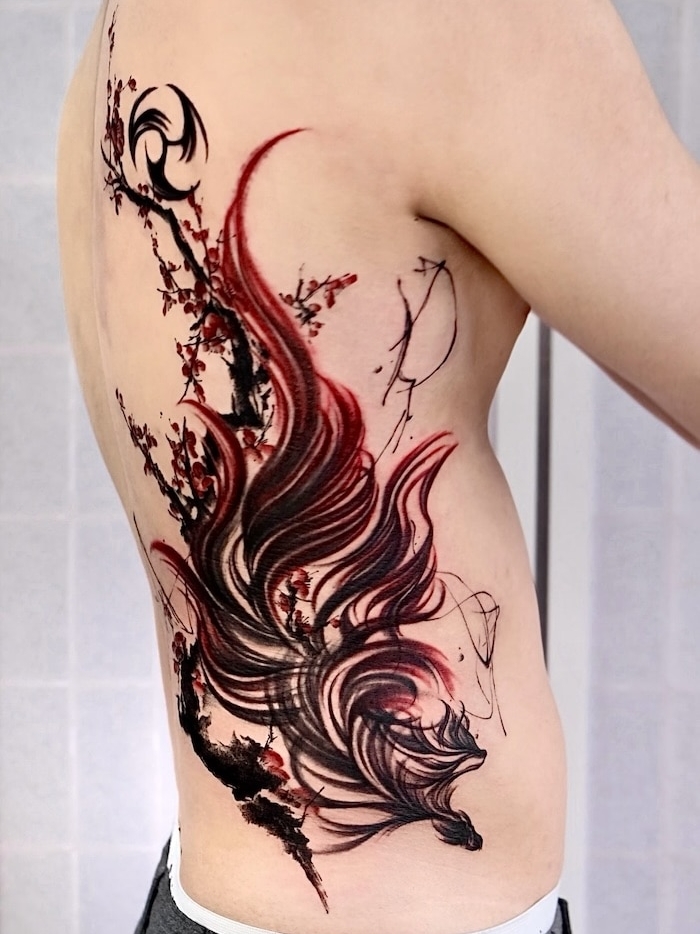
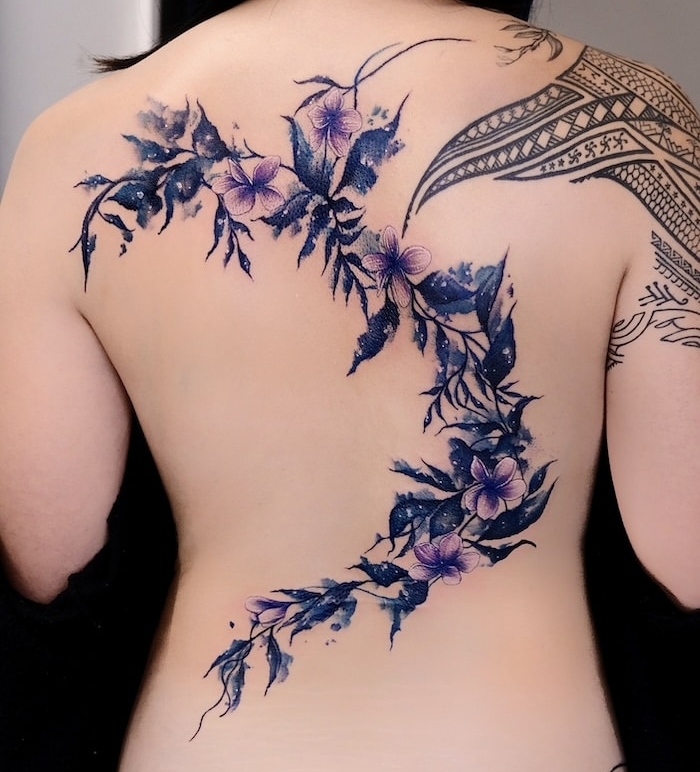
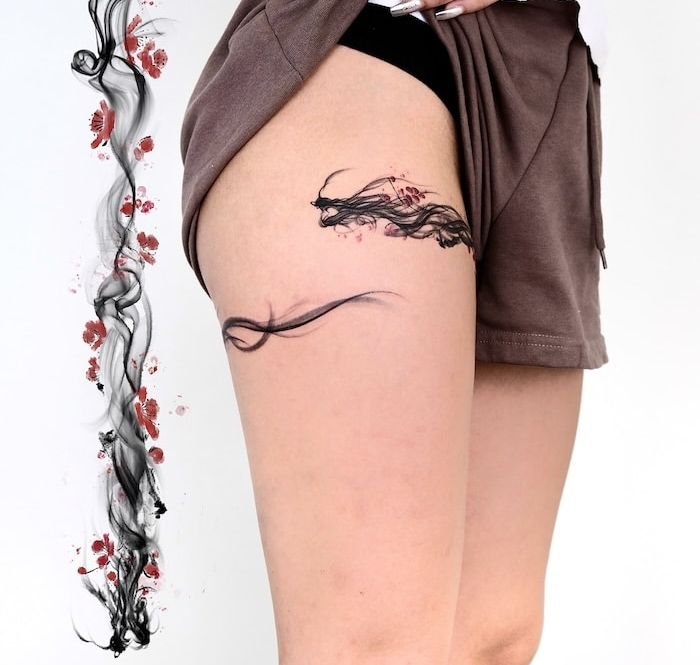
My style combines the flow and aesthetic sensibility of Eastern brushwork with Western color sensibilities to create harmonious and distinctive imagery.
It began from my desire to express both Eastern and Western beauty within a single piece. Through experimentation and exploration, I gradually developed my own visual language rather than following any specific existing style.
- Please walk us through your process when starting a new tattoo.
First, I have a consultation with the client to understand the design they want, and then I prepare the sketch. On the day of the appointment, we decide together on the final placement and size before beginning the tattoo. After finishing, I take photos, explain the aftercare briefly, and cover the tattoo with second skin or wrap before the client leaves.
- How do you stay creatively inspired?
I spend a lot of time observing trends and thinking about how they might connect with my work. While museums and exhibitions can be inspiring, I personally find a lot of inspiration in everyday life.
I like to observe people and cultural movements closely, paying attention to how tastes and trends change. From those observations, new ideas often emerge.
- How do you balance client requests with your artistic vision?
I always prioritize the client’s request. The body belongs to the client, so I believe my role as an artist is to reinterpret their request through my own style. That’s where my artistic vision naturally comes into play.
- Are there styles you’d like to explore more?
Because I’m very attentive to trends, I enjoy incorporating contemporary influences into my own style to create something new. Recently, I’ve been particularly interested in exploring designs that combine my style with geometric elements.
- What’s the most underrated tattoo style?
Irezumi. I think it’s an incredible genre—the artists, the work, and the clients all embody a very powerful presence. However, in Asia, especially in Korea, it’s often undervalued due to certain social perceptions.
- What’s the most overrated tattoo style?
I don’t believe any particular style is overrated. Tattoo culture grows through the coexistence of many different styles, and each one has its own unique charm.
- Are there any tattoos you prefer not to do?
I originally started as an all-around tattoo artist, so there isn’t any specific type of tattoo that I refuse outright. However, I believe the best results come when a design aligns well with my style.
That said, I don’t take on traditional Irezumi projects because it’s not a field I specialize in.
- Do you have sponsors?
Currently, I use second skin products supported by Emalla. It’s a very convenient product for aftercare, and I apply it to clients after finishing their tattoos.
- What tattoo ethics are important to you?
A tattoo doesn’t end as just a drawing—it becomes part of someone’s story and memory. Because of that, I believe the most important ethic is respecting the meaning that the tattoo holds for the client.
- How do you keep learning as an artist?
Beyond tattooing itself, I try to develop various skills that help sustain my career—design, marketing, photography, and editing. I believe it’s important to grow these abilities in balance so I can both protect my work and present it effectively.
- Do you mentor upcoming artists?
I don’t actively pursue mentoring at the moment because I’m focusing on my own growth. However, if my experiences or thoughts can help someone, I’m always happy to share them naturally.
- What was the best advice you’ve received?
Rather than advice from someone else, it’s something I often remind myself: don’t be afraid to try new things, and never lose consistency. I try to keep those two principles in mind at all times.
- How do you stay at the top of your game?
To maintain both creativity and stamina, I try to keep a consistent routine in my daily life. I want to continue exploring new ideas while also taking care of my physical condition so I can sustain this work for a long time.
- What separates a good tattoo artist from a great one?
I believe a good tattoo artist can be shaped through effort and conviction. But a truly great tattoo artist is someone where talent exists on top of that effort.
- How do you feel about the growing acceptance of tattoos?
As a Korean tattoo artist, I feel this change very strongly. I hope that tattoos will gradually be seen not as something heavy or unusual, but simply as a natural part of culture.
- What’s the biggest misconception about tattoos?
In many parts of Asia, there is still a tendency to associate tattoos with negative lifestyles or images. I believe that’s one of the biggest misconceptions. Tattoos are simply a form of expression and a cultural practice.
- What’s the biggest trend in the last five years?
In recent years, global interest in Eastern culture has grown significantly. Because of that, Oriental styles such as brushstroke aesthetics and East Asian painting influences have become a strong trend.
- What’s your view on AI in tattooing?
Tattoo artists often manage many stages of the process alone—from design to consultation—so AI can be useful as a tool. However, when it comes to design, I believe it’s important to go beyond simple reference and maintain your own style.
- What would you change about the tattoo industry?
In Korea, there has been a rapidly growing industry around quick tattoo courses. I hope the culture can move more toward genuine learning under mentorship and growing through personal experience rather than extremely fast training.
- Do you work on other projects within the tattoo industry?
Not at the moment.
- Do you do other forms of art besides tattooing?
Yes, I also work on oriental-style painting.
- Who do you admire in the tattoo community?
One artist I deeply admire is Gb Kim. I waited a long time to receive a full sleeve tattoo from him because I truly loved his work. Watching how he prepared and approached the process taught me a lot about the mindset of a tattoo artist.
- Is there a tattoo you’re particularly proud of?
One piece that stands out is a full-back tattoo inspired by Korean Minhwa painting that I worked on for about a year. The client couldn’t visit frequently, and the piece had a lot of detail, so it took quite a long time.
Unfortunately, I didn’t manage to take proper final photos, but it was my first full-back project, which makes it especially meaningful to me.
- What is your greatest accomplishment as a tattoo artist?
Nine years ago, I started by practicing on my own skin. Now there are people around the world who appreciate my work and travel to get tattooed by me. For me, that alone feels like the greatest accomplishment. Every experience along the way has shaped who I am today and the work I create.
- Any advice for aspiring tattoo artists?
If you come into this field expecting only the glamorous side, you may burn out quickly. But if you can see tattooing as a part of your life and enjoy growing alongside it, then it’s definitely worth pursuing.
- What are your goals for the near future?
I would like to start participating in tattoo conventions. Because of my frequent guest work travels, I haven’t had many opportunities to attend conventions so far. In the future, I want to prepare for them, share my work with more people, and continue growing as an artist.
- What legacy do you want to leave?
I believe the work I’m creating now already forms part of my legacy. Rather than focusing on leaving something grand at the end, I hope to continue creating meaningful and beautiful work that will naturally become my legacy over time.
- To close this awesome interview, what’s your last message to our readers?
Thank you for taking the time to read this interview and showing interest in my work and story. I look forward to connecting with more people through my tattoos in the future.
 |

Leave A Comment