

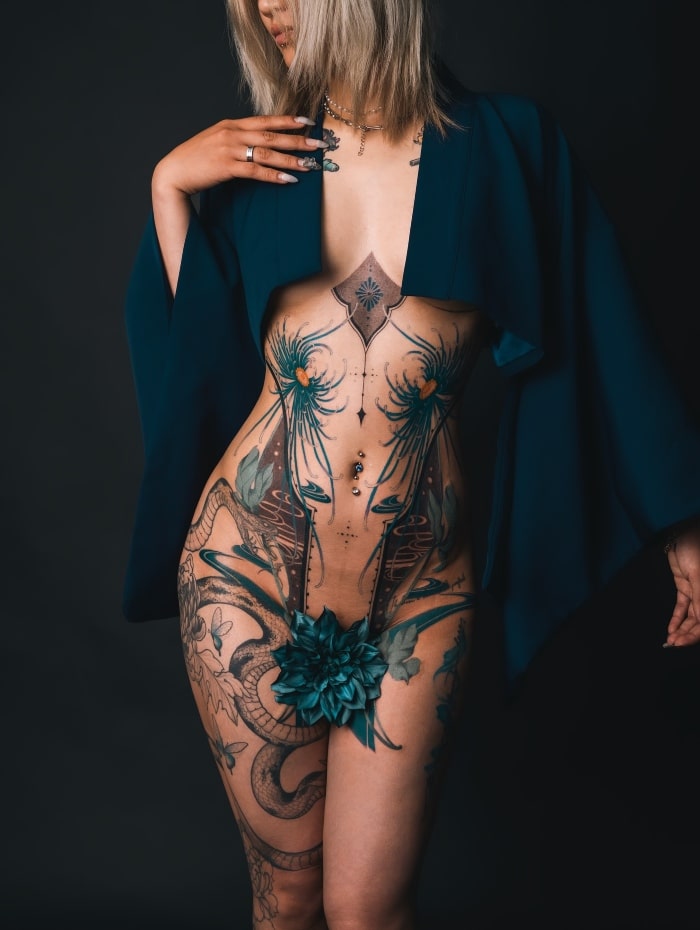
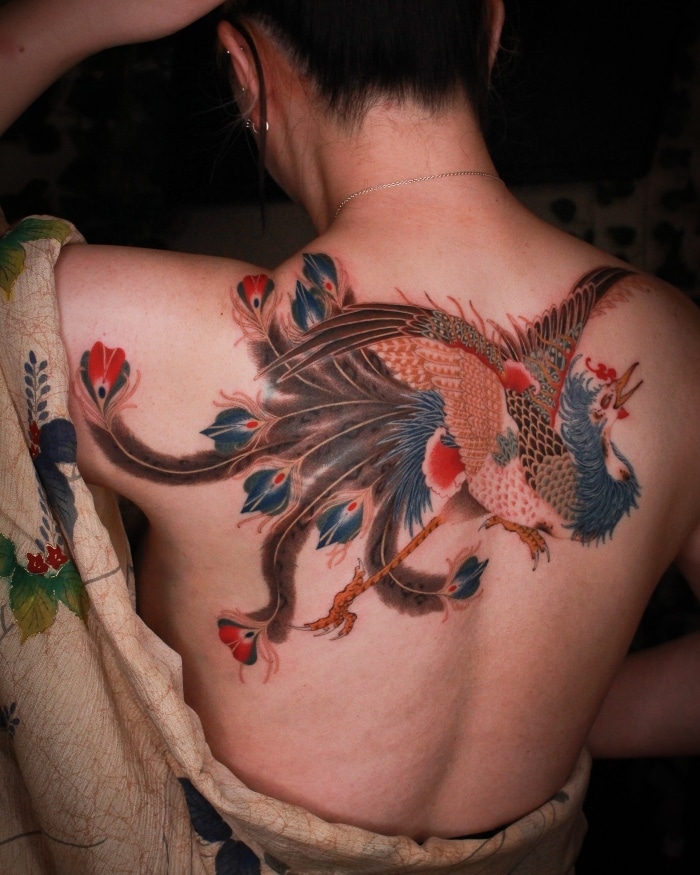
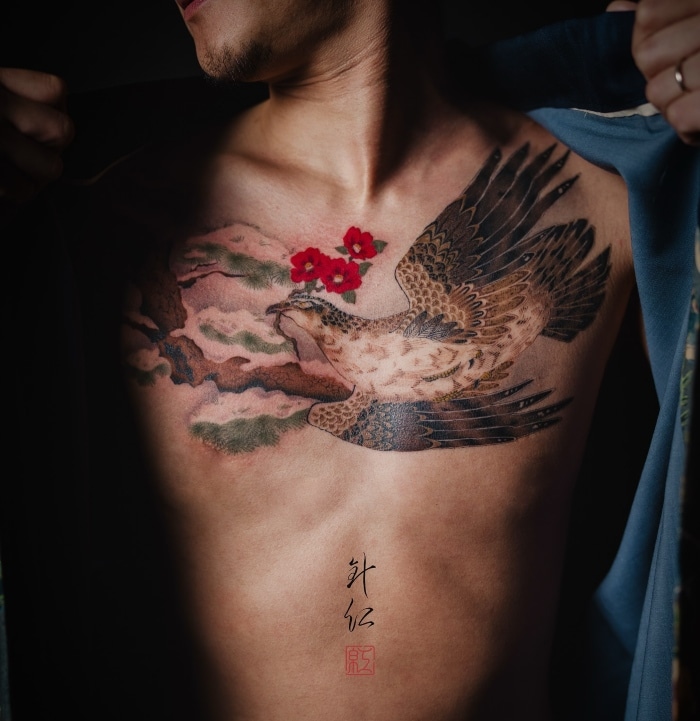
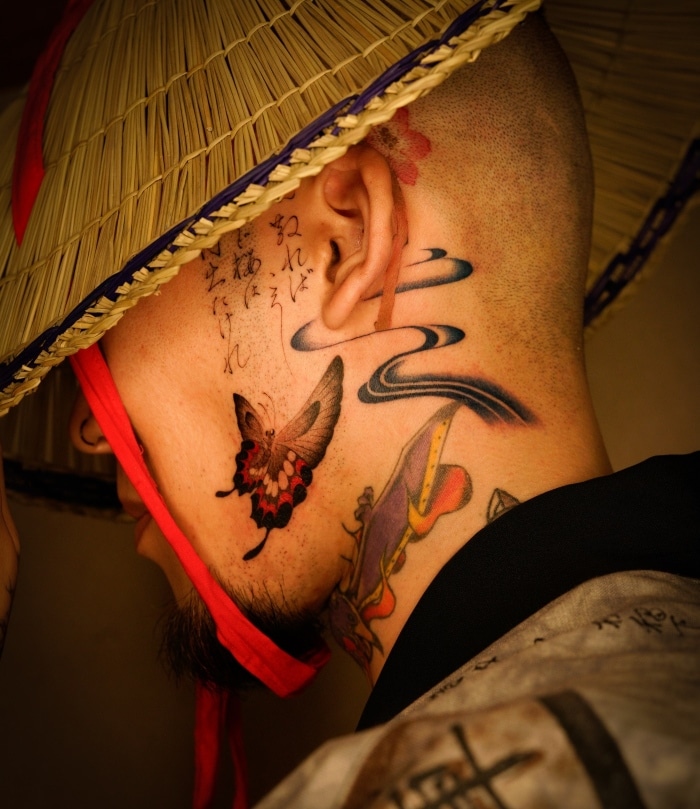
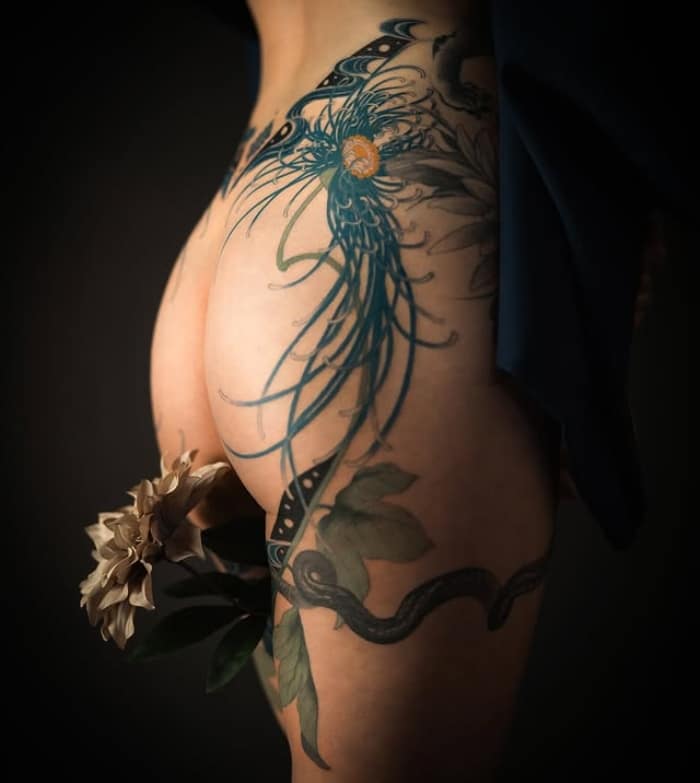
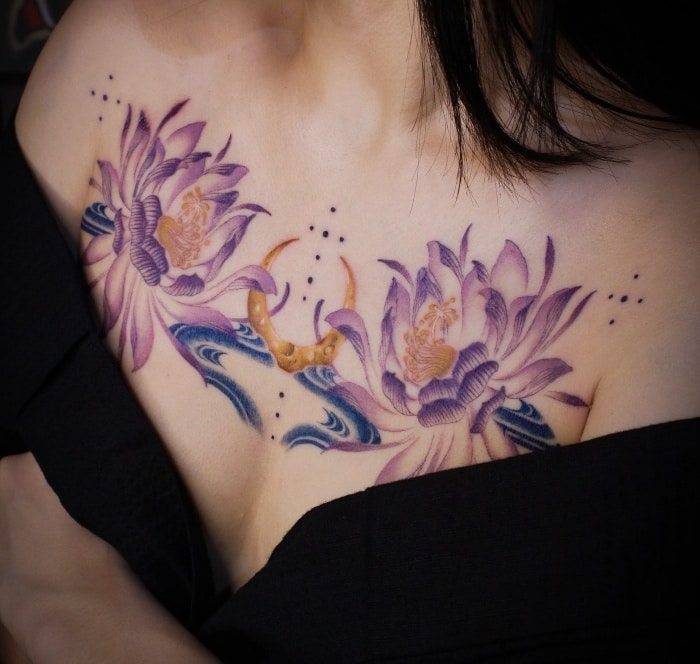
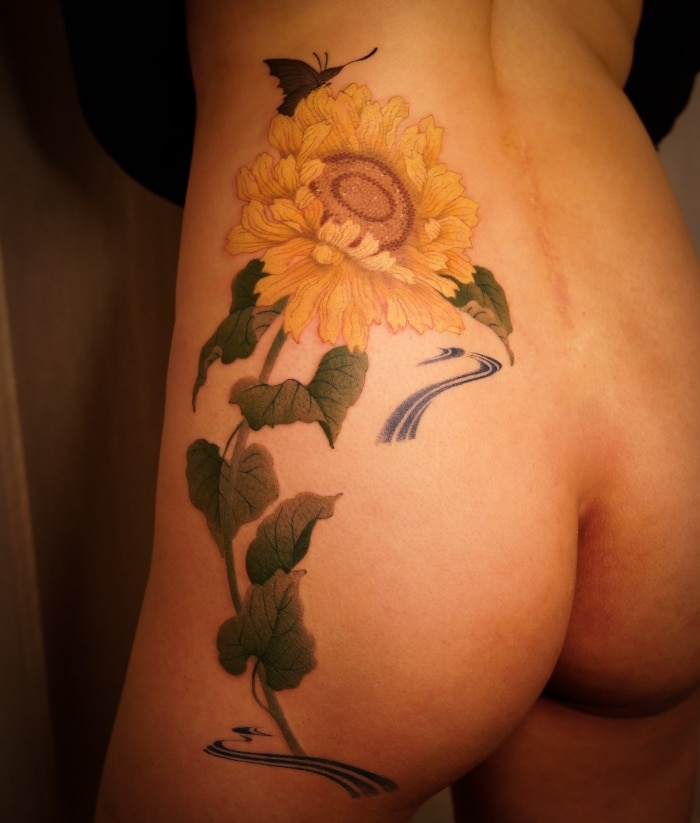
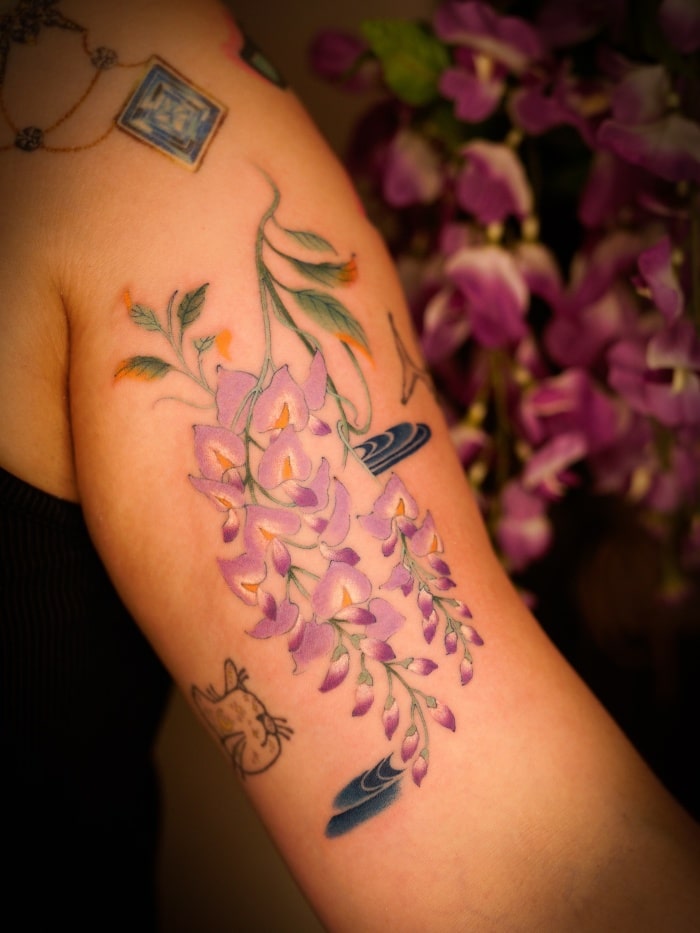
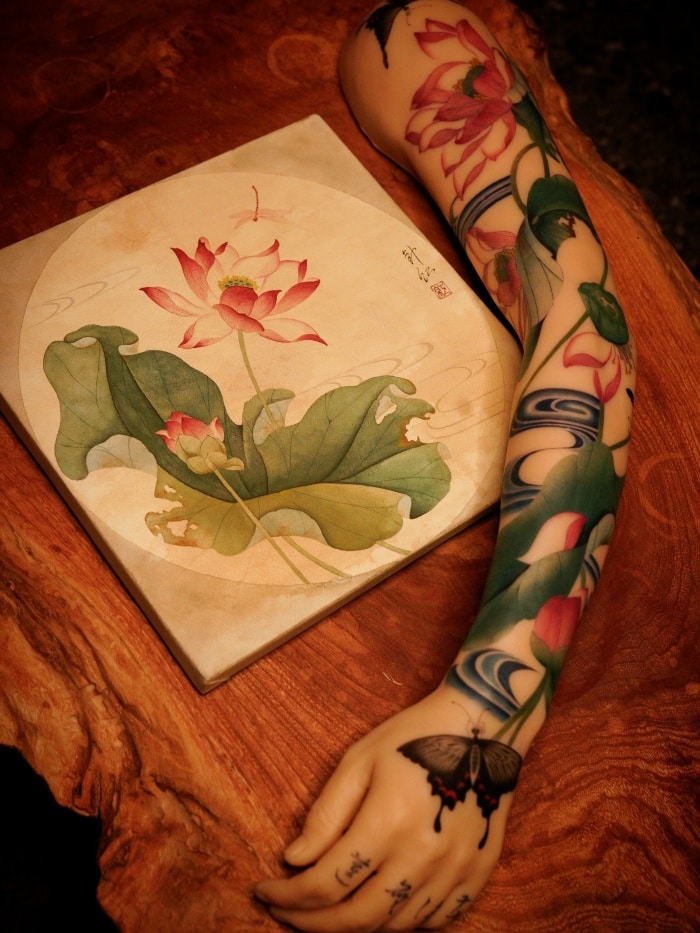
Sink is a tattoo artist whose work is deeply influenced by traditional Japanese arts such as ikebana, kimono, and ceramics. Rather than trying to modernize or alter existing Japanese tattoo traditions, she explores new possibilities through Alter Traditional – a style she developed together with her husband, Ivoly, by imagining how tattooing in Japan might have evolved under different circumstances.
From body painting and makeup work to building a practice grounded in cultural awareness and personal expression. She reflects on the changing tattoo scene in Japan, the challenges of protecting originality in the age of social media, and her vision of opening a tattoo museum in Osaka to support and educate future artists. Throughout her work, Sink values tradition, continuous learning, and long-term thinking using tattooing not only as a profession, but as a way to share the quiet, often unseen beauty of Japanese culture.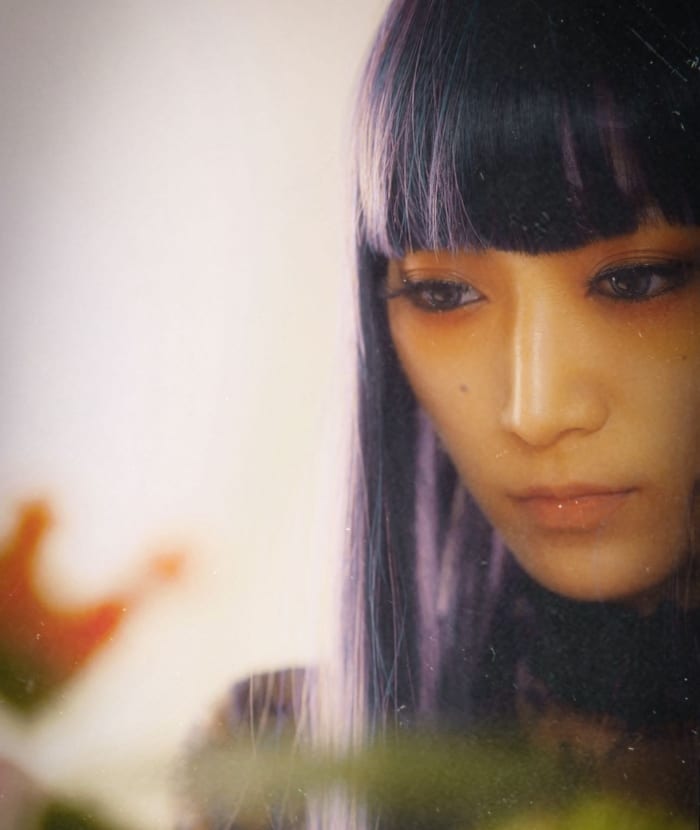
For the readers who are not familiar with you, how would you introduce yourself?
Hello, I’m Sink, a tattoo artist based in Japan. My designs are inspired by traditional Japanese arts such as ikebana, kimono, and ceramics.
Your path into tattooing wasn’t a direct one, can you share how your earlier work led you to this craft?
I used to work at Universal Studios Japan doing zombie makeup and body painting, and later at a paint manufacturer. After meeting my husband, Ivoly, I became deeply fascinated by the art of tattooing.
Where are you based?
I’m based in Osaka, western Japan. Here, I learn from the deep-rooted traditions of places like Kyoto and Nara, which preserve older cultures than Tokyo.
How do you see the tattoo scene in Japan today?
After the pandemic, the business side has grown stronger, but Japan’s unique tattoo traditions are fading. That’s why we’re planning to open a tattoo museum in Osaka to educate the next generation.
How would you define your current tattoo style and how did you end up focusing on it?
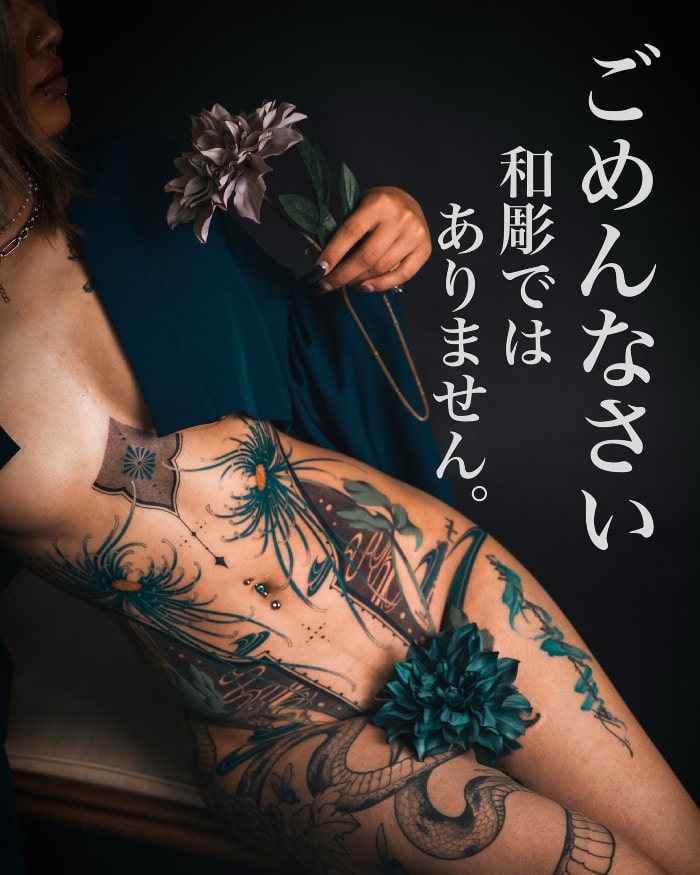
Together with Ivoly, I developed the “Alter Traditional” style, imagining what Japanese tattooing would look like if its origins had been different. I do this because I believe the existing traditional tattoos in Japan are already perfect.
Please walk us through your process when you start a new tattoo for your customers.
I always start by listening to my clients’ wishes and then propose a design rooted in the traditional Japanese aesthetic.
What’s the most challenging aspect of being a tattoo artist in 2025?
With the rise of social media, it’s hard to spread your work while protecting your unique style and ideas from being copied.
What has been the most rewarding part of your journey so far?
Through tattooing, I get to learn about worlds I never knew and share those discoveries with my clients.
What’s your experience at tattoo conventions so far?
I joined my first convention in Europe in 2024.
Did you ever participate at any tattoo contest?
Yes, in 2025, my husband Ivoly and I won 2nd and 3rd place in the sleeve category at Japan’s top event, King of Tattoo.
What’s your primary reason to attend a tattoo convention?
To showcase my work and connect with other tattoo artists.
What’s your favorite tattoo convention so far? And why?
The Tokyo Bay Tattoo Festival, which I started attending in 2024. Held in a hotel banquet hall, it offered close interactions among artists and guests, creating a fun, friendly atmosphere.
What advice would you offer to someone considering a career as a tattoo artist?
Stay true to your own sensibilities and don’t let social media sway you.
Who are the people you admire the most within the tattoo community?
Of course, my husband Ivoly, and the many women artists active worldwide who give me courage. I also deeply respect Japan’s legendary tattooists for both their skill and character.
What’s your biggest accomplishment as a tattoo artist?
Being featured in a traditional art exhibition in Japan, where tattoos still face prejudice, was a proud milestone for me.
Do you do other forms of art besides tattooing?
Yes, I’ve practiced kung fu since childhood, winning second place in the world. Now, I study ikebana to deepen my understanding of Japan’s traditional spirit.
What are your goals or dreams for the near future?
My first goal is to open a tattoo museum in Osaka to mentor future artists. I also hope to grow by joining major conventions and becoming part of my dream brand’s pro team.
Do you have a sponsor? If so, what could you tell us about your sponsors?
Yes, I’m part of the pro team for Xtreme, an American tattoo ink brand. Their vibrant colors are now essential for me.
Is there anything else you would like to tell our readers?
I will continue to share the hidden beauty of Japan with the world. Thank you for reading.

Leave A Comment