

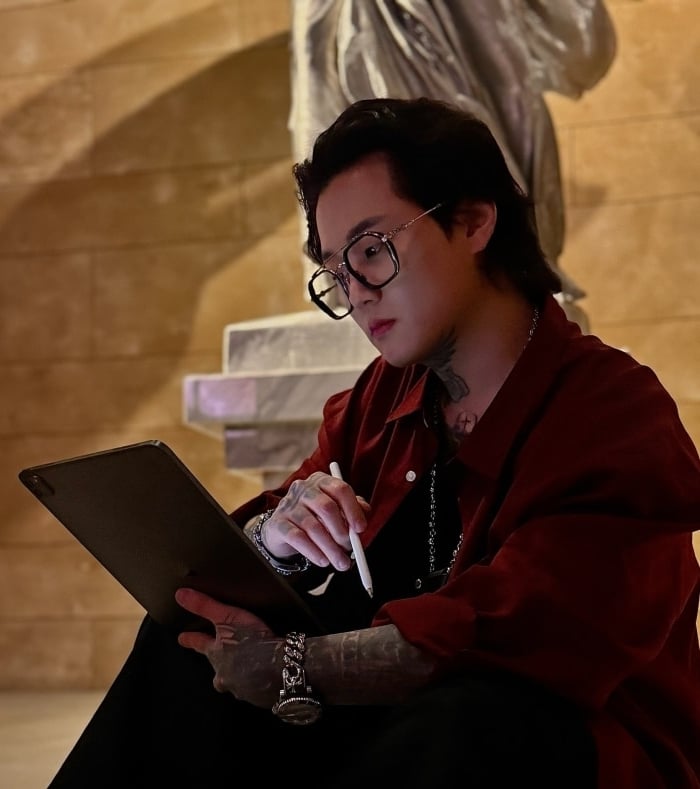
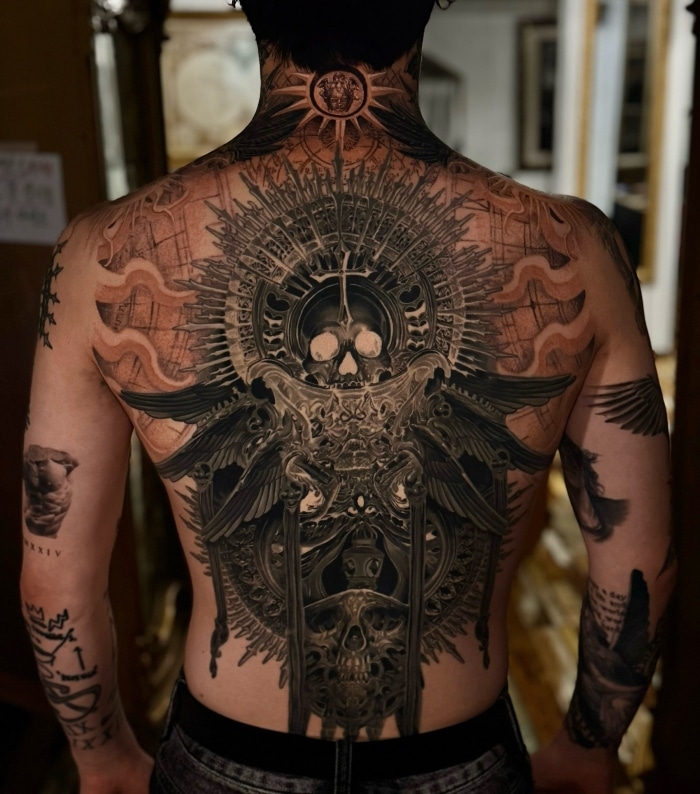
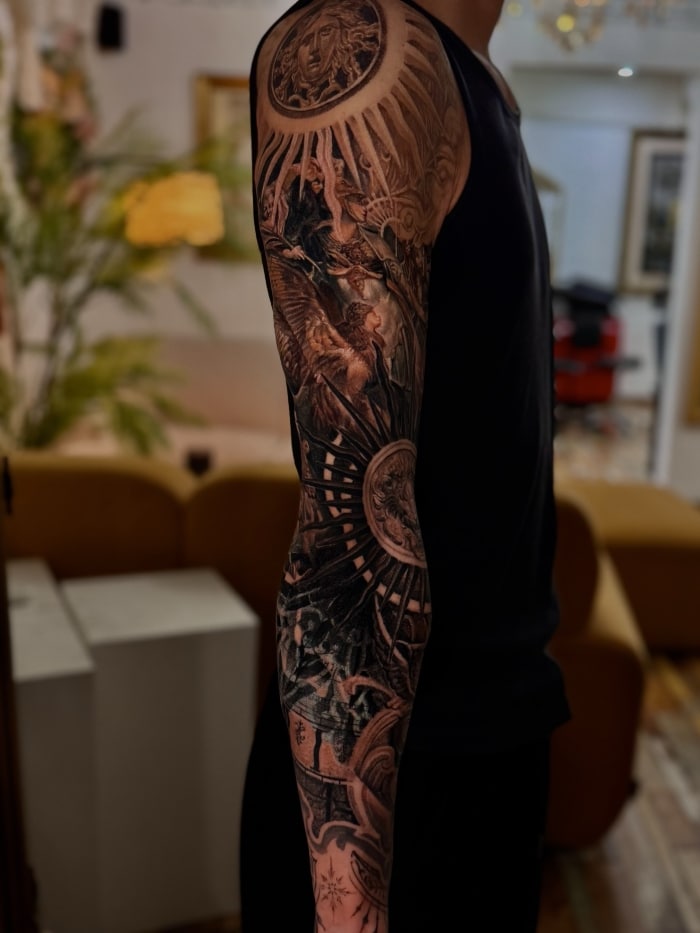
Judas is a Seoul-based tattoo artist recognized for large-scale monochromatic compositions built on the principles of color realism. Working primarily in expansive pieces, his tattoos emphasize structure, anatomy, and subtle tonal depth to create sculptural designs that interact with the body itself.
Through his self-developed style, which he calls Warm Grey Bespoke, Judas blends classical art concepts with modern tattoo techniques. By mixing color inks to match individual skin tones while maintaining low saturation, he creates tattoos that appear nearly monochrome yet retain the richness and dimension of color realism.
Working during a historic turning point in Korea’s tattoo industry, Judas approaches tattooing not only as a craft but as a philosophy. His work reflects a balance between technical precision, client collaboration, and long-term artistic growth while exploring how tattoos can function as both personal expression and evolving cultural artifacts.
Let’s step into his world.
- How would you like to introduce yourself?
I am Judas, a tattoo artist based in Seoul. My work focuses on large-scale monochromatic pieces built on the foundation of color realism.
- Where can your customers find you in Seoul?
Currently, I work at a studio located in the Hongdae area of Mapo-Gu in Seoul, South Korea.
- How would you describe the tattoo scene in Korea these days?
Korea’s tattoo scene is currently going through a major turning point. For a long time, South Korea was one of the few countries where tattooing could not legally be practiced by tattoo artists themselves, and tattooists were often treated as criminals under the law. Recently, however, tattoo artists have begun going through formal legalization procedures for the first time, and related legislation is being developed. Because of this, the industry is now at an important moment where both public perception and the overall culture surrounding tattoos are beginning to change.
- How would you define yourself in one word?
- Where did your fascination for tattoos come from?
Around the time I became an adult, I received my first tattoo. What fascinated me was how tattoos combine personal values, symbolic or even ritual meaning, and aesthetic design within a single medium. That combination felt extremely powerful to me.
- What does tattooing mean to you personally?
Tattooing is both a medium through which I witness my own growth and a reflection of my personal aesthetic philosophy.
- At what point in your life did you decide to become a professional tattoo artist?
When I was studying fine art, I was experimenting with painting across different mediums and going through a period of deep artistic reflection. At that time, I became fascinated with the idea that tattoos transform each individual into a living exhibition space where art is permanently carried and experienced. That realization led me to pursue tattooing professionally. In many ways, I began to see tattooing as one of the most accessible forms of fine art.
- How did your family react when you started a career in tattooing?
They strongly opposed it. My family is deeply Christian, so there was significant resistance to the idea. Eventually, I realized persuasion would be difficult, so I chose to continue on my own path.
- Did you go through an apprenticeship? How was that experience?
Interestingly, I am self-taught. At the time, tattoo artists were extremely rare in Korea, and there was very little information available about apprenticeships or formal training. Because of that, I had no choice but to teach myself. Ironically, that experience later became one of the reasons I opened my own tattoo academy.
- What did your first tattoo look like?
My entire left forearm was my first tattoo and essentially became my practice canvas. By my current standards it is a complete mess. I didn’t even know how to assemble a machine properly, the skin damage was excessive, the tone control was poor, and the pigmentation was inconsistent. However, I now use it as a teaching example to show clients what a poorly executed tattoo can look like.
- Do you usually do guest spots? If yes, what’s your experience in doing them?
Yes, I do guest work quite often. For a long time I lived mainly as a shop owner, and it was only after more than ten years in the industry that I seriously began doing guest work overseas. That experience became a major turning point for me.
For many years I followed a principle that I valued strongly: never create your own art with someone else’s money. Because of that, my highest priority was always fulfilling the client’s requests. However, over time this mindset sometimes made my work feel like factory production, which eventually led to burnout. Traveling and doing guest work abroad helped reset my perspective.
New environments create new ideas. Through guest work, I found a way to maintain my commitment to clients while also developing a style that allows me to pursue my artistic direction without compromise.
- As a Tattoo Artist, what does your daily working routine look like?
On average, I work about twelve hours a day. I usually begin tattooing around 2 PM and finish around 2 AM. After client sessions, I prepare designs for upcoming projects and often go to sleep around 7 AM or 8 AM in the morning.
My schedule is largely organized around clients, so I don’t maintain fixed working days.
- What is one surprising aspect of being a tattoo artist?
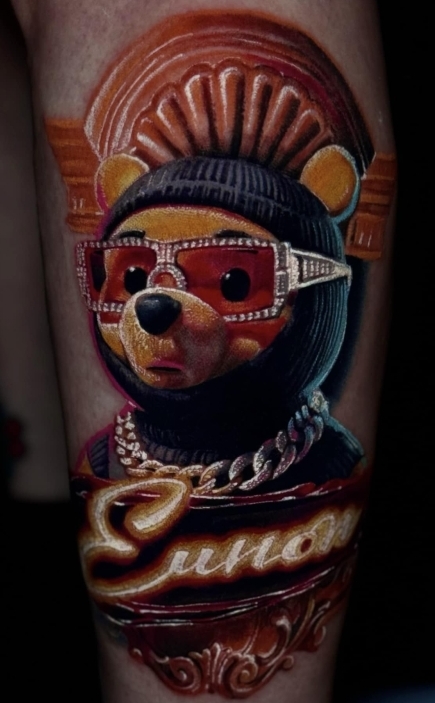
How difficult it is to draw a single clean black line on skin. When I first started, I was surprised by how important the technical control of skin penetration truly is.
- How do you determine the price of a tattoo?
In Korea, I generally use a fixed pricing system based on surface area. I use an A4 sheet as the basic measurement. For example, two A4 pages roughly correspond to the size of a full sleeve on a male arm.
During guest work abroad, however, I typically charge per session.
- What’s the most challenging aspect of being a tattoo artist in 2026?
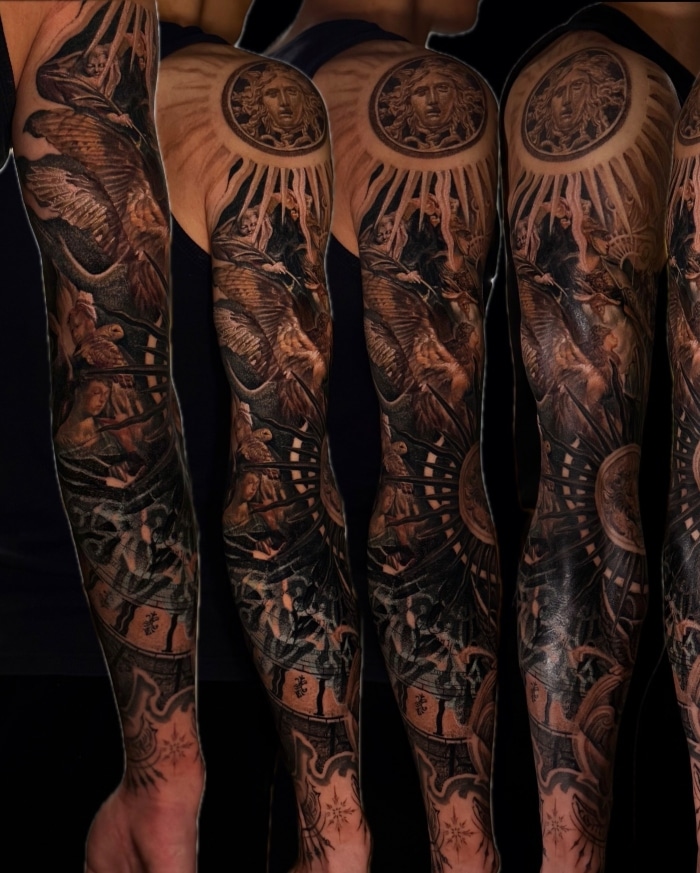
Visually correcting body proportions through tattoo design. For me, this is both the most challenging and one of the most fundamental aspects of tattooing.
- What’s the most rewarding aspect of being a tattoo artist?
When a client feels proud of their tattoo. At that moment I know I have created real value.
- What tools and machines do you prefer to use?
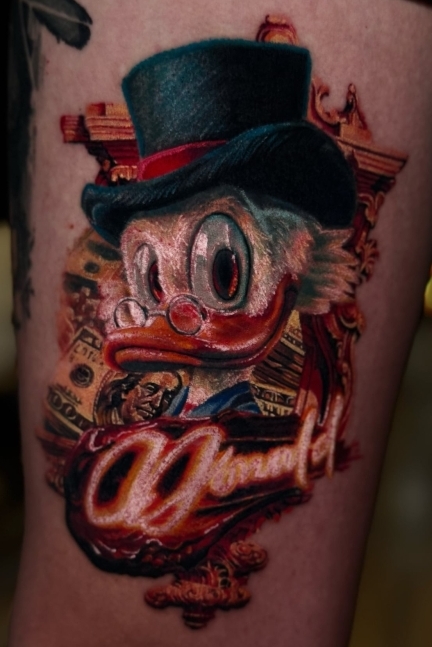
Currently I use the Pepax H2 machine. For inks I use several brands depending on the color, including Eternal Ink, Intenze, World Famous Ink, and Kuro Sumi. I mainly work with Kwadron needles.
- What’s your number one aftercare advice for clients?
In my view, the most important “aftercare” actually happens before the tattoo begins.
If tissue damage during the tattoo process is minimized, the healing process becomes much smoother. Controlled skin penetration reduces inflammation and allows pigment to settle correctly in the skin.
Because of that, preparation before the session—such as proper sleep, avoiding alcohol, and maintaining good health—can be more important than many aftercare products.
- How would you define your current tattoo style?
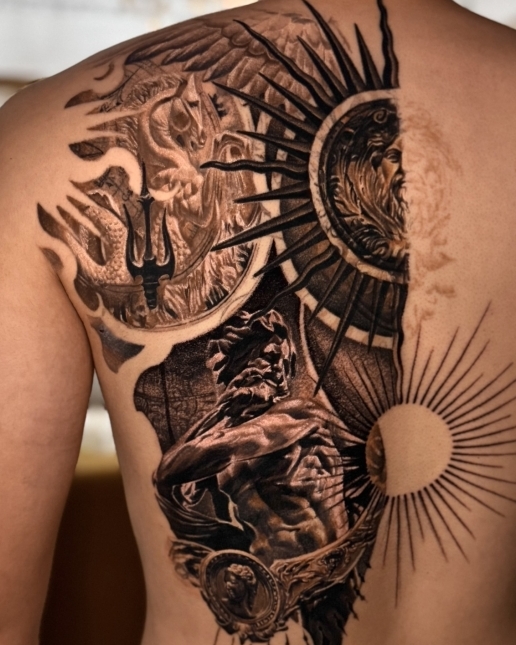
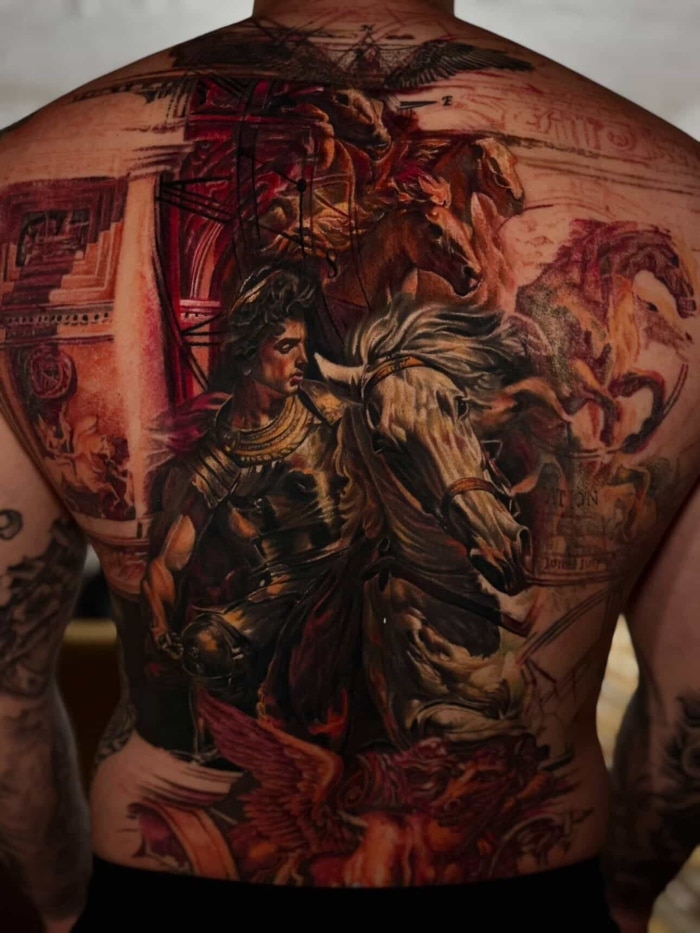
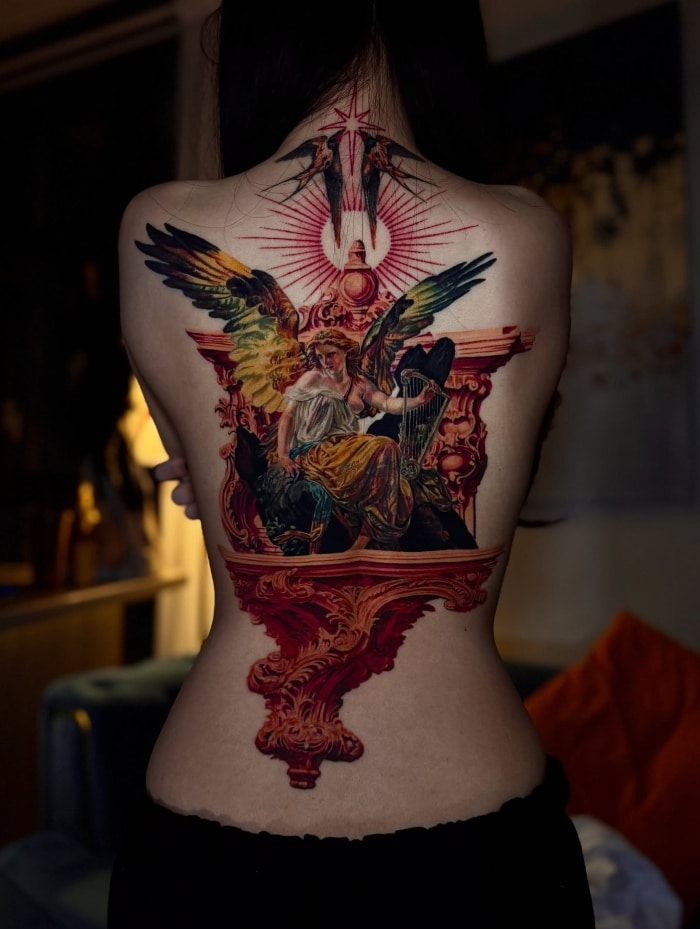
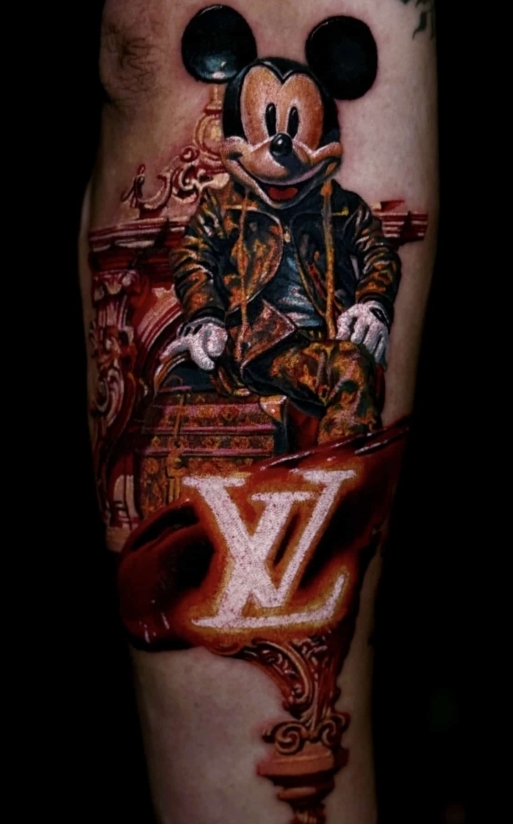
My work focuses on large-scale monotone tattoos built on the principles of color realism.
I personally call the style Warm Grey Bespoke. By mixing colored inks that match the client’s skin tone and reducing overall saturation, I create tattoos that appear almost monochrome while still retaining the depth of color realism.
- Please walk us through your process when you start a new tattoo.
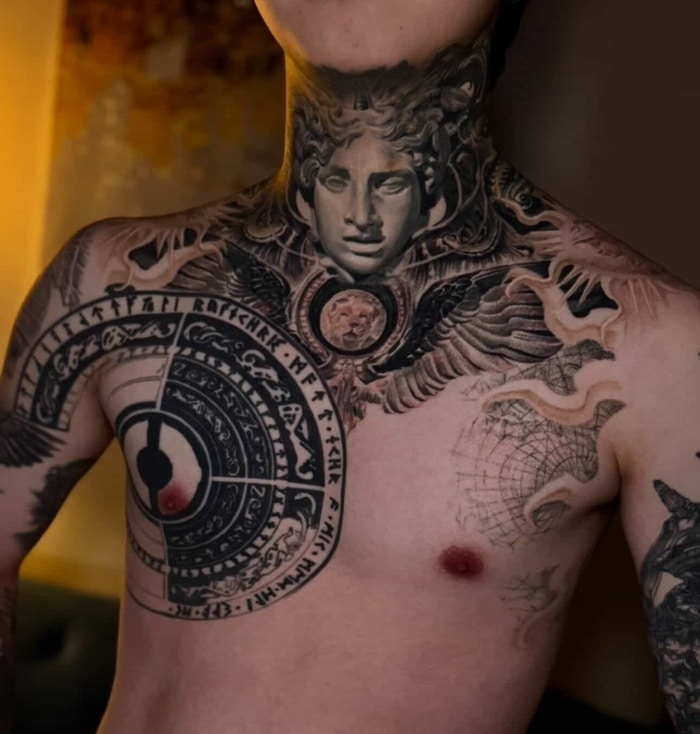
I first photograph the client’s body to analyze placement and composition. Then I design a structural framework that fits within the client’s budget. After that, we conduct a deeper consultation about their values, references, and direction.
From there, I analyze anatomical elements such as bone structure and muscle length to determine how the design should visually correct or enhance the body’s proportions.
- How do you stay creatively inspired?
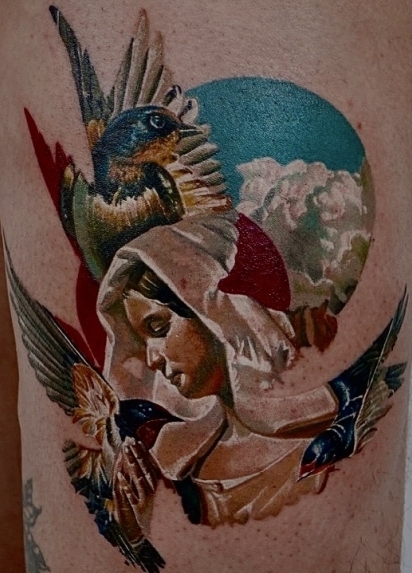
Through continuous training. Creativity is not simply spontaneous inspiration—it is something that develops through repetition and discipline until the design process becomes internalized. Much of my training focuses on combining anatomical understanding with compositional design.
- How do you balance client requests with your artistic vision?
Client requests always come first. My role is to fully respect those requests while guiding the design toward the best possible outcome.
- What separates a good tattoo artist from a great one?
A good tattoo artist satisfies their clients. A great tattoo artist changes paradigms.
- To close this awesome interview, what’s your last message to our readers?
Thank you to everyone reading this interview and for your interest in tattoo culture.
Because people continue to care about this scene, I am able to take pride in my work every day. I look forward to the day we may meet in person.


Leave A Comment