

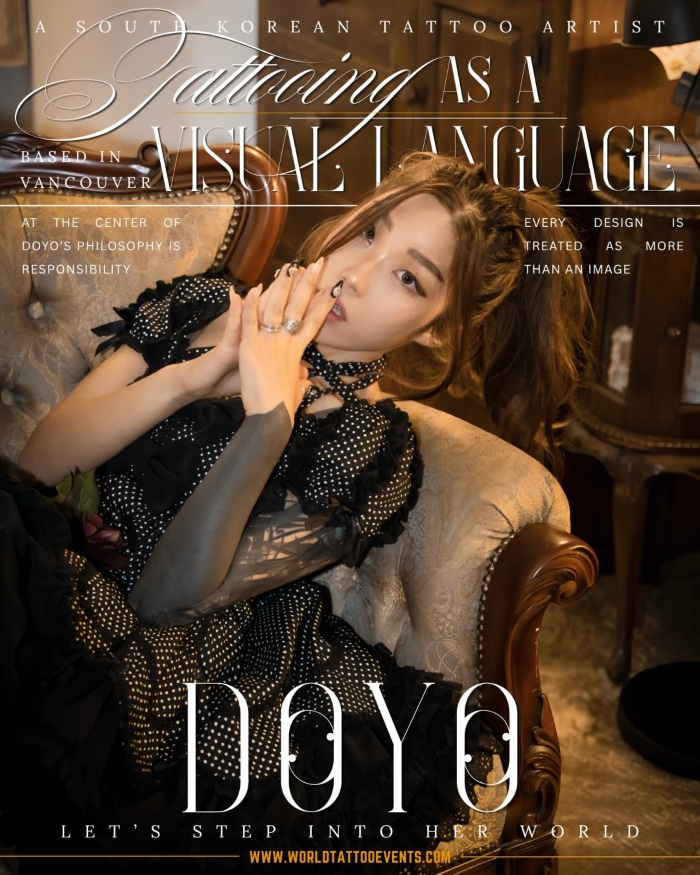
Doyo is a South Korean tattoo artist based in Vancouver whose work moves fluidly between abstract compositions, vintage stamp inspired imagery, and delicate blackwork line designs. Influenced by Eastern aesthetics such as calligraphy, ink painting, and the thoughtful use of negative space, her tattoos carry a quiet atmosphere that emphasizes balance, texture, and subtle emotion. Rather than limiting herself to one style, she approaches tattooing as a visual language that evolves with each collaboration.
At the center of Doyo’s philosophy is responsibility. Because tattoos exist permanently on the body, she believes the process must be guided by honesty, respect, and trust between artist and client. Every design is treated as more than an image. It becomes part of someone’s life story, shaped through careful dialogue, thoughtful composition, and an awareness of how the work will age over time.
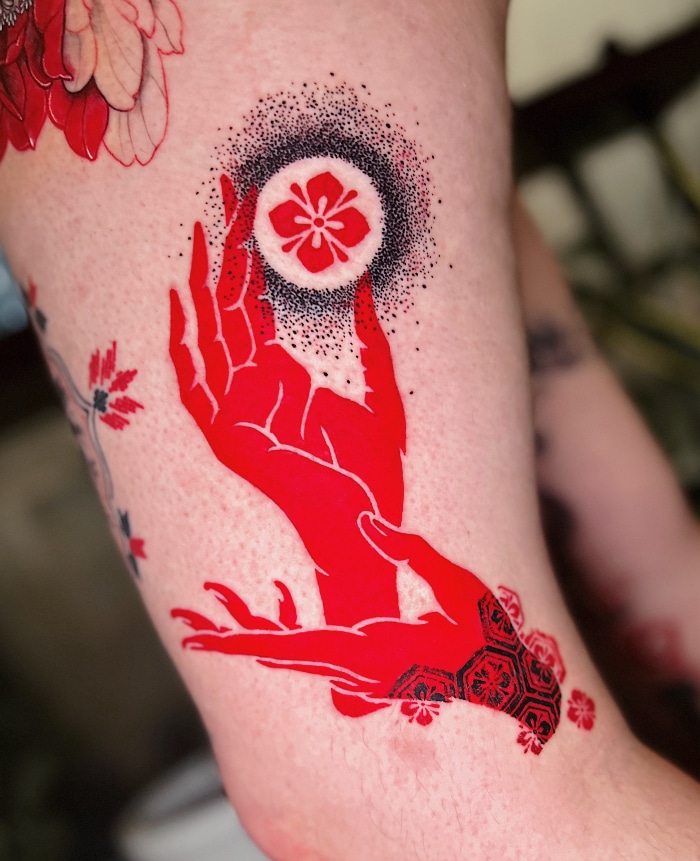
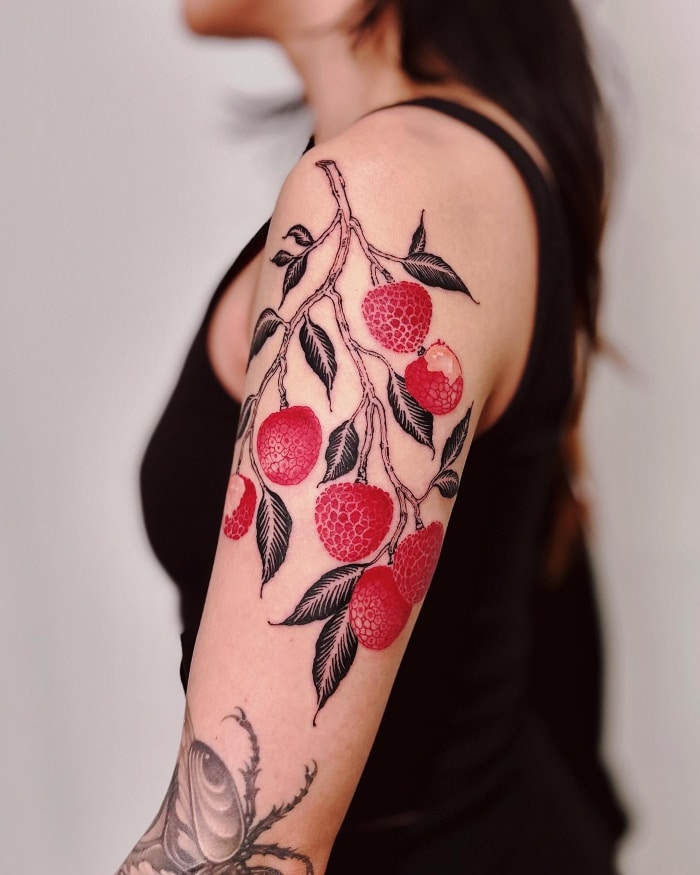
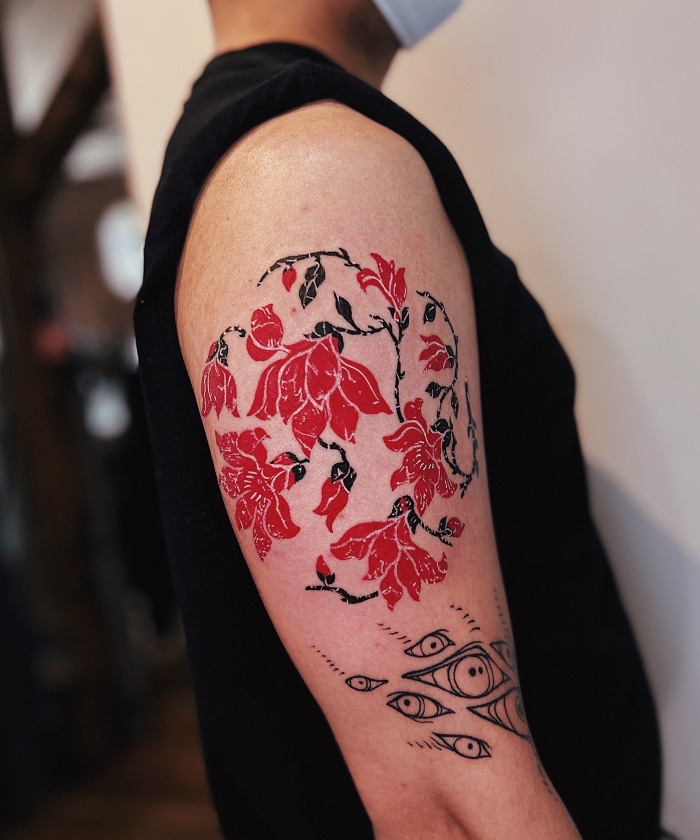
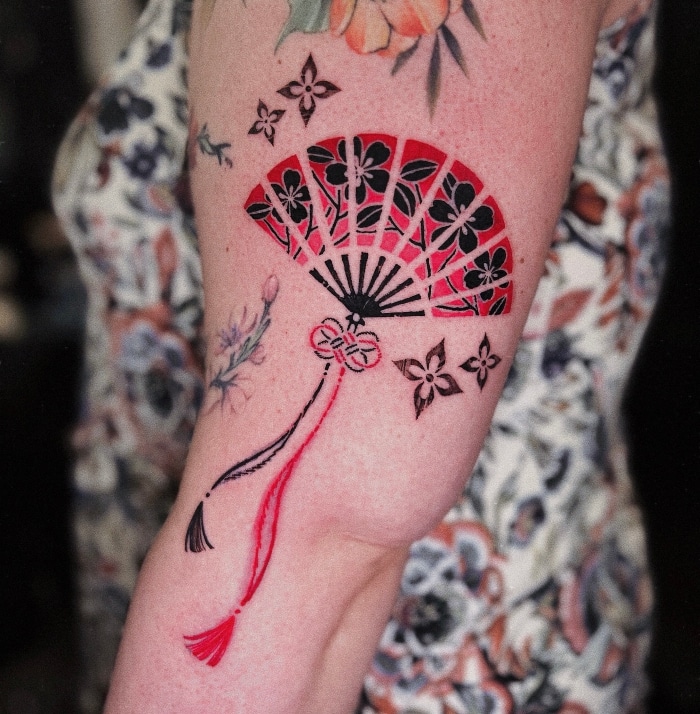
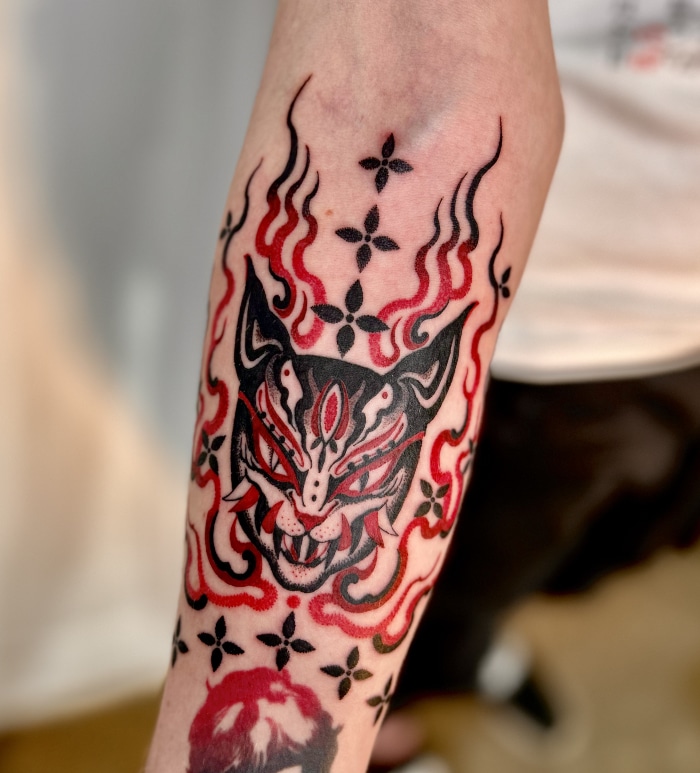
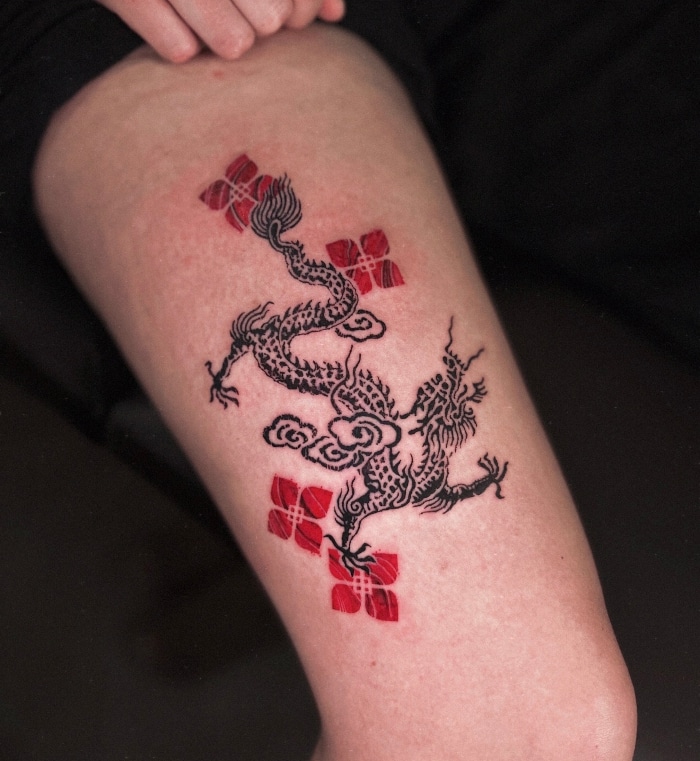
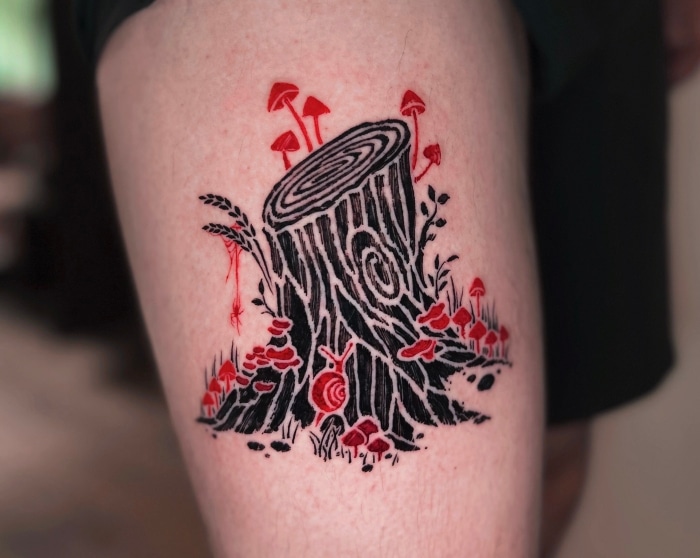
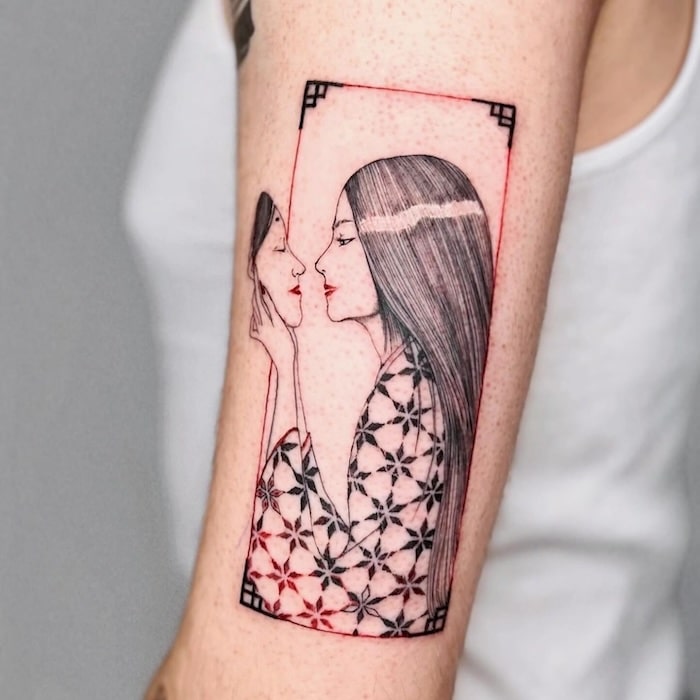
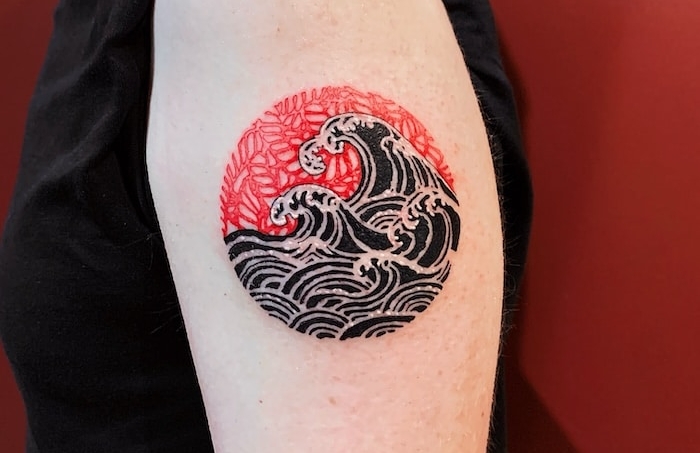
Her distinctive stamp inspired tattoos reflect a fascination with imperfection and the passage of time. Drawing inspiration from traditional printmaking, the designs often incorporate subtle cracks, ink spreads, and worn textures that echo the beauty of aged prints. For Doyo, tattoos function almost like stamps in the passport of a person’s life, quietly marking memories, journeys, and meaningful moments while carrying the presence of the artist’s hand.
Let’s step into her world.
- How would you like to introduce yourself?
My name is Doyo, a tattoo artist originally from South Korea and now based in Vancouver, Canada. I have been tattooing for over a decade, exploring different styles while gradually developing my own visual language.
My artist name “Doyo” combines the characters for path and shine, representing the idea of a shining journey or shining along one’s path. It originally began as the name of my tattoo studio, but over time it naturally became the name people associate with my work as an artist.
- Where can your customers find you in Vancouver, Canada?
I currently work in Gastown at Patchwork Art Studio, and I also travel regularly for guest spots and tattoo conventions in different cities.
- How would you describe the tattoo scene these days?
The tattoo scene has evolved significantly over the past decade. In Korea, despite the complex legal situation, the level of artistry and technical precision is incredibly high and many artists are developing very strong visual identities.
In Canada the environment feels more open in terms of artistic freedom and diversity of styles. Experiencing both environments has broadened my perspective and shaped how I approach tattooing today.
- How would you define yourself in one word?
“Curious”.
- Where did your fascination for tattoos come from?
My fascination with tattoos started quite early. When I was around fourteen, I had already developed a deep interest in drawing, and tattoo culture immediately caught my attention.
It felt like a unique way of transforming art into something living and permanent.
- What does tattooing mean to you personally?
To me, tattooing exists somewhere between art, memory, and human connection. A tattoo is never just an image. It becomes part of someone’s life and experiences.
I see every tattoo as a collaboration between the artist and the person wearing it, built on trust and responsibility.
- At what point in your life did you decide to become a professional tattoo artist?
I first tried tattooing when I was eighteen. Once I experienced the process of creating something directly on skin, I quickly realized how powerful the medium was.
By the time I was twenty, I had opened my first tattoo studio and fully committed to the profession.
- Sounds like a very quick start!
Yes indeed. Opening a studio at twenty was both exciting and challenging. It forced me to grow quickly as both an artist and a professional. Since then, I have continued to develop my work while exploring different directions and influences.
- So you didn’t go through any apprenticeship?
No, I did not follow a traditional apprenticeship path. Instead, I invested in professional training courses and spent a great deal of time learning independently through practice and research.
It required discipline and self-direction, but that process also shaped my work ethic and curiosity about constant improvement.
- How did your family react when you started a career in tattooing?
My parents were very supportive from the beginning. At that time, tattooing was not widely accepted as a profession, but they trusted that I would take my work seriously.
Looking back, their support gave me the confidence to continue pursuing this path.
- What did your first tattoo look like?
Like most artists, my first tattoo was very simple. Looking back, it reminds me how much patience and time it takes to develop technical control.
Those early experiences are important because they teach humility and respect for the craft.
- Do you usually do guest spots? If yes, what’s your experience in doing them?
Yes, I enjoy doing guest spots and attending tattoo conventions. Traveling allows me to meet different clients and connect with artists from many cultures.
Each place brings new energy and perspectives that can influence my work.
- As a Tattoo Artist, what does your daily working routine look like?
My day usually begins by reviewing designs and preparing for appointments. I spend time refining sketches, adjusting placements, and making sure everything is ready before the client arrives.
During the session, my focus is on creating a comfortable and collaborative environment. After tattooing, I often continue drawing, responding to messages, and developing ideas for future projects.
- What is one surprising aspect of being a tattoo artist?
Many people think tattooing is only about drawing or technical skill. In reality, communication and emotional understanding play a huge role.
Listening carefully and understanding what someone wants to express through a tattoo is just as important as the technique itself.
- How do you determine the price of a tattoo?
Pricing depends on several factors such as size, placement, complexity, and the time required to complete the piece. I also consider the design process and the level of detail involved.
Because every tattoo is different, I prefer discussing the idea with the client first and then providing a clear estimate.
- What’s the most challenging aspect of being a tattoo artist in 2026?
One challenge today is the speed at which trends circulate through social media. While that can be inspiring, it also creates pressure to constantly produce new work.
For me, the real challenge is maintaining authenticity and continuing to develop a personal voice in such a fast-moving environment.
- What’s the most rewarding aspect of being a tattoo artist?
The most rewarding moment is seeing how meaningful a tattoo becomes for someone. When a client feels truly connected to the work and carries it with pride, it reminds me why I chose this path.
- What tools and machines do you prefer to use?
I usually select tools depending on the style I am working in. For fine lines and delicate details, I prefer machines that allow precise control and consistency.
Comfort and balance are also important, especially during long sessions.
- What’s your number one aftercare advice for clients?
The most important advice is to keep the tattoo clean, moisturized, and protected during the healing process. Healing is an essential part of tattooing.
Proper care during that time makes a big difference in how the tattoo will look for years to come.
- How would you define your current tattoo style, and how did you end up focusing on it?
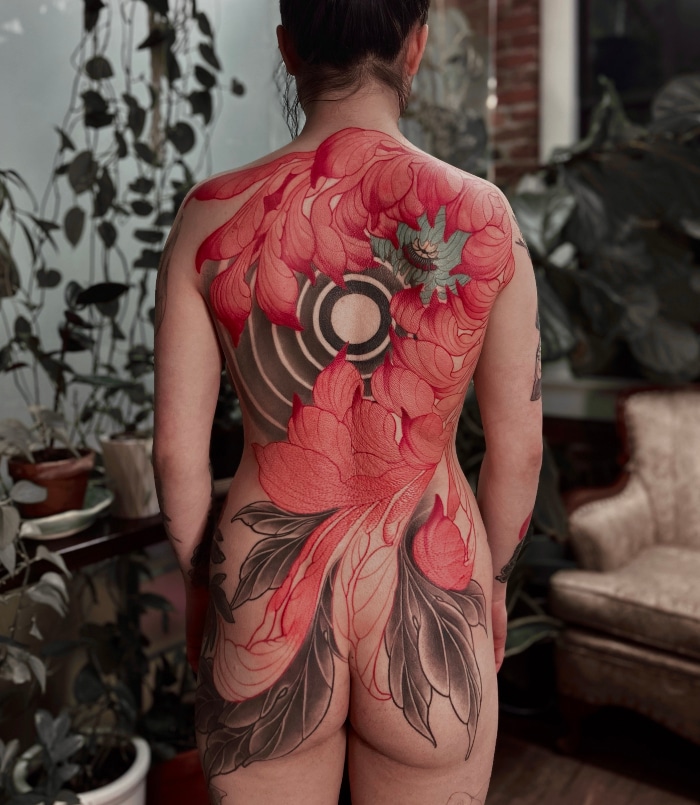
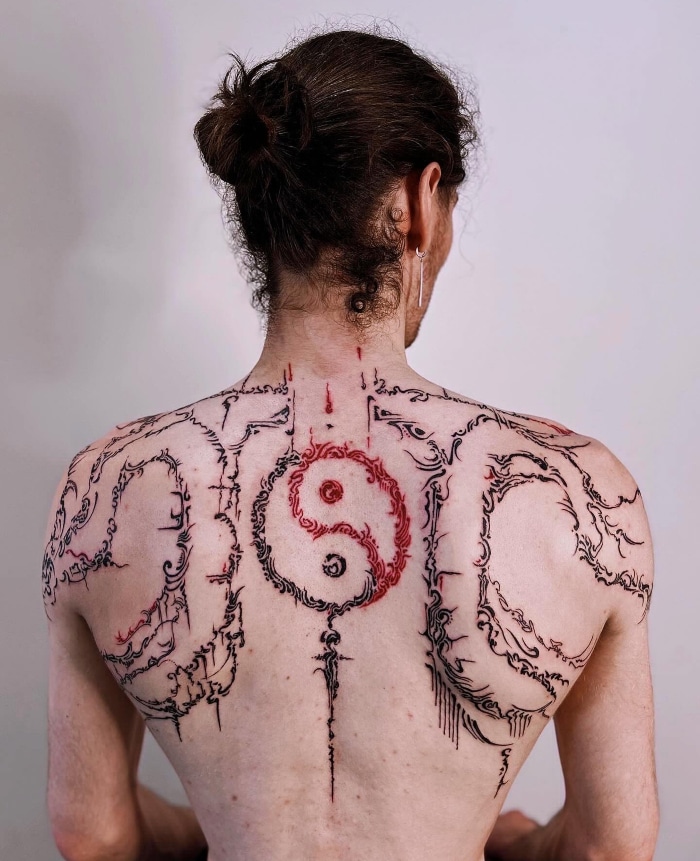
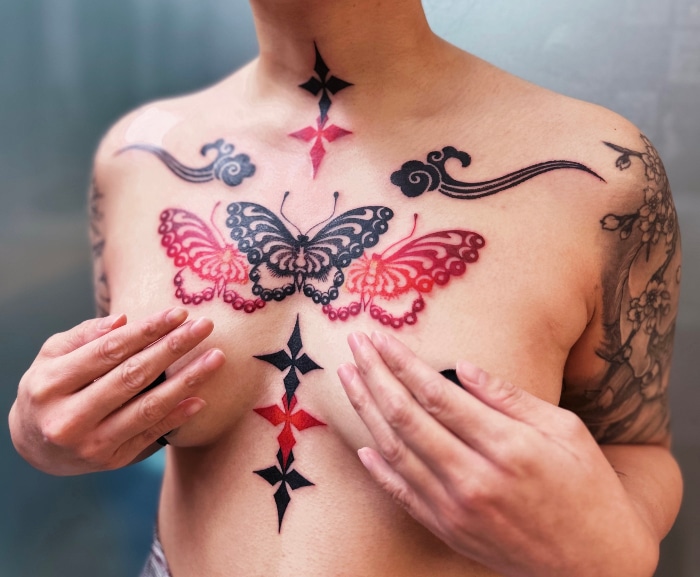
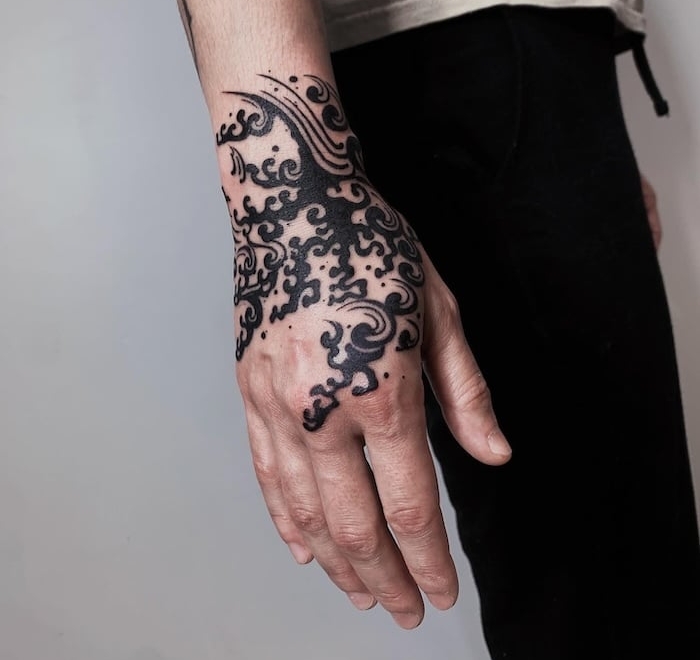
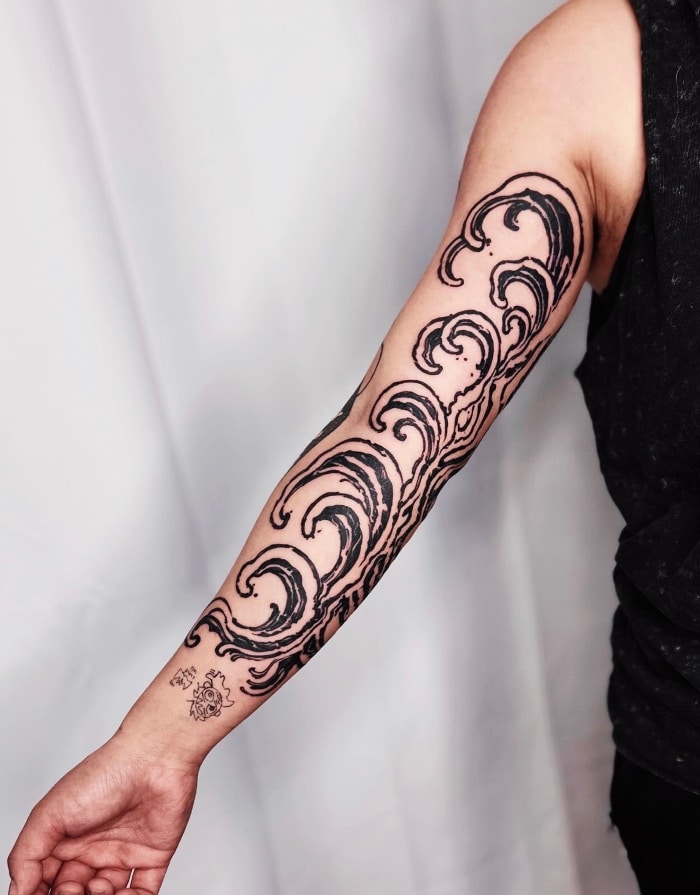
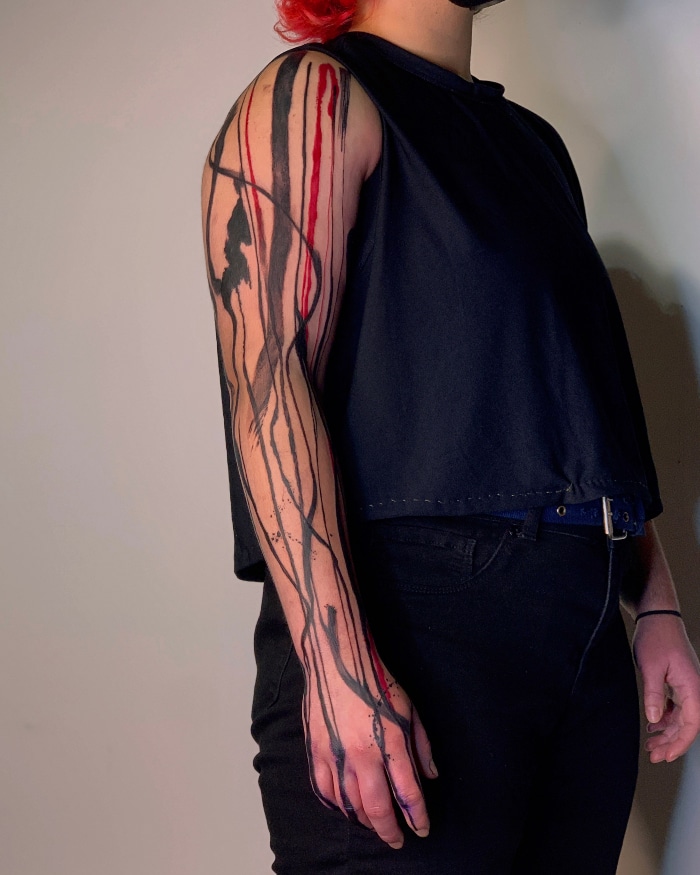
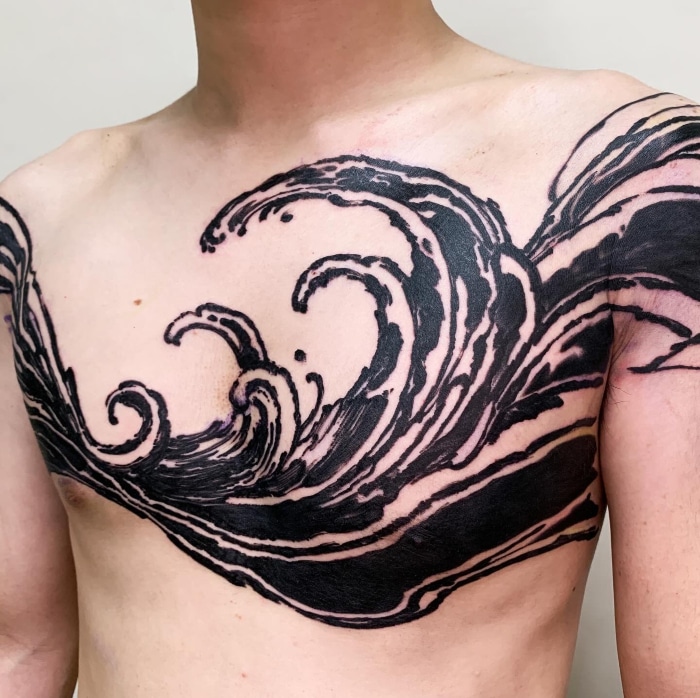
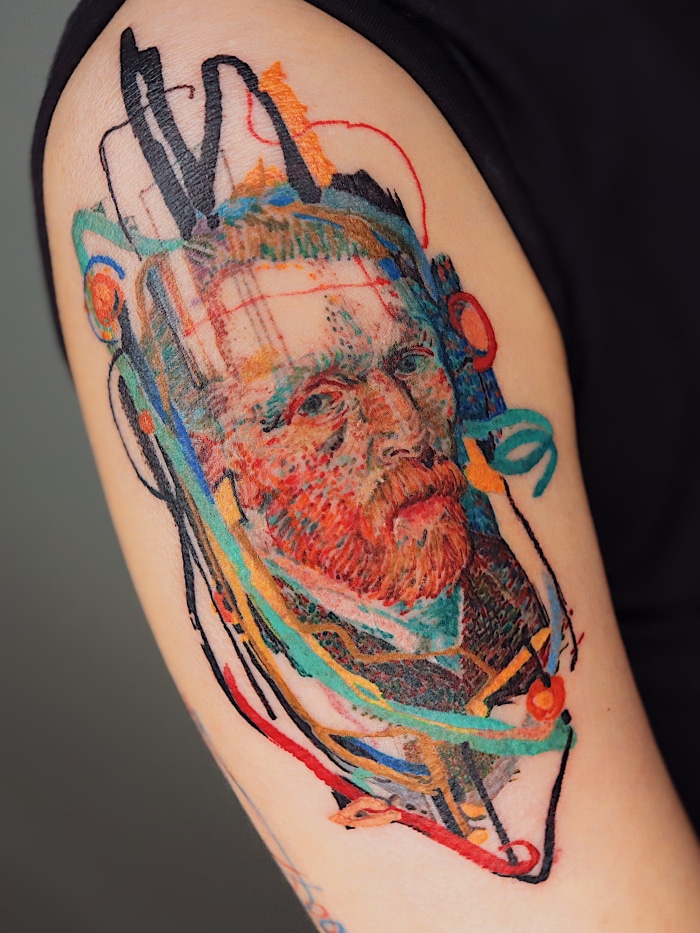
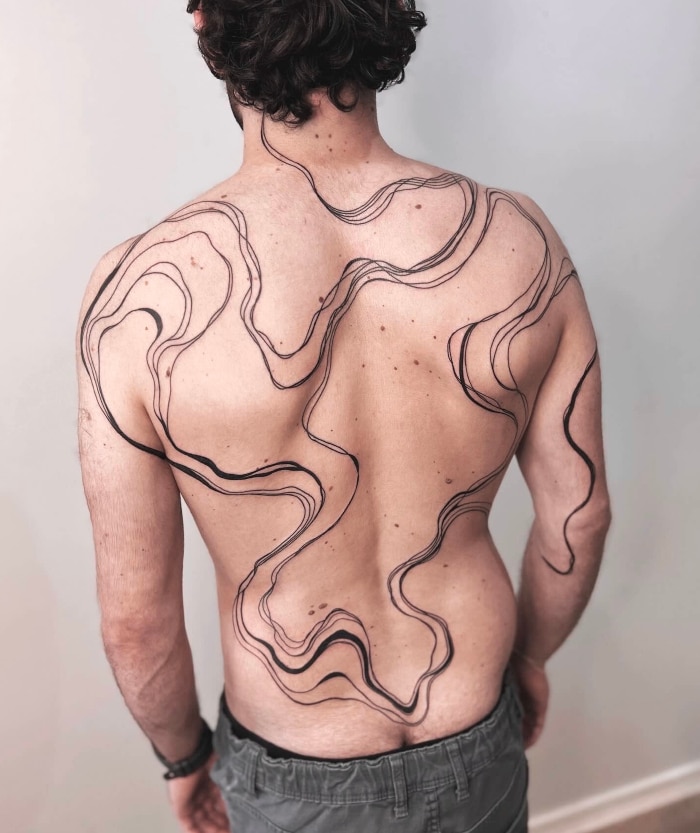
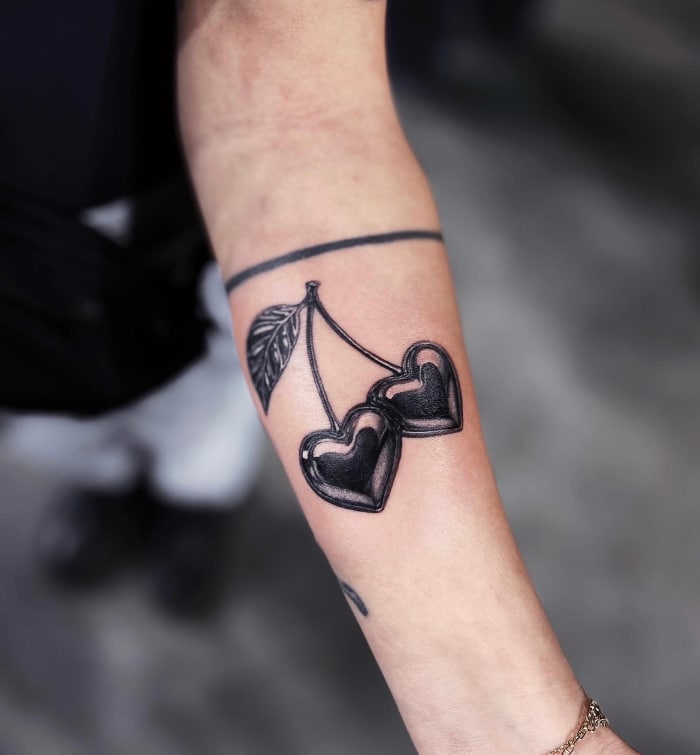
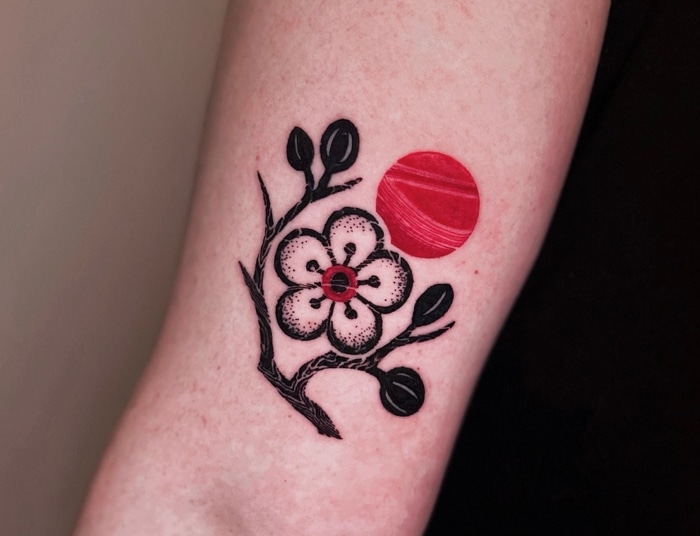
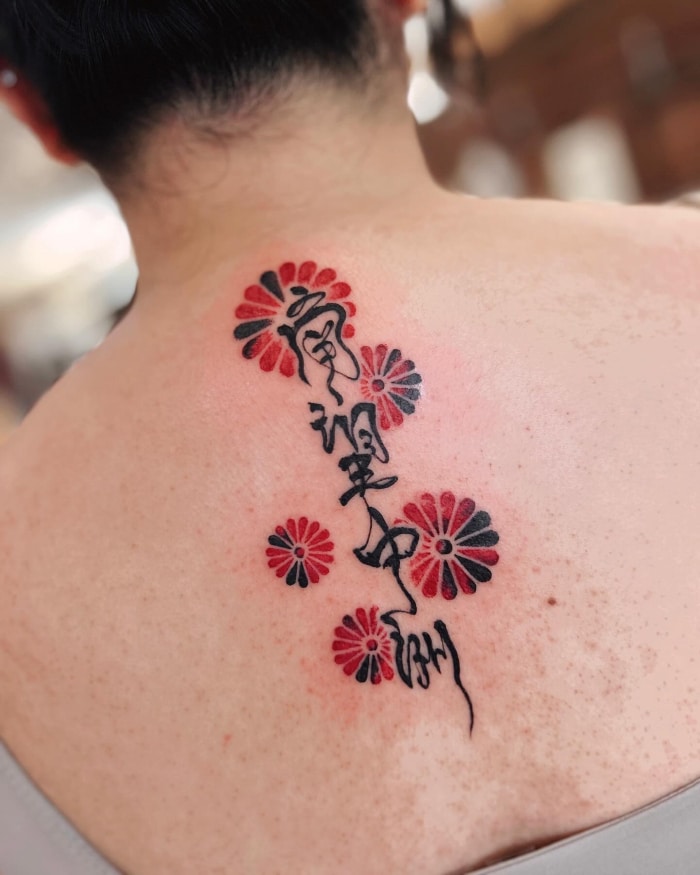
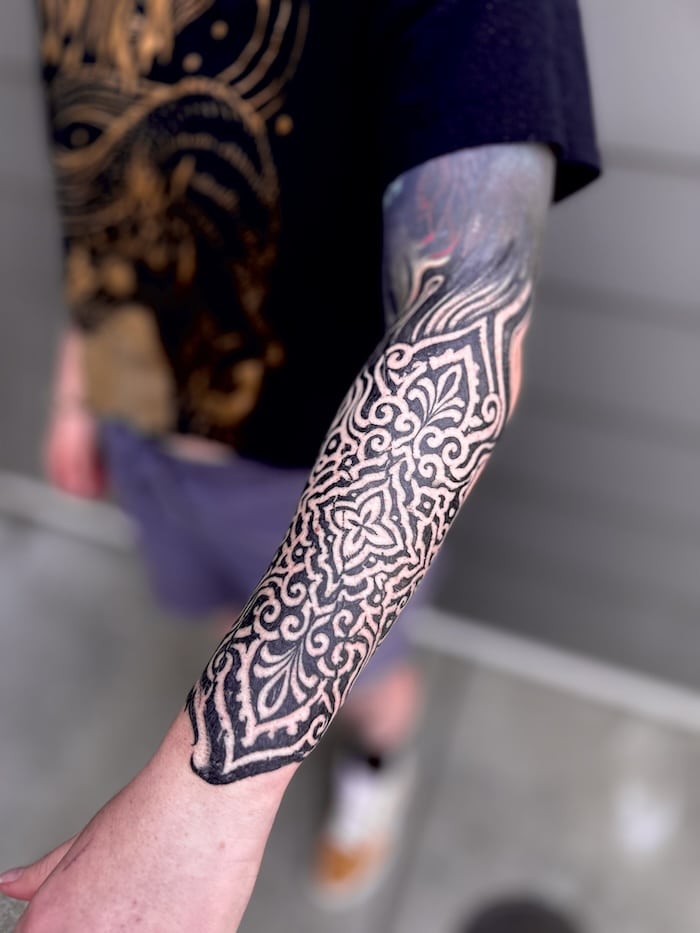
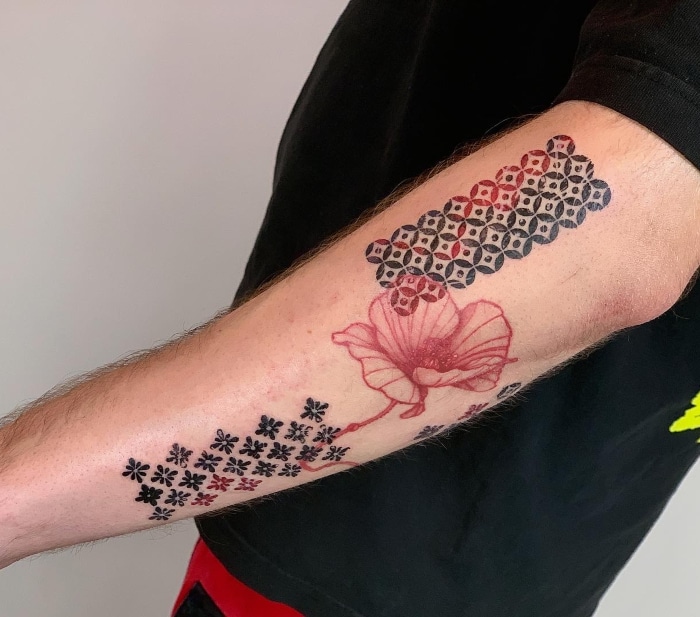
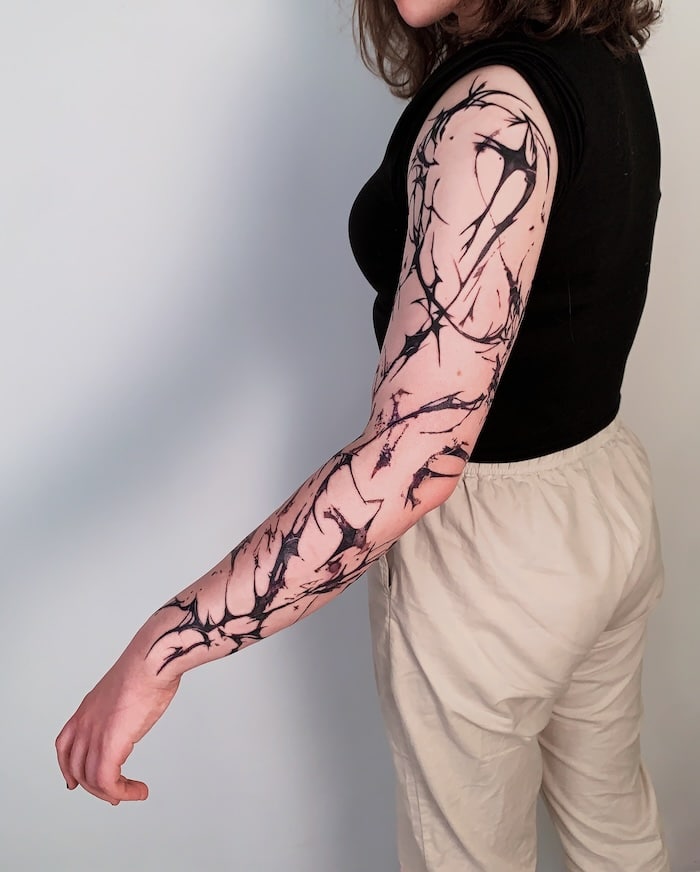
My work currently moves between three main directions: vintage-inspired stamp style tattoos, abstract compositions, and line-based blackwork.
Although these approaches may appear different visually, they share a common atmosphere rooted in Eastern aesthetics such as calligraphy, ink painting, and the thoughtful use of negative space.
I prefer to think of tattooing as a visual language rather than limiting myself to a single style. Different expressions can coexist while remaining connected through the same emotional tone.
Around half of my work is created freehand directly on the body. This allows the design to respond naturally to the flow of the skin, creating compositions that feel more organic and personal.
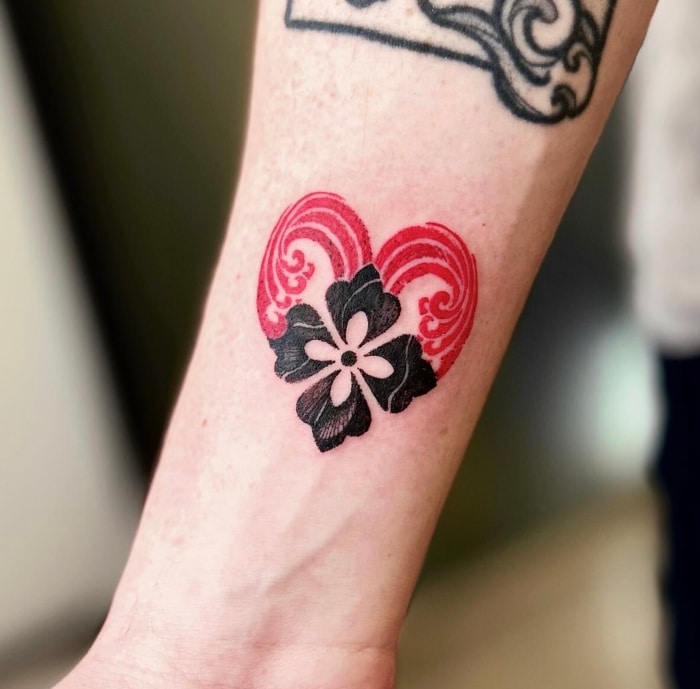
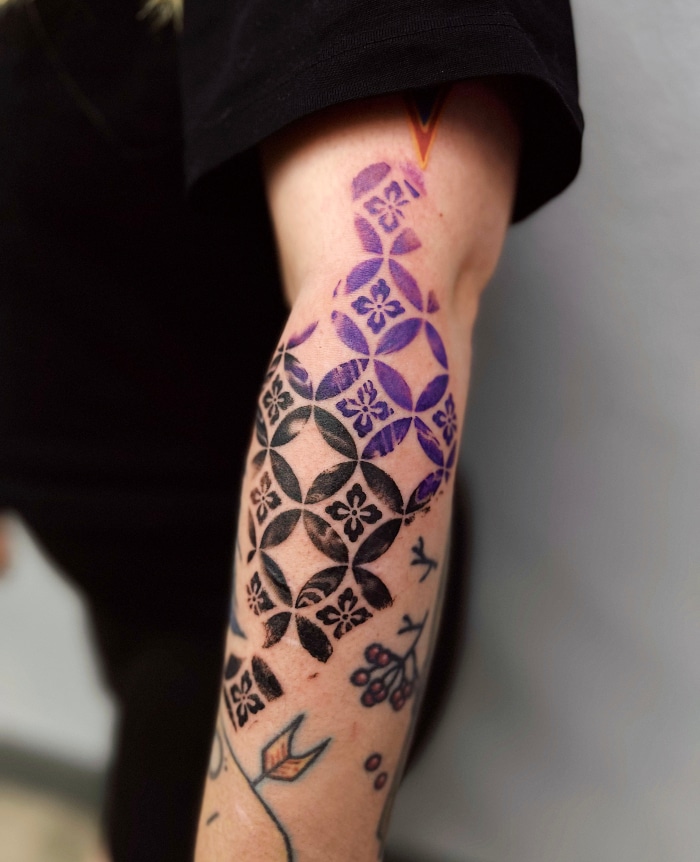
The stamp-inspired work has become one of the most personal directions in my practice. I am fascinated by the imperfections found in traditional printmaking, such as uneven ink, subtle cracks, and worn textures.
In some ways, this approach also reflects how tattoos age naturally over time. Rather than resisting that process, I like the idea that a tattoo can already carry a sense of time from the beginning.
- Please walk us through your process when you start a new tattoo for your customers.
Everything begins with conversation. I like to understand the client’s ideas, references, and the placement they have in mind.
From there, I begin sketching and exploring how the design will flow with the body. Sometimes the design continues to evolve during the appointment, especially when I incorporate freehand elements.
Tattooing is a collaboration. The client brings the meaning, and my role is to translate it into a visual language that works artistically and technically on the skin.
- How do you stay creatively inspired?
Inspiration often comes from outside tattooing. I am inspired by nature, vintage printmaking, traditional art, and small visual details in everyday life.
Traveling and meeting different people also play a big role. Creativity often begins with simply noticing things that might otherwise be overlooked.
- How do you balance client requests with your artistic vision?
I see it as a dialogue rather than a compromise. The client brings their story and intention, and my role is to interpret that idea in a way that works visually and technically.
When both perspectives are respected, the final result often becomes stronger than either one alone.
- Are there any tattoo styles you’d like to explore more?
I am interested in continuing to explore the space between abstraction and recognizable imagery.
Recently, I have been experimenting with combining simple graphic elements with layered textures within my stamp style work. I feel there is still a lot of potential to develop in that direction.
- What’s the most underrated tattoo style?
I believe simplicity is often underrated. Minimal tattoos may appear effortless, but they require a deep understanding of balance, composition, and restraint.
When done well, even the simplest design can have a powerful presence.
- What’s the most overrated tattoo style?
I try not to think of any style as overrated. Trends come and go naturally.
What matters most is authenticity and strong fundamentals.
- Are there any tattoos you prefer not to do?
I generally avoid tattoos that promote hate, discrimination, or harm toward others. Tattooing carries a certain responsibility.
The work we create should be something people can carry with pride.
- Do you have sponsors? If yes, what could you tell us about your sponsors?
At the moment my main focus is continuing to develop my work and connect with different communities through tattooing.
I am always open to collaborations with brands that genuinely support creativity and respect the culture of tattooing.
- As a Tattoo Artist, what kind of tattoo ethics is really important to you?
For me, one of the most important aspects of tattoo ethics is responsibility. Tattooing is a unique form of art because it exists permanently on someone’s body, and that permanence requires a level of honesty and care that goes beyond simply creating something visually appealing.
I believe it is important to approach every tattoo with respect for the person wearing it, the meaning behind it, and the craft itself. Tattooing is built on trust, and that trust should never be taken lightly.
- Being a successful tattoo artist requires many different skills. What’s your favorite way to keep learning?
For me, learning in tattooing is less about chasing new trends and more about deepening observation. Drawing regularly remains one of the most important parts of my learning process.
I try to study textures, composition, and visual balance not only within tattooing but also through other forms of art, printmaking, and nature. Often the smallest details can lead to new ideas. In many ways, continuing to learn as an artist means continuing to look at the world with curiosity.
- Do you like to teach or mentor upcoming artists?
I think mentorship in tattooing often happens in quiet ways. Sometimes it is not formal teaching but conversations, shared experiences, or simply working alongside other artists.
If someone is genuinely committed to the craft, I am always happy to share what I have learned. Tattooing is a long path, and having someone offer perspective in the early stages can make a meaningful difference.
- What’s the best piece of advice you ever received to improve your tattooing technique?
One piece of advice that stayed with me was to never rush the fundamentals. It is easy to become distracted by trends or complex designs, but strong line work, composition, and patience are what ultimately sustain a tattoo over time.
That advice helped me understand that growth in tattooing often comes from refining the basics rather than constantly searching for something new.
- How do you stay at the top of your game?
For me, it is about staying curious and avoiding complacency. Tattooing is both an art and a craft, and both sides require constant attention.
I try to keep challenging myself creatively while continuing to refine my technical discipline. The moment an artist feels completely comfortable is often the moment growth begins to slow.
- What do you think separates a good tattoo artist from a great one?
Technical skill is important, but what truly separates a good tattoo artist from a great one is awareness.
A great artist understands how a tattoo lives on the body, how it ages over time, and how it becomes part of someone’s personal story. It is not only about creating something beautiful in the moment, but about creating something that continues to hold meaning for years to come.
- How do you feel about the growing acceptance of tattoos in society?
I think the growing acceptance of tattoos reflects how society’s perception of personal expression has evolved. Tattoos were once considered something niche or rebellious, but today they are widely recognized as a legitimate art form and a way for people to express identity, memories, and personal stories.
At the same time, I believe it is important for the industry to maintain respect for the craft and its cultural history as tattooing becomes more mainstream.
- What’s the biggest misconception that customers may have about tattoos?
One common misconception is that tattooing is simply about drawing on skin. In reality, it requires a deep understanding of how skin behaves, how a design will age over time, and how it interacts with the body’s movement and structure.
A tattoo may look like a simple image, but creating one that ages well and feels balanced on the body requires a great deal of technical and artistic consideration.
- What’s the biggest trend in tattooing you have noticed in the last 5 years?
One noticeable trend is the growing diversity of styles and artistic identities among tattoo artists. In the past, certain styles dominated the industry, but today many artists are developing very distinct visual languages.
Social media has played a large role in that shift by allowing artists from different parts of the world to share their work and influence one another.
- What’s your view on the rise of AI in tattooing?
I see AI as a tool rather than a replacement for creativity. Technology can sometimes help generate ideas or references, but tattooing is ultimately a human process that involves intuition, experience, and personal interpretation.
The connection between the artist and the client, as well as the physical act of tattooing itself, is something technology cannot replace.
- What would you change about the tattoo industry?
If there is one thing I would hope for, it would be a greater emphasis on respect within the industry. Respect for the history of tattooing, for other artists, and for the craft itself.
Tattooing has grown very quickly, and while that growth brings new opportunities, maintaining integrity and professionalism will be important for the future of the industry.
- Do you work on other projects within the tattoo industry?
Beyond tattooing, I am interested in developing projects that expand the visual language of my work, including design concepts and creative collaborations within the tattoo community.
I also enjoy participating in conventions and traveling for guest spots, which allow me to connect with different artists and audiences.
- Do you do other forms of art besides tattooing?
Yes, I spend a lot of time exploring different forms of creativity outside of tattooing. I enjoy drawing, doodling, calligraphy, zentangle drawing, illustration, and action painting. Many of these practices are abstract or spontaneous, which allows me to approach creativity in a more intuitive way.
Recently I also began learning how to sew and make clothes for myself after buying a sewing machine. In addition, I enjoy beadwork, which I actually started when I was very young. I began making bead crafts around the age of seven.
For me, all of these activities feel connected to a kind of personal meditation. They are not necessarily about producing finished works, but about staying connected to creativity and allowing ideas to move freely.
- Who are the people you admire the most within the tattoo community?
I have great respect for artists who remain dedicated to their craft over many years while continuing to evolve creatively.
Tattooing requires patience, discipline, and humility. Artists who maintain those qualities while developing their own unique voice are the ones I admire the most.
- What’s your experience at tattoo conventions so far?
Tattoo conventions have been one of the most meaningful parts of my career, both professionally and personally. They bring together artists with very different backgrounds, aesthetics, and philosophies, creating a unique kind of energy.
In one space you can feel both the individuality of each artist and the shared respect for the craft. Conventions remind me that tattooing is not done in isolation, but within a wider community shaped by exchange, observation, and inspiration.
- How do you usually prepare for a tattoo convention?
My preparation usually begins long before the event itself. I think carefully about what kind of work I want to bring, what I want to communicate through my booth, and how I want people to experience my work in that environment.
There is also the practical side of preparing flash, organizing equipment, and planning the setup so everything runs smoothly. At the same time, I try to prepare mentally by staying open, because conventions are intense and unpredictable experiences.
- What’s your primary reason to attend a tattoo convention?
My main reason is connection. Conventions create a space where artists, clients, collectors, and curious members of the public all come together.
That kind of encounter is valuable because tattooing is not only a profession but also a culture built through people. Conventions allow me to keep learning, meet others in the community, and place my work within a broader conversation.
- What’s your favorite tattoo convention so far? And why?
It is difficult to choose just one. What stays with me is often not only the event itself but the atmosphere, the people, and the conversations around it.
My favorite conventions tend to be the ones where there is a strong sense of community, where artists take their work seriously but still share space and energy generously with others.
- Have you ever had the opportunity to participate in any tattoo contests?
Yes, I have participated in tattoo contests at conventions and have received one award. I appreciate that recognition, but I try not to measure my work only through awards.
For me, the deeper value of conventions lies in the experience itself, the discipline of showing up, creating work under pressure, and continuing to grow in front of both peers and the public.
- Do you collect tattoos from artists you meet at conventions?
Yes, I do. Receiving a tattoo from another artist is meaningful to me because it is both personal and relational.
It allows me to carry a memory of that encounter in a very direct way. Being tattooed by someone whose work you admire becomes more than collecting an image. It becomes a record of connection and shared time within the tattoo community.
- How do you think tattoo conventions could improve for both artists and the public?
I think conventions could become even more meaningful by creating more space for education and dialogue. For the public, tattooing can still feel mysterious even when it is widely visible.
Artist talks, discussions, or process based presentations could help people better understand the depth of the craft. For artists, a healthy convention culture is one that supports not only visibility but also meaningful exchange.
- Was there any event in particular that really boosted your career?
Rather than one single event, I think my career has grown through accumulation. Different conventions, guest spots, and encounters have shaped me gradually.
Often growth does not come from one dramatic turning point but from many smaller moments that expand your perspective over time.
- Is there any tattoo that you have created in your career that you are particularly proud of?
Rather than a single tattoo, there are certain moments that stay with me. Sometimes a tattoo becomes meaningful not only because of the design itself but because of the story behind it.
When someone trusts you with something deeply personal and you are able to translate that into a piece they will carry for years, those are the tattoos that feel the most meaningful to me.
- What is your greatest accomplishment as a tattoo artist?
For me, the greatest accomplishment is simply being able to continue doing this work for many years while still feeling curious and inspired.
Tattooing requires patience, discipline, and a lasting relationship with creativity. The fact that I can still feel excited about drawing, meeting new people, and creating meaningful work is something I consider a real achievement.
- What advice would you offer to someone considering a career as a tattoo artist?
Tattooing requires much more than artistic talent. It demands patience, responsibility, and deep respect for the craft.
It is a long path and progress often happens slowly. But for someone who is genuinely committed to learning and improving, the journey itself can be very rewarding.
- What are your goals or dreams for the near future?
In the near future I hope to continue developing my artistic language while traveling and connecting with different communities through tattooing.
I am especially interested in expanding my stamp style work and exploring how tattoos can function as marks of memory within a person’s life journey.
- What legacy do you want to leave as a tattoo artist?
If I leave anything behind, I hope it is a body of work that reflects sincerity and care.
Tattoos stay with people for a lifetime, and knowing that my work becomes part of someone’s story is something I take very seriously. More than recognition, I hope my work is remembered for its honesty and the connections it created between people.
- To close this awesome interview, what’s your last message to our readers?
Tattooing is more than decoration. It is a way of marking time, memory, and personal meaning on the body.
If someone chooses to carry a tattoo, I hope it becomes something that grows with them over the years and continues to remind them of a moment, a feeling, or a story that matters.
 |
Leave A Comment