

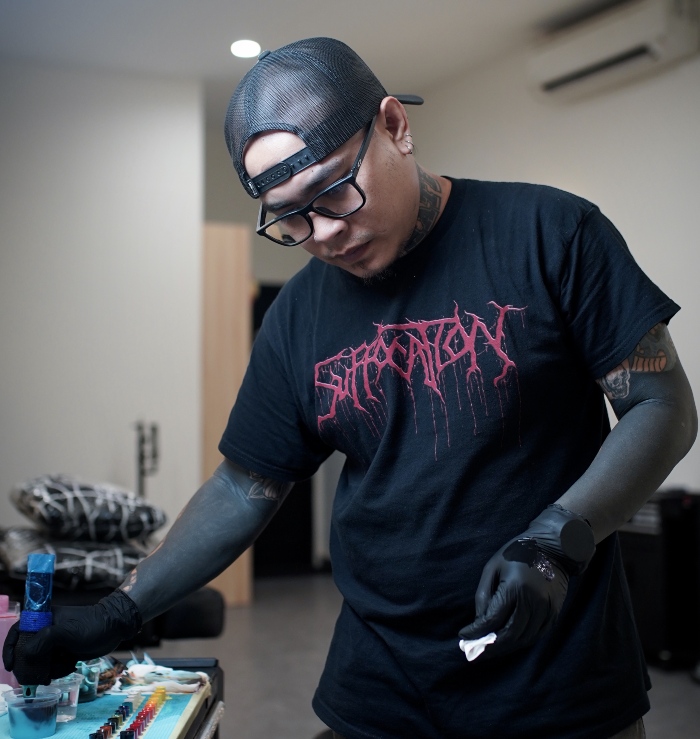
In an industry constantly shaped by trends and visibility, Denario remains focused on realism and personal direction. Originally from Bandung and now tattooing in Bali, he works in darkside color realism at Sabian Ink in Seminyak, developing work that prioritizes atmosphere, structure, and long-term impact over short-lived popularity.
In this interview, Denario speaks about adapting to change without losing identity, tattooing as a form of focus and balance, and the challenges of staying true to one’s style in a rapidly shifting tattoo landscape. He shares insights into his creative process, his interest in reintroducing bio-organic elements, and the discipline required to build a body of work that grows with time.
How would you like to introduce yourself?
My name is Denario, I’m an Indonesian tattoo artist from the city of Bandung. Currently living and tattooing in Bali, Indonesia.
Where can your customers find you?
I am currently a resident artist at Sabian Ink, in Seminyak, Bali.
How would you describe the tattoo scene in your country these days?
The tattoo scene in Indonesia has evolved much further from before, and is much less taboo nowadays, especially in Bali.
How would you define yourself in one word?
“Adapatable” – Over the years as a tattoo artist, I had to adapt to a constantly changing tattoo landscape, and styles at different studios.
Where did your fascination for tattoos come from?
Since I was young, around 6th grade, I used to see my uncles tattooing each other. That got me interested in tattoos early.
What does tattooing mean to you personally?
For me, it’s therapy. Because when I’m tattooing, I’m focused and happy. I enjoy the process as a whole.
At what point in your life did you decide to become a professional tattoo artist?
I decided to become a professional tattoo artist in 2011. Once I had the proper professional equipment, and the mentality to start working professionally.
How did your family react when you started a career in tattooing?
At the start, of course, they didn’t really accept it. Although as the times changed, and the stigma of tattoos started going away, they began to accept my career choice.
Did you go through an apprenticeship? How was that experience?
I didn’t go through an apprenticeship, I learned on my own. I had to keep repeating and trying, and it wasn’t easy.
What did your first tattoo look like?
I tattooed a joker from a playing card. Back then it was hard to get references. So I had to use a playing card as a reference.
Do you usually do guest spots? If yes, what’s your experience in doing them?
I haven’t done guest spots, so I can’t say anything about it.
As a tattoo artist, what does your daily working routine look like?
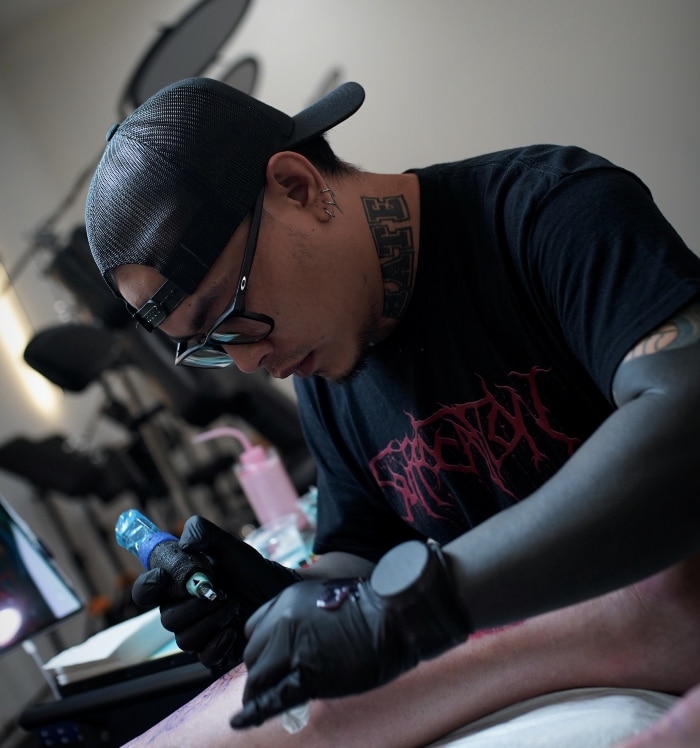
It depends, I often do my consults a few days before the tattoo. So I speak with my client, make a design and mock up. If they’re happy with it, then we meet again on the tattooing day. On they day, I’ll come in, confirm the design one more time, take measurements, prep my equipment, place the stencil, and start tattooing. I typically work from around 11AM to around 9PM with breaks in between.
What is one surprising aspect of being a tattoo artist?
Being realistic, the income. Being a tattoo artist pays better than most jobs here in Indonesia. I get a good work-life balance, and get to channel my creativity in my work.
How do you determine the price of a tattoo?
For me it depends on the design, size, placement, time needed, also if I get some creative freedom with the design.
What’s the most challenging aspect of being a tattoo artist in 2025?
For me, the most challenging is having to follow trends for visibility. Sometimes, I just want to work on my designs and styles without having to worry about popularity.
What’s the most rewarding aspect of being a tattoo artist?
For me, it’s when I get full creative freedom for the design and tattoo from my client. They trust me with my own art and style.
What tools and machines do you prefer to use?
For me, I like using FKIron’s Flux Max and EXO machines. I like the accuracy and stability of the machine’s impact. The specs suit my needs.
What’s your number one aftercare advice for clients?
Wait around 3-4 days until the tattoo is dry, then apply aftercare. This is to wait for the swelling to go down and the wound to dry up. I give that advice because Bali is hot and humid. Different places have different conditions.
How would you define your current tattoo style, and how did you end up focusing on it?
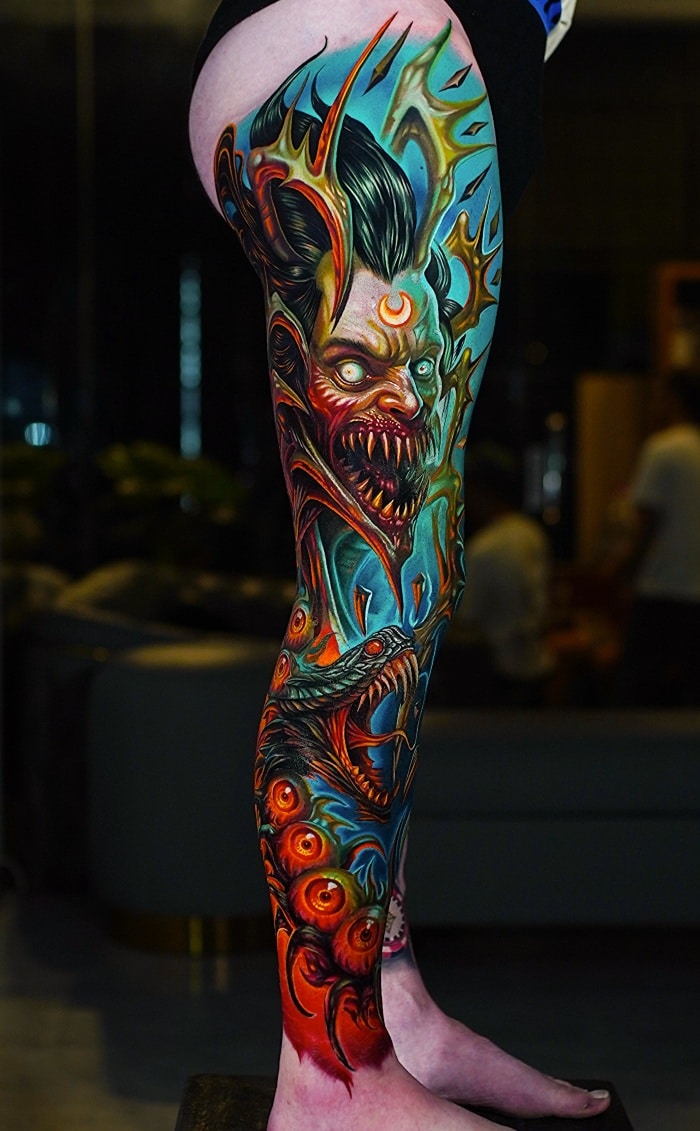
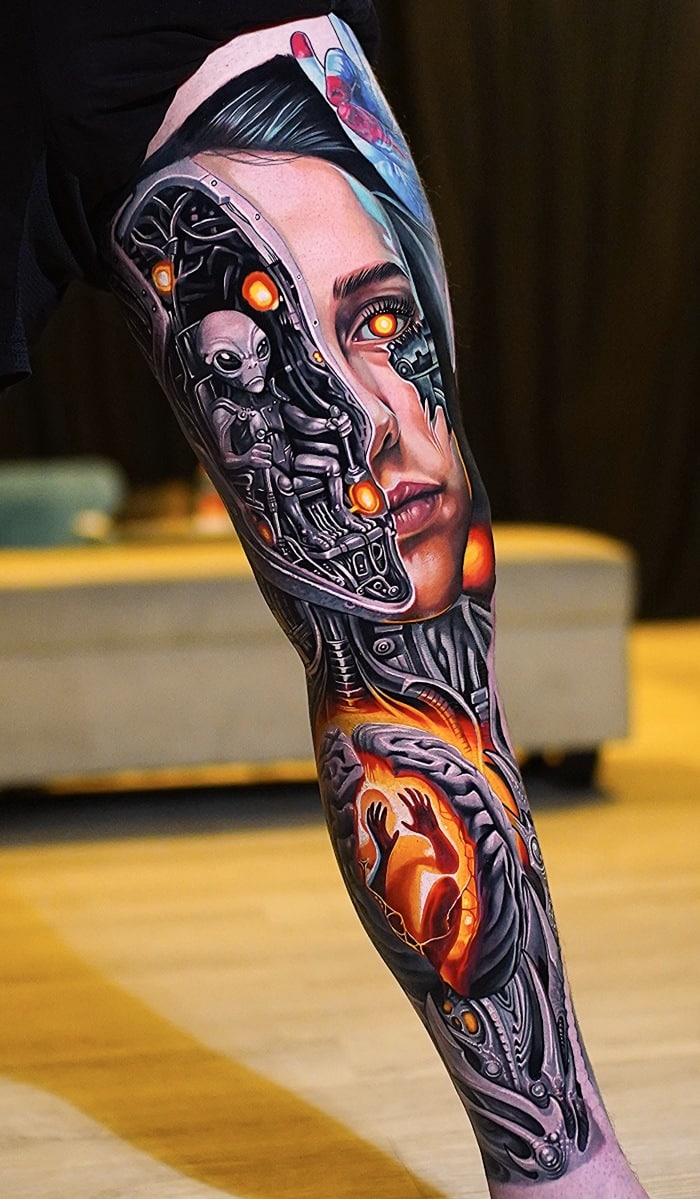
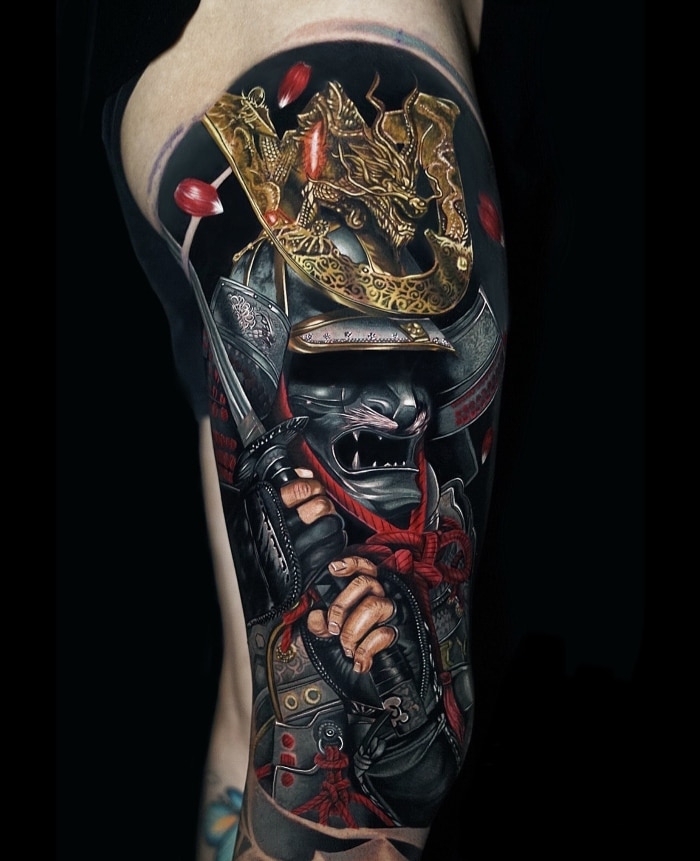
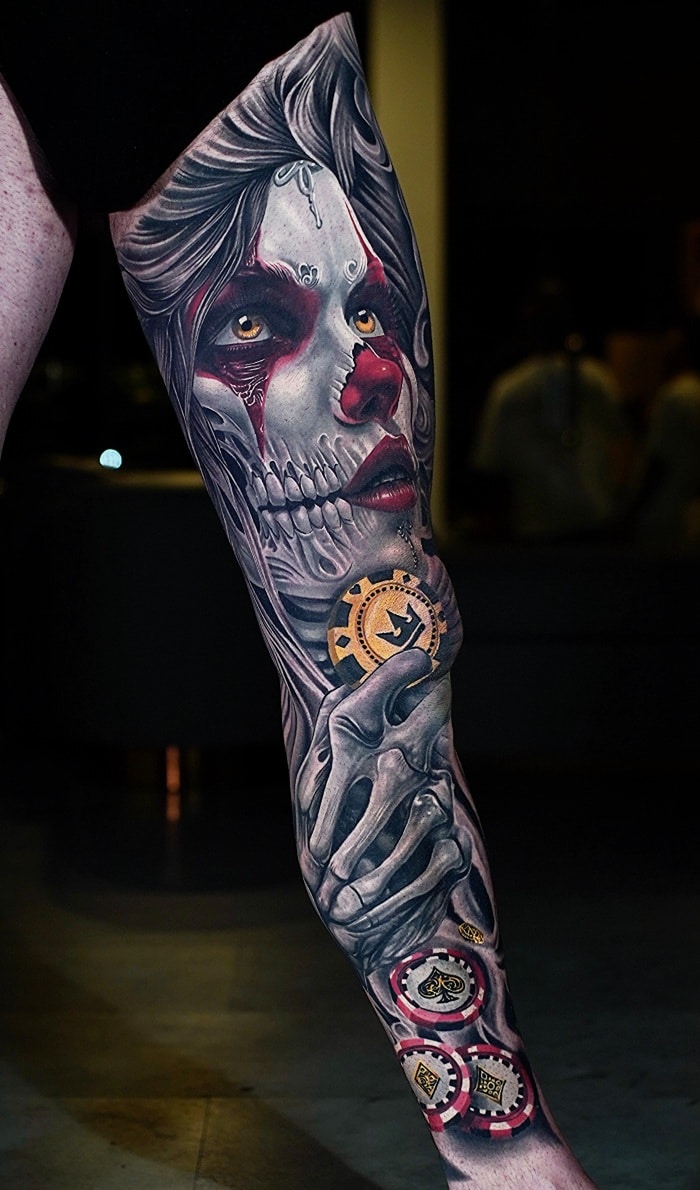
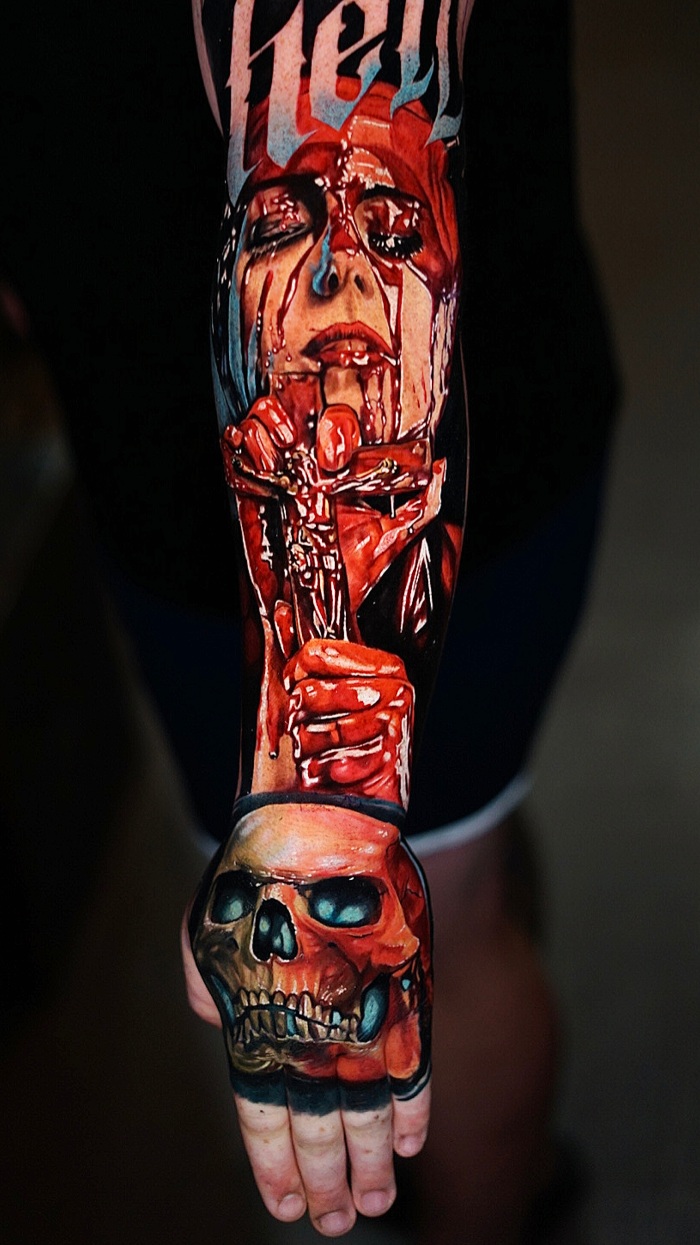
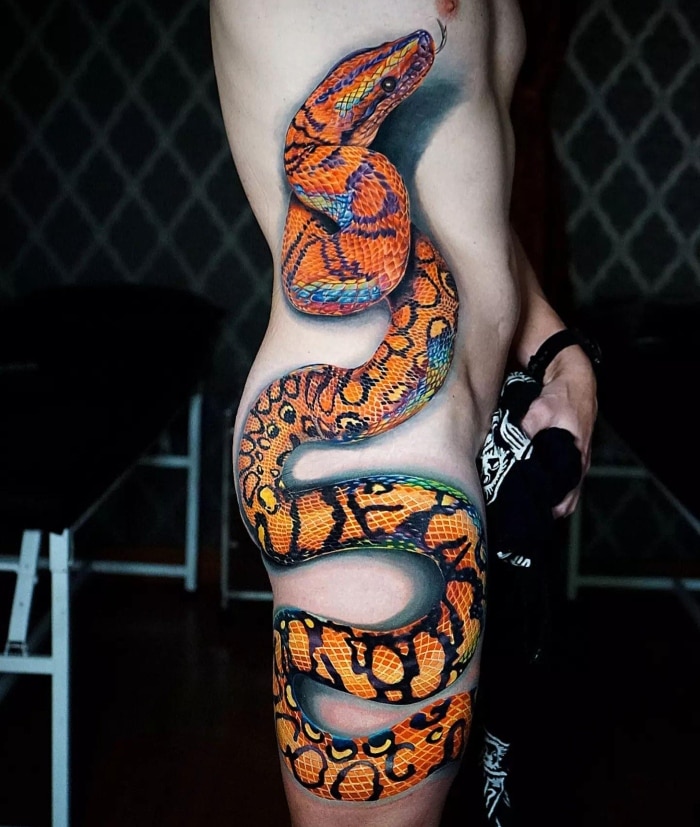
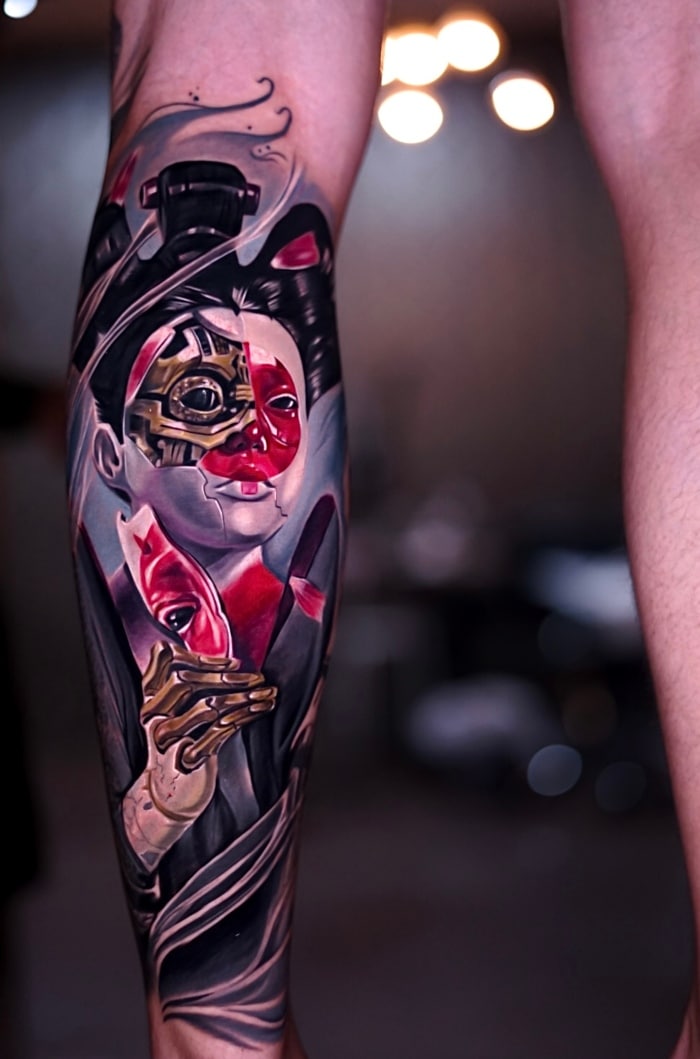
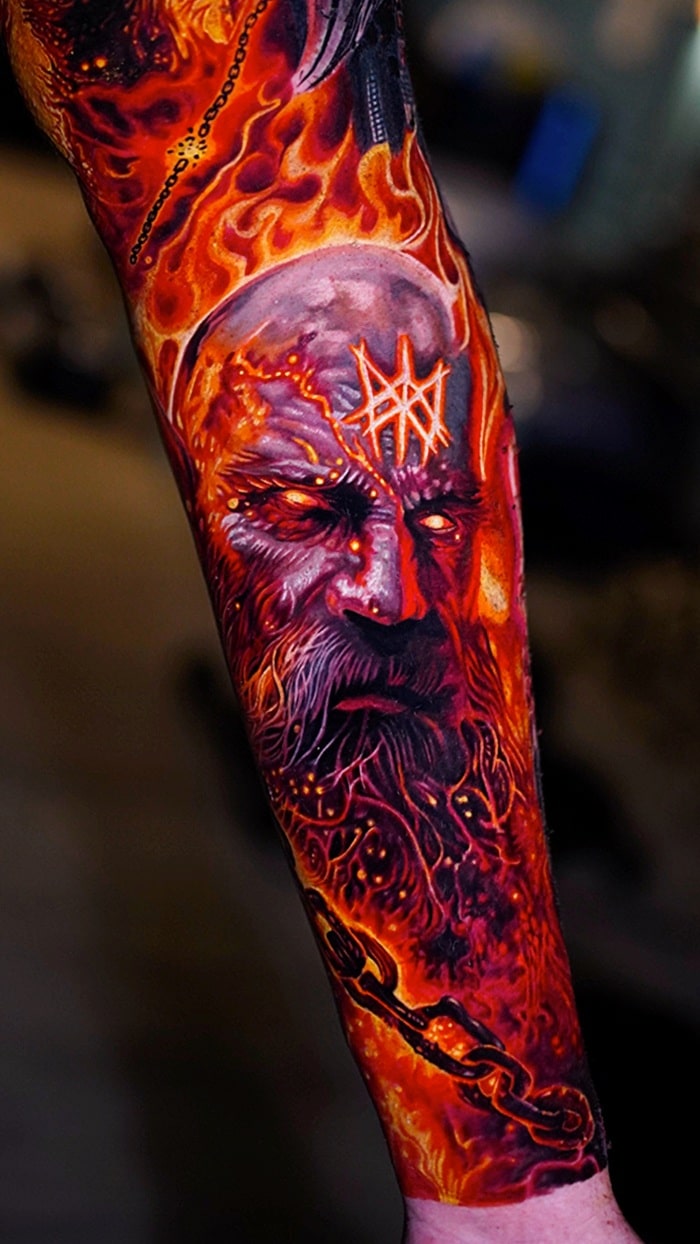
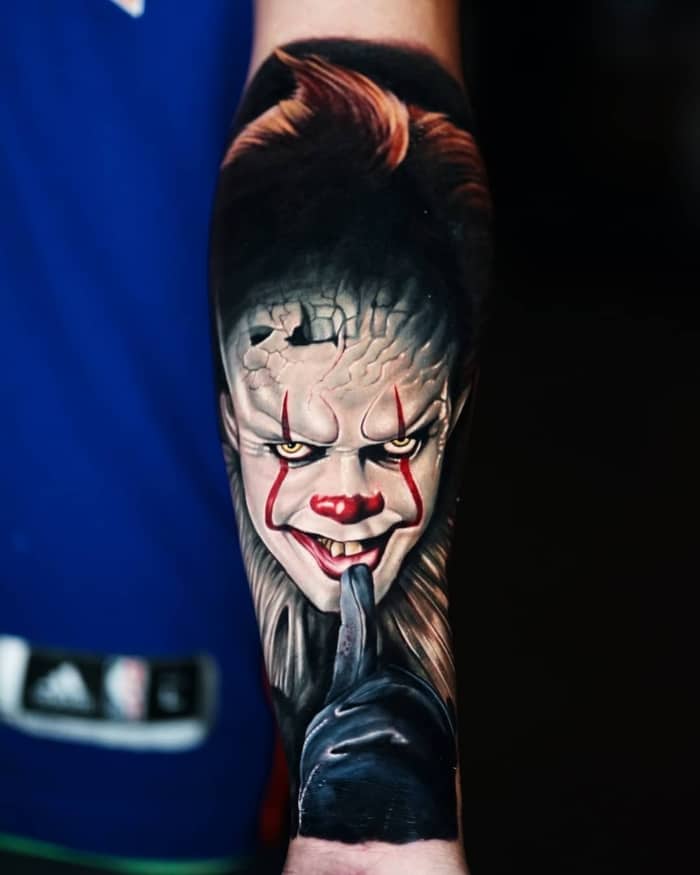
I would say my style is color realism darkside. I wanted to do something different, push myself into a new style that I like and that stands out.
Please walk us through your process when you start a new tattoo for your customers.
First, I start with the consult: Does the client have any references? Where’s the placement? What’s the size? Are there any details they want? Then take a photo of the area, and make the design first on Procreate on my iPad. I show the design for revisions, and make changes if needed. Once the design is confirmed, I’ll make a mock-up of the tattoo. On the day of the tattoo, I’ll come in, measure the area, print out the stencil, and get to tattooing. If it’s the multi-day tattoo, I’ll continue from where I left off. Once everything is done, I’ll take photos and videos, and wrap up the tattoo.
How do you stay creatively inspired?
Listening to music, specifically death metal. The aesthetic, the tone of the music – it fits my style of creativity.
How do you balance client requests with your artistic vision?
It depends; there are times I will follow the client’s requests more. Other times, I will offer my own input and designs more. The most important thing is that my clients are happy with my designs.
Are there any tattoo styles you’d like to explore more?
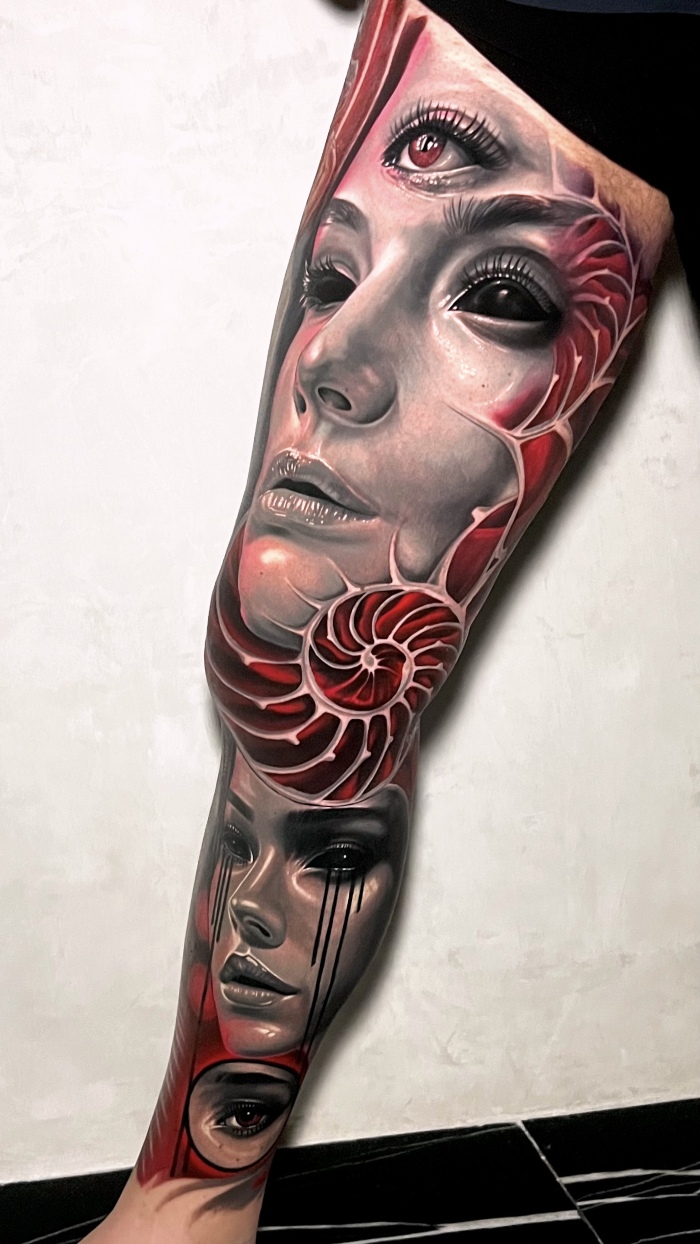
I would like to explore bio-organic designs more. Because that style drew me in first when I was learning tattooing. Now that style is rarely seen, I want to try to bring it back in some way. Through combining my dark-side realism with bio-organic elements.
What’s the most underrated tattoo style?
Old-school American Traditional, it’s treated as common, easy to make. But it still has value, and looks good.
What’s the most overrated tattoo style?
Gangsta-style tattoos, ones with rappers, ski masks, and such. A lot of them are done here in Bali, in large full legs, full sleeves, and full backs. Not because of the style, but I feel that they are just done without any real care. There’s still room for the designs to look better.
Are there any tattoos you prefer not to do?
For me tribal and fine line tattoos. I’m not as interested in doing those pieces.
Do you have sponsors? If yes, what could you tell us about your sponsors?
For needles, I am sponsored by HY Tattoo and Xtreme is my ink sponsor.
As a tattoo artist, what kind of tattoo ethics is really important to you?
Discipline, consistency, and your hospitality towards clients. If you want to last long in the industry as an artist, those are important.
Being a successful tattoo artist requires many different skills. What’s your favorite way to keep learning?
For me it’s looking for new references, things that I have never done before.
Do you like to teach or mentor upcoming artists?
For me, I prefer not to teach and mentor, rather to give advice and feedback.
What’s the best piece of advice you ever received to improve your tattooing technique?
To start mixing inks, because my base is in realism, it helps me get more details and lifelike tones.
How do you stay at the top of your game?
For me, it’s never feeling satisfied. Keeping that mindset makes you want to learn more. If you feel like you’ve learned everything, you’ll be stuck in the same place.
What do you think separates a good tattoo artist from a great one?
Character, I mean that by their style of tattooing. They have a unique style of tattooing that they do, and people come to them for it.
How do you feel about the growing acceptance of tattoos in society?
I feel really happy about it; tattoos aren’t as taboo as they were before. And the tattoo industry has grown far beyond my expectation.
What’s the biggest misconception that customers may have about tattoos?
That some tattoos are simple. They can look easy to make, but they can be really hard, detailed, or take a lot of time. Some have no room for mistakes like fine lines.
What’s the biggest trend in tattooing you have noticed in the last 5 years?
Patchwork, I’m seeing a lot of people getting pieces added one by one. It looks cool, like a revival of old-school sleeves.
What’s your view on the rise of AI in tattooing?
For me there’s positives and negatives, the positives, things can be done quicker. But, the negative side, tattoo artists are going to be less creative if they keep relying on AI.
What would you change about the tattoo industry?
For me it’s the trend chasing, it doesn’t help artists try to look for their own character. Trends don’t last, they come and go.
Do you work on other projects within the tattoo industry?
I don’t have any other projects.
Do you do other forms of art besides tattooing?
Music, I have a grindcore music project I’m working on.
Who are the people you admire the most within the tattoo community?
For me it’s Paul Booth, he has his own strong darkside character that’s consistent.
What’s your experience at tattoo conventions so far?
I’ve been to the Australian Tattoo Expo in Sydney, Melbourne and Perth before. For me conventions are fun, but also a good way to learn more by seeing other artists work in-person.
How do you usually prepare for a tattoo convention?
For me I like to prepare creative ideas, and my mentality, along with the usual equipment and travel planning.
What’s your primary reason to attend a tattoo convention?
I want to meet with tattoo artists from other countries.
What’s your favorite tattoo convention so far? And why?
For me it was the Australian Tattoo Expo in Melbourne 2018, because back then the competition was really fierce. A lot of people were doing amazing work.
Have you ever had the opportunity to participate in any tattoo contests? You are welcome to specify your awards.
I haven’t participated in any contests, I mainly focused on tattooing my clients. When I feel ready, I’ll take the opportunity to compete.
How do you think there are ways tattoo conventions could improve for both artists and the public?
For me it’s to collaborate with music, fine arts. Getting more creative people involved will make things interesting.
Was there any event in particular that really boosted your career?
Not really, I haven’t had an event with that impact.
Is there any tattoo that you have created in your career that you are particularly proud of?
For me it was the tattoo that I most recently made, a full outer leg piece of a witch with bio-organic elements. Because, I felt excited to work on it, and the customer gave me full creative freedom over the tattoo.
What is your greatest accomplishment as a tattoo artist?
Having the freedom to express my style and vision through my tattoos.
What advice would you offer to someone considering a career as a tattoo artist?
Patience, consistency and disclipline. These three will be important for you as an artist going forward, well into your career.
What are your goals or dreams for the near future?
I want to join expos in Asia and Europe as an artist.
What legacy do you want to leave as a tattoo artist?
My works of course, because as an artist its only natural that your works are left behind.
To close this awesome interview, what’s your last message to our readers?
Don’t be afraid to try, and always be willing to learn. Because we are born to learn.

Leave A Comment