

Black ink is not only an aesthetic choice but a functional one, especially in cover-up work, where structure and problem-solving are essential. Working between Spain and the wider European tattoo scene, Daniele, known as Danidtattooer. Specializing in large-scale blackwork inspired by ancient and modern Japanese art, his tattoos are defined by strong anatomy awareness, disciplined execution, and a deep respect for the permanence of the medium. Originally from southern Italy and trained through years of formal art education and hands-on experience, Daniele approaches tattooing as both craft and responsibility.
Daniele reflects on the importance of fundamentals, the dangers of surface-level inspiration, and the need to stay connected to tattooing’s roots in an era shaped by speed and technology. The result is work designed not for instant impact, but for clarity, strength, and endurance over time.
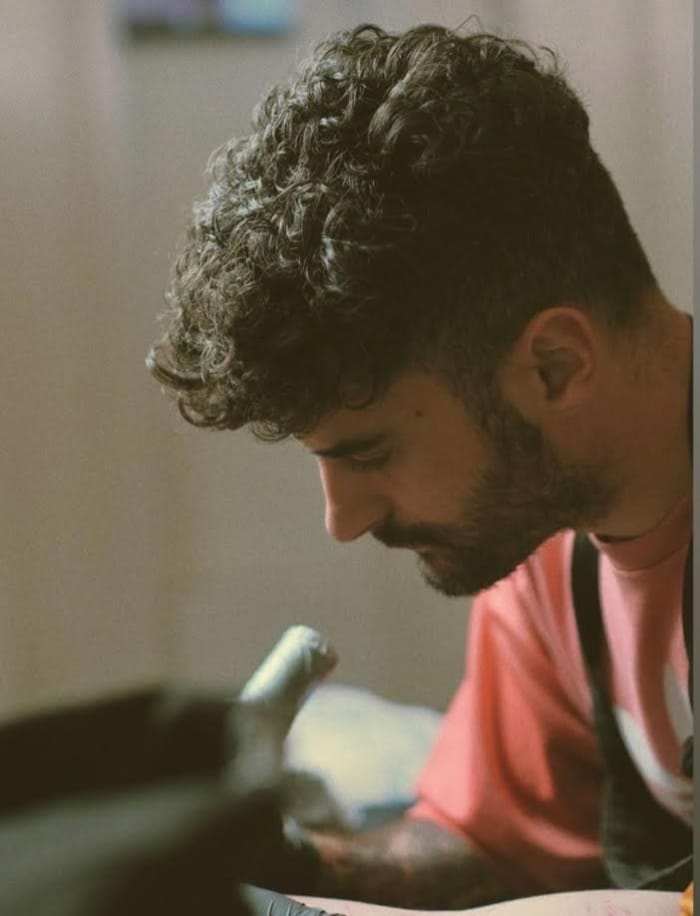
How would you like to introduce yourself?
Hi, my name is Daniele, also known on social media as Danidtattooer. I specialize in large blackwork tattoos inspired by modern and ancient Japanese art. You can find me on Instagram as @danidtattooer.
Where can your customers find you?
I’m currently based in Spain, and I frequently work in Barcelona. Over the years, I’ve also been doing regular guest spots across Europe.
How would you describe the tattoo scene in your Spain these days?
Spain, and especially Barcelona. has always been an important reference point for tattooing. The city is surrounded by art, and many great international tattoo artists have worked or still work here. This environment has played a key role in my artistic and professional development.
How would you define yourself in one word?
Technique-first.
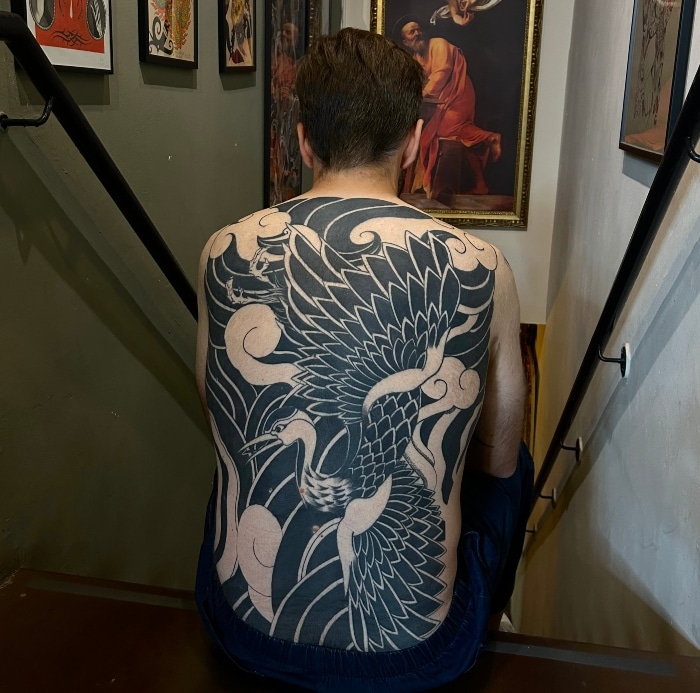
Where did your fascination for tattoos come from?
My interest in tattoos and art has been present for as long as I can remember. I used to draw as a child, later studied for five years at an art school, and eventually specialized in tattoo art.
What does tattooing mean to you personally?
Tattooing is an essential part of my life. I’ve dedicated most of my time to this craft for many years, and my passion continues to grow. Thanks to tattooing, I’ve met incredible people, traveled the world, and I hope to continue doing so for a long time.
At what point in your life did you decide to become a professional tattoo artist?
I decided to become a tattoo artist after finishing my studies, at the age of twenty.
How did your family react when you started a career in tattooing?
My family has always supported and encouraged me. My mother, like other family members, works in art education, so seeing me spend so much time drawing was always viewed very positively.
Did you go through an apprenticeship? How was that experience?
The beginning was difficult. I’m originally from a small village in southern Italy, where tattooing wasn’t very widespread more than sixteen years ago. When I moved abroad, I began to understand what tattooing really was. Over time, I was fortunate to learn by working alongside highly skilled and talented artists.
What did your first tattoo look like?
My first tattoo was done on a good friend. It was small and, honestly, not very well executed. Today it’s a funny anecdote and a shared memory. I’ll always be grateful to him and to everyone who trusted me when I was just starting and still had so much to learn.
Do you usually do guest spots? If yes, what’s your experience in doing them?
Yes, for many years now I’ve been doing guest spots almost every month, working in many European cities, often returning to the same studios. Over time, this has also led to real friendships.
As a Tattoo Artist, what does your daily working routine look like?
On a typical workday, I like to arrive at the studio about an hour before my appointment to prepare everything calmly. Before starting, it’s important to me that the client feels comfortable. After a brief conversation, I begin working. After tattooing, I often stay longer to study and plan upcoming projects.
What is one surprising aspect of being a tattoo artist?
What fascinates me is that no two jobs are ever the same. Each client brings a different wish, which affects everything, from the initial drawing to the final tattoo and the tools used. Every day is different, and I never stop learning or experimenting.
How do you determine the price of a tattoo?
I usually price tattoos based on size and complexity rather than time. A tattoo is never just about the hours spent tattooing, much of the work happens beforehand through preparation, research, drawing, and studying body anatomy.
What’s the most challenging aspect of being a tattoo artist in 2025?
One of the biggest challenges today is creating something truly unique in a world flooded with online references. I try to avoid social media as a source of inspiration and instead focus on books, art research, and offline sources to keep my work uncommon and personal.
What’s the most rewarding aspect of being a tattoo artist?
The most rewarding part is building long-term relationships with clients and seeing how tattoos become part of their lives.
What tools and machines do you prefer to use?
I use different machines depending on the task. Pen machines are ideal for fine lines, building the base, and small fills. For thick lines and deep, solid black that lasts over time, I prefer machines like the Dan Kubin combined with thicker needles.
What’s your number one aftercare advice for clients?
I recommend keeping the tattoo dry and avoiding creams for the first three days. After that, tattoo-specific creams help support proper healing. I also ask clients to send photos after a few days, since every skin heals differently.
How would you define your current tattoo style, and how did you end up focusing on it?
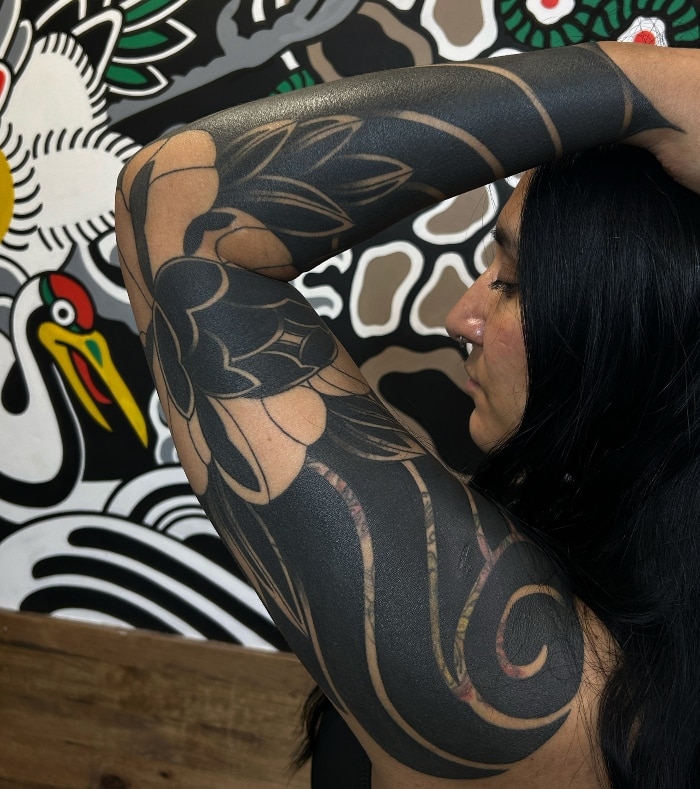
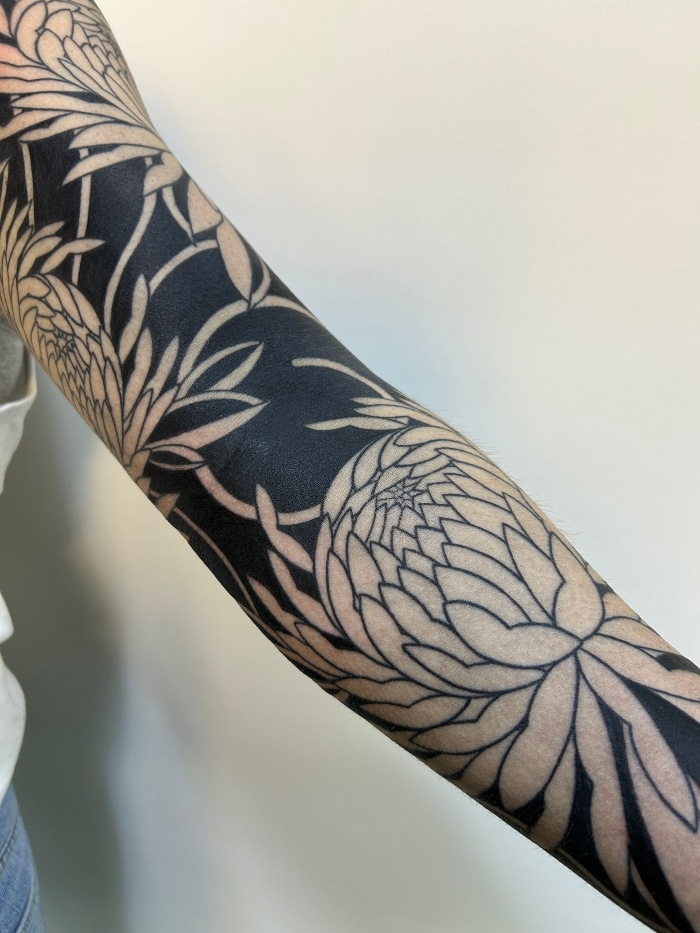
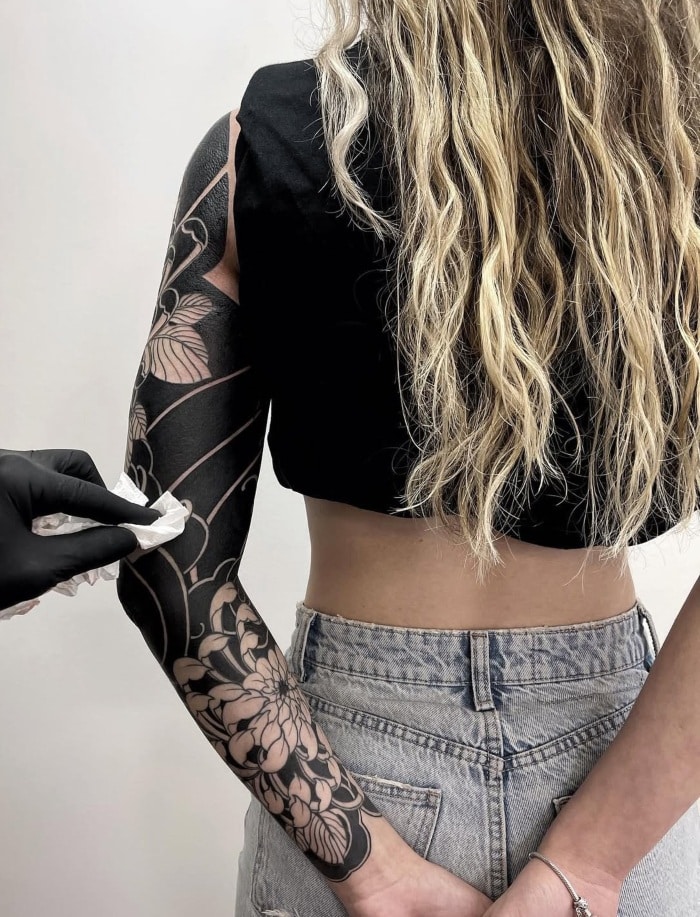
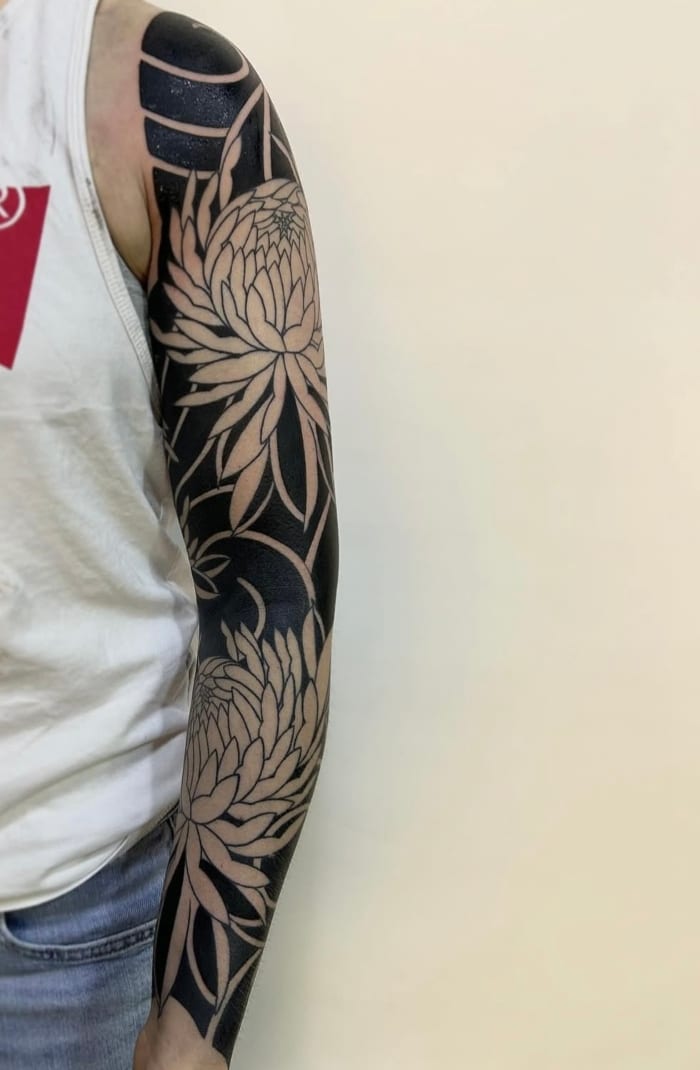
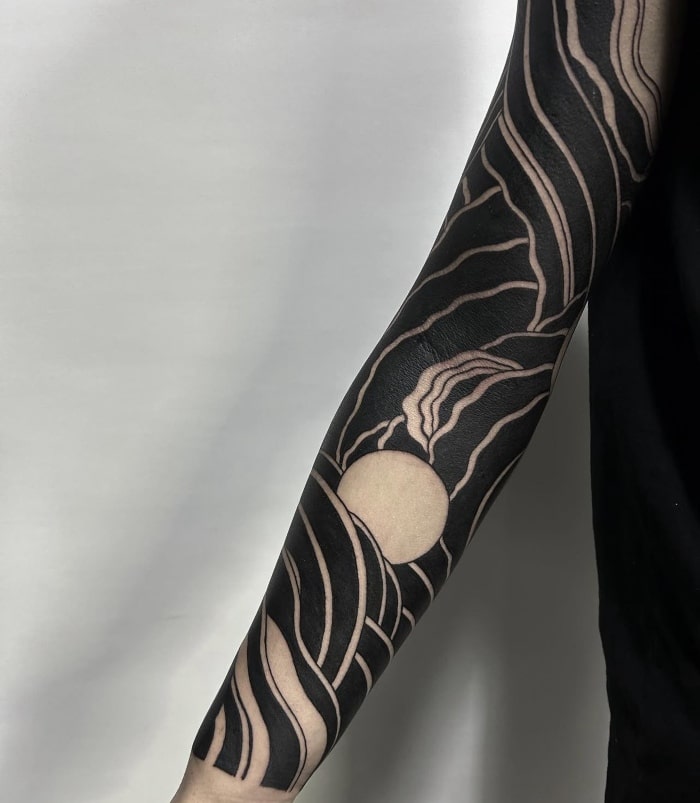
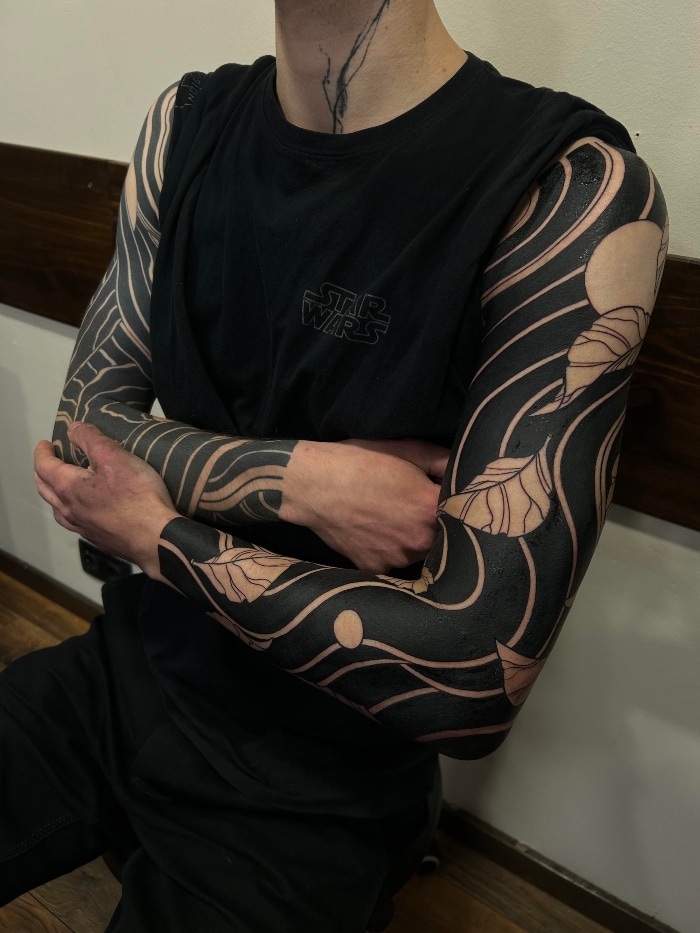
My style is blackwork inspired by oriental tattooing. I study Japanese tattoo art extensively without copying it directly, always adding my own personal interpretation. I arrived at this style mainly because I do many cover-ups. Working with black ink makes that possible and turns each piece into a creative problem-solving process.
Please walk us through your process when you start a new tattoo for your customers.
The process always begins with the client’s wishes. I work almost entirely freehand, following the body’s anatomy. For large projects, the first session is crucial. I do extensive drawing beforehand for personal study, then apply everything directly on the body, making each tattoo unique and impossible to replicate.
How do you stay creatively inspired?
Inspiration is constant. Working in different studios alongside talented artists keeps me motivated. I also buy many books, not only tattoo-related one because inspiration can come from many different perspectives.
How do you balance client requests with your artistic vision?
Sometimes requests don’t fit my style, and in those cases I choose not to take on the project. Fortunately, most people who contact me already have a clear understanding of my work and trust my approach, especially since I mainly work on large-scale tattoos.
Are there any tattoo styles you’d like to explore more?
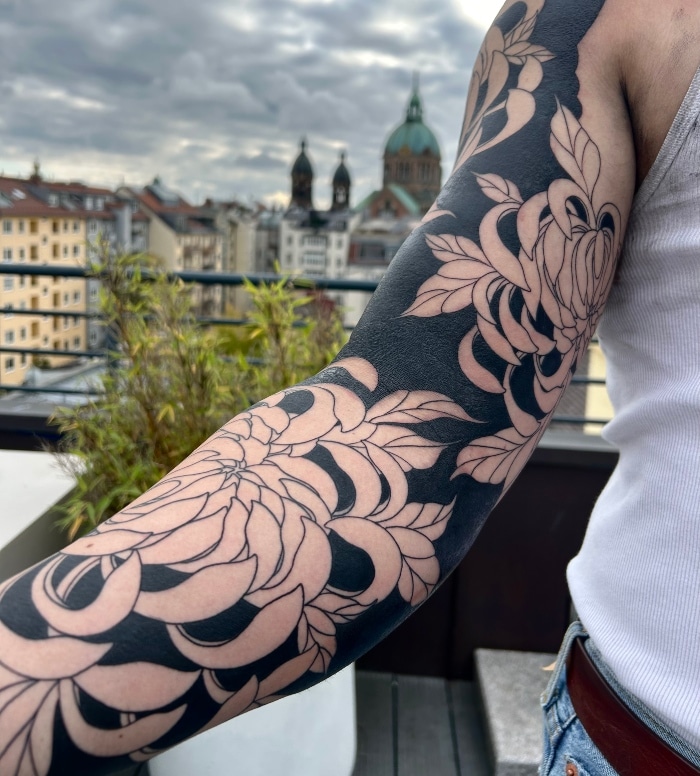
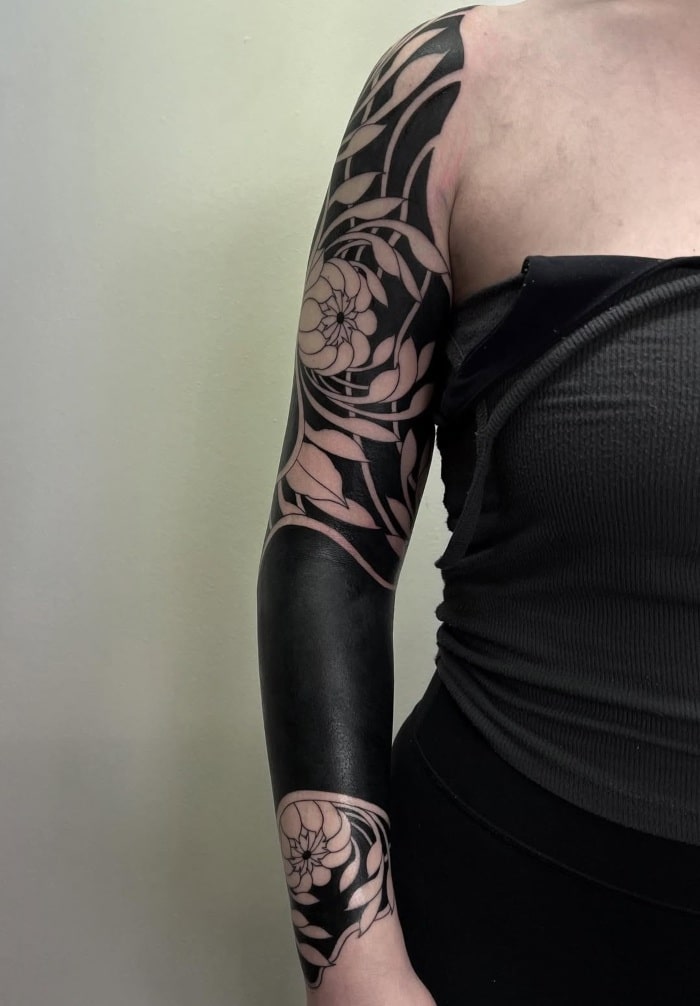
In the future, I’d like to dedicate more time to illustration and painting, exploring organic themes such as flowers and natural patterns. I’ve already worked on some projects like this and I’m very satisfied with the results.
Are there any tattoos you prefer not to do?
I generally avoid projects that don’t align with my style or artistic direction.
Do you have sponsors? If yes, what could you tell us about your sponsors?
Yes, I’m sponsored by @inkin.official. They’re very supportive and attentive, regularly sending machines and needles for testing and feedback. I feel very comfortable working with them.
As a Tattoo Artist, what kind of tattoo ethics is really important to you?
Staying connected to the true essence of tattooing. Technique, anatomy, freehand drawing, and deep respect for the permanence of tattoos are fundamental to my ethics.
Being a successful tattoo artist requires many different skills. What’s your favorite way to keep learning?
Through continuous experimentation, studying art history, reading books, and working alongside other skilled artists.
What’s the best piece of advice you ever received to improve your tattooing technique?
To never stop studying and refining the fundamentals.
How do you stay at the top of your game?
By constantly questioning my work, avoiding creative shortcuts, and staying faithful to strong technical foundations.
What do you think separates a good tattoo artist from a great one?
A deep understanding of technique combined with the ability to create work that remains strong and meaningful over time.
How do you feel about the growing acceptance of tattoos in society?
With technology advancing rapidly, I believe it’s more important than ever to stay connected to the roots of tattooing. Tattoos are for life, and that awareness must always come first.
What’s your view on the rise of AI in tattooing?
Technology can be helpful, but it should never replace artistic skill. Tattooing is a craft rooted in hands-on experience and human interpretation.
What are your goals or dreams for the near future?
To continue traveling, developing my work, and dedicating more time to illustration and painting alongside tattooing.
What legacy do you want to leave as a tattoo artist?
I want to leave behind tattoos built on strong technique, respect for the body, and a deep understanding of the craft.
To close this awesome interview, what’s your last message to our readers?
Tattooing is a lifelong commitment for both the artist and the person wearing it. Choose carefully, respect the process, and value quality above all else.

Leave A Comment