

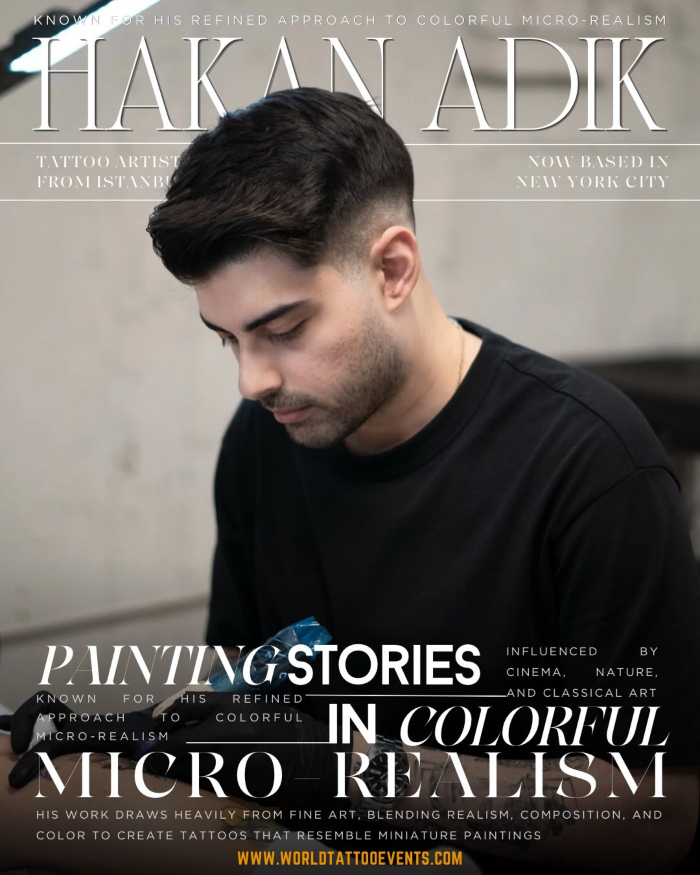
Hakan Adik is a tattoo artist from Istanbul now based in New York City, known for his refined approach to colorful micro-realism. His work draws heavily from fine art, blending realism, composition, and color to create tattoos that resemble miniature paintings. Each piece reflects both technical precision and a strong sense of visual storytelling.
His artistic process is rooted in understanding the personal meaning behind each tattoo and translating it into a balanced, living composition on the skin. Influenced by cinema, nature, and classical art, Hakan continuously expands his creative perspective beyond tattooing itself. This multidisciplinary approach allows him to create work that feels both deeply personal and visually timeless.
Through international guest spots and a global client base, Hakan has built a career shaped by cultural exchange and artistic collaboration. He values originality, trust, and artistic integrity, seeing tattooing as a lasting dialogue between artist and client. His goal is to create pieces that resonate emotionally long after they are made.
Let’s step into his world.
- How would you like to introduce yourself?
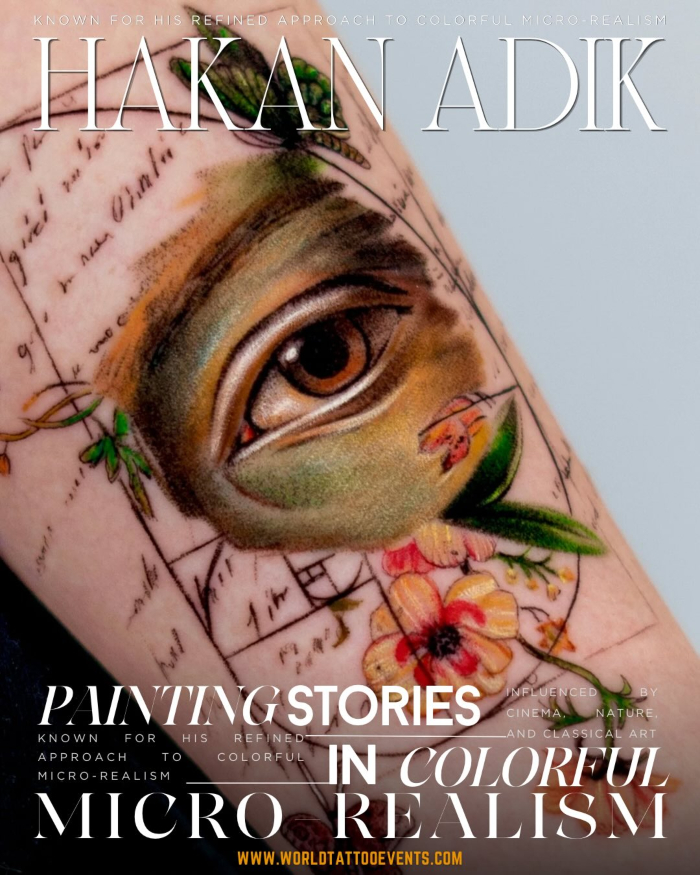
My name is Hakan Adik. I’m a tattoo artist originally from Istanbul and currently based in New York City. I specialize in colorful micro-realism tattoos that are heavily inspired by painting and fine art.
My work often blends elements of realism, color, and composition to create tattoos that feel more like paintings than traditional tattoo designs. Over the years, I’ve focused on developing a style that combines technical precision with artistic storytelling.
- Where can your customers find you?
I’m working at Maison Mono Studio in New York City. Many of my clients travel specifically for appointments, which makes every project feel like a collaboration between people from different parts of the world.
- Where did your fascination for tattoos come from?
My fascination with tattoos started through my love for art. Drawing and painting were always part of my life growing up, but tattooing felt different because it connects art directly to people and their stories.
The idea that a piece of artwork could become part of someone’s identity fascinated me from the beginning.
- What does tattooing mean to you personally?
For me, tattooing is a form of artistic dialogue between the artist and the person wearing the piece.
A tattoo carries meaning, memories, and emotions. Translating those into something visually strong and aesthetically balanced is what makes the process so special to me.
In many ways, tattooing allows me to merge technical craftsmanship with emotional storytelling.
- Do you usually do guest spots? If yes, what’s your experience in doing them?
Yes, I’ve had the opportunity to work as a guest artist in several cities across Europe, including Amsterdam, Berlin, Paris, and Barcelona.
Those experiences have been incredibly valuable for my artistic development. Working in different cultural environments allows you to meet new clients, exchange ideas with other artists, and experience how tattoo culture evolves in different parts of the world.
Each city has its own creative energy, and being part of that has helped shape my perspective as an artist.
- What’s the most rewarding aspect of being a tattoo artist?
The most rewarding part is the trust people place in you.
Many clients travel long distances and bring ideas that are deeply personal to them. Knowing that something you create will stay with someone for the rest of their life is both a privilege and a responsibility.
Seeing how meaningful a tattoo becomes for the person wearing it is incredibly fulfilling.
- How would you define your current tattoo style, and how did you end up focusing on it?
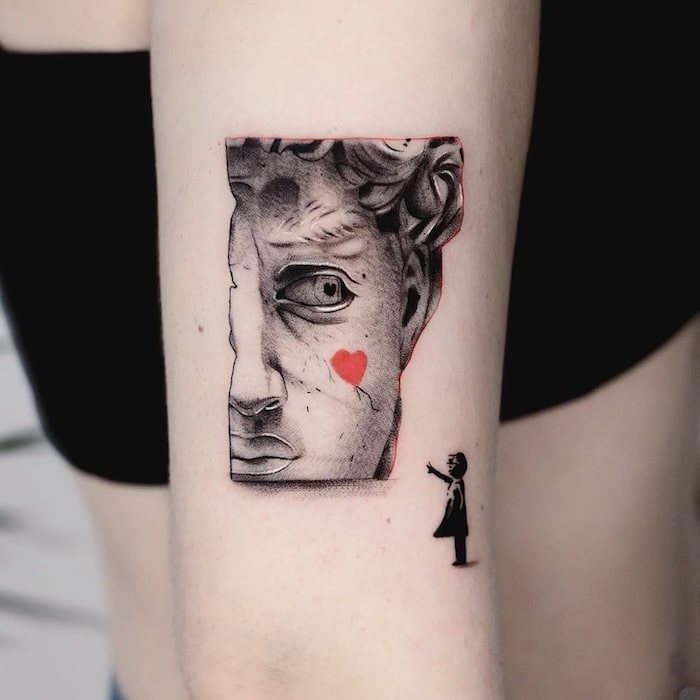
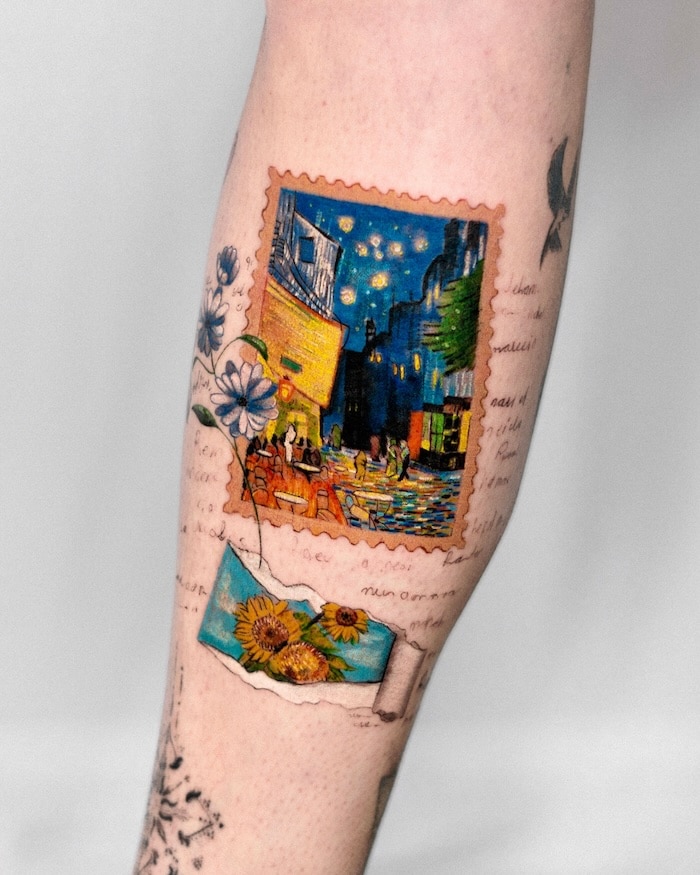
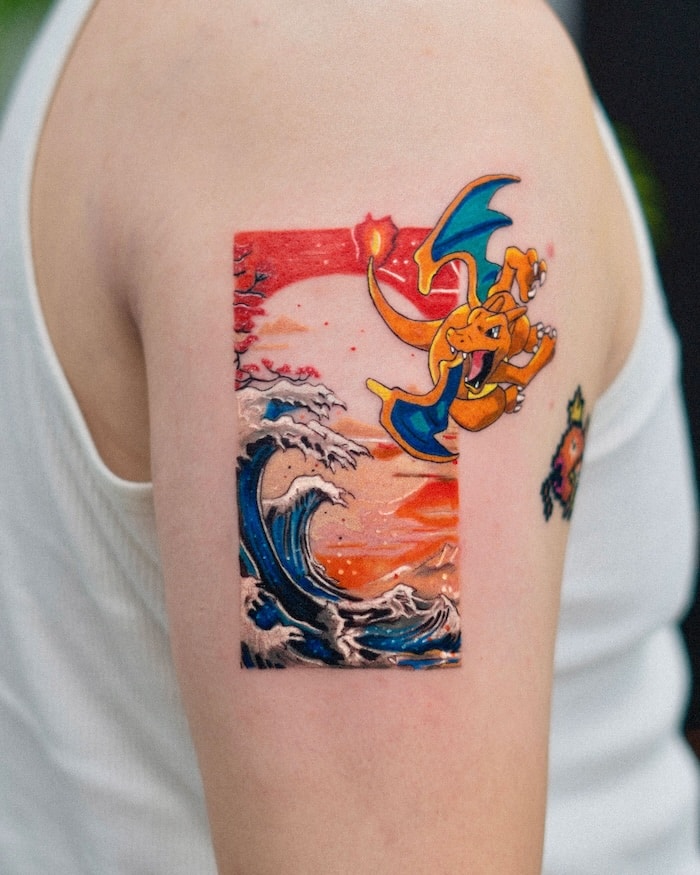
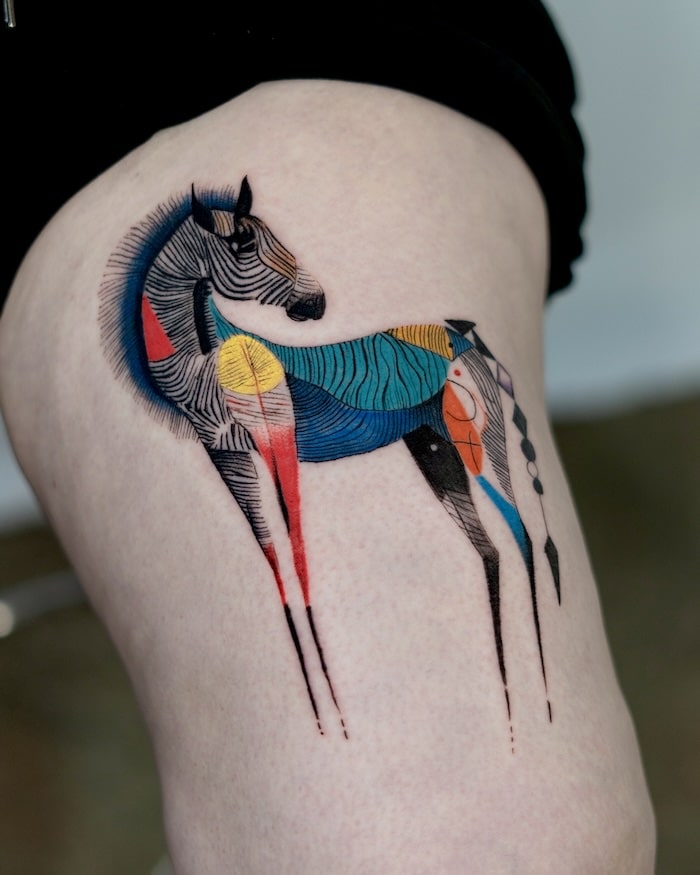
My style can be described as colorful micro-realism, but it’s influenced by many different sources rather than just one artistic direction. I draw inspiration from painting, nature, animals, films, anime, and sometimes even very personal stories that clients bring.
What interests me most is translating those inspirations into something that works naturally on the skin. Sometimes a tattoo feels like a small painting, while other times it captures the atmosphere of a film scene or the personality of an animal.
Over time, I realized that what defines my work is not just realism itself, but the way I combine different visual inspirations to create something unique for each client. Every tattoo becomes a small composition where art, storytelling, and emotion come together.
- Please walk us through your process when you start a new tattoo for your customers.
The process always begins with understanding the story behind the tattoo.
I study the client’s references and then build a composition that works visually and structurally for the body placement. The design stage is where most of the artistic decisions happen.
During the tattoo session, I focus on building the piece layer by layer—structure first, then depth, then color and details. The goal is to make the final piece feel balanced and alive.
- How do you stay creatively inspired?
Inspiration often comes from outside the tattoo world.
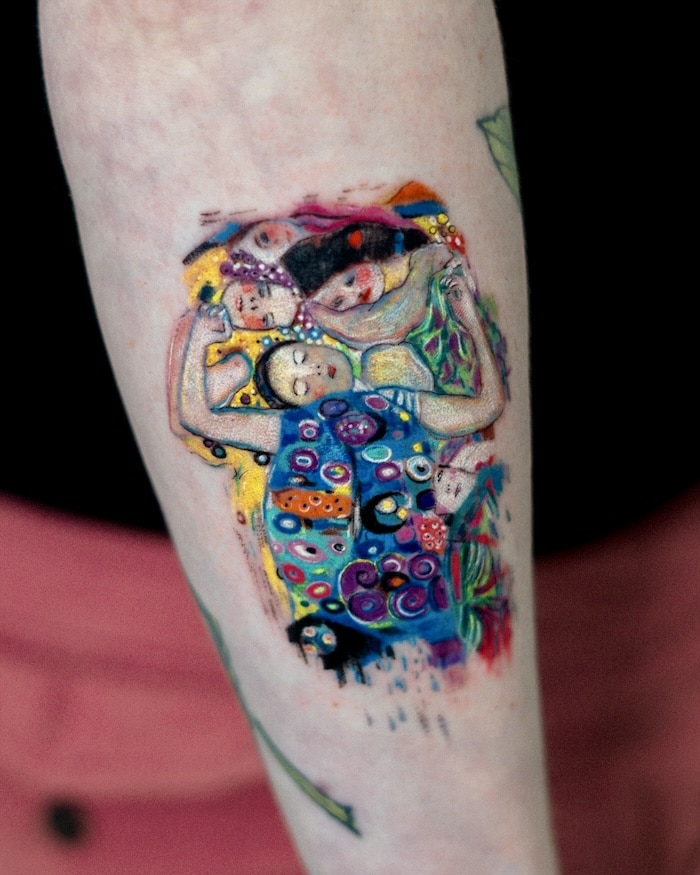
Painting, illustration, cinema, architecture, and even nature all influence how I think about composition and color. Studying fine art has always been especially inspiring because it teaches you how to create visual depth and emotion.
Traveling and meeting other artists also helps keep creativity alive.
- How do you balance client requests with your artistic vision?
The key is communication.
I always listen carefully to the client’s idea and understand what the tattoo represents to them. Then I translate that idea into a composition that works both artistically and technically.
When the client’s vision and the artist’s experience come together, the final result is usually stronger than either perspective alone.
- What tattoo ethics are important to you?
Originality and respect are very important.
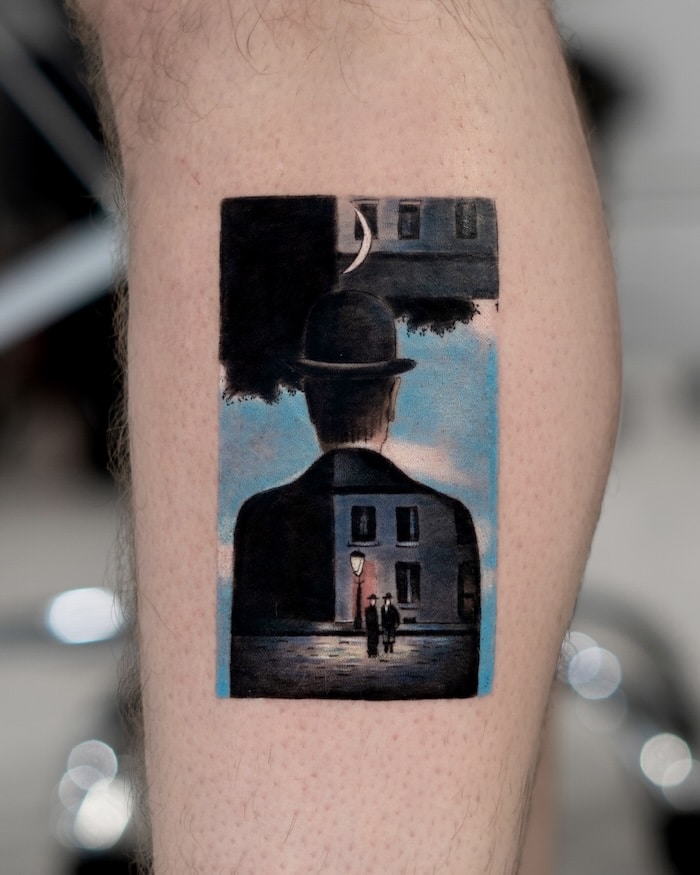
A tattoo artist should respect the trust of the client and also respect the creative work of other artists. Creating original artwork rather than copying existing designs is essential to artistic integrity.
Tattooing leaves a permanent mark on someone’s body, so responsibility and honesty are fundamental values.
- What do you think separates a good tattoo artist from a great one?
Technical skill is important, but artistic vision is what truly separates great artists.
A great tattoo artist understands composition, color harmony, and how to create work that feels timeless rather than temporary.
Consistency and dedication over many years also make a big difference.
- How do you feel about the growing acceptance of tattoos in society?
It’s exciting to see tattoos becoming more accepted globally.
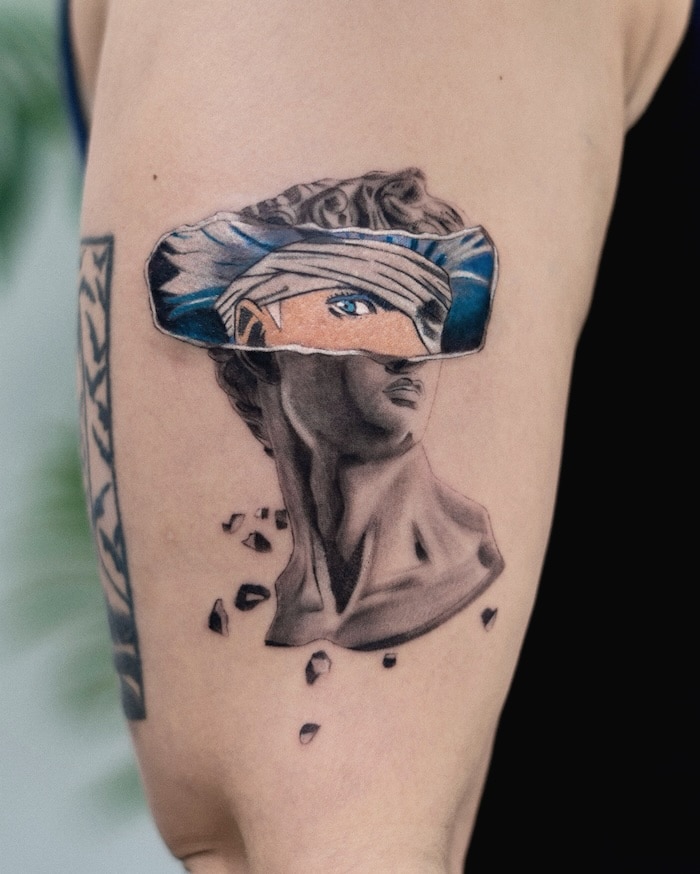
This shift allows tattooing to be recognized more clearly as an art form rather than just a subculture. As acceptance grows, artists have more freedom to experiment and push creative boundaries.
- What’s your favorite subject to tattoo?
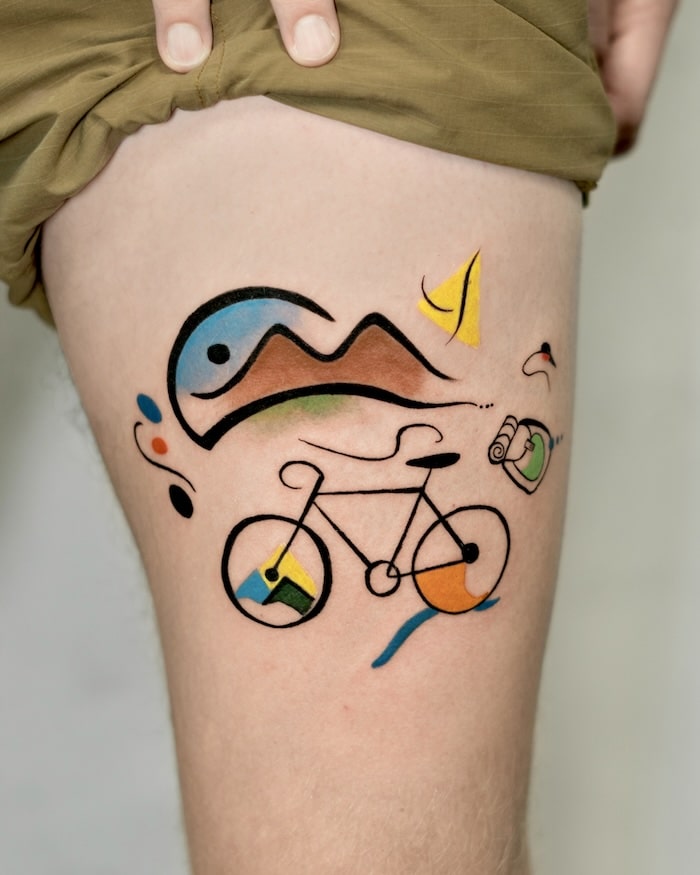
I enjoy working on subjects that allow strong visual storytelling.
Animals, nature elements, and designs inspired by paintings or films are some of my favorite themes.
I also really enjoy projects that combine multiple inspirations into one composition, because it allows me to explore creativity and build something unique for each client.
- What is your greatest accomplishment as a tattoo artist?
Being able to build a career that connects different cities, cultures, and clients is something I’m very grateful for. The opportunity to work internationally and see people travel specifically for my work is one of the most meaningful recognitions an artist can receive.
Another important milestone has been being invited to serve as a judge at tattoo conventions. Being trusted to evaluate the work of other artists is a great honor and reflects the respect you gain within the international tattoo community.
- What advice would you give to someone who wants to become a tattoo artist?
Patience and dedication are essential.
Tattooing is not only about learning technique, but also about developing your artistic eye and understanding how art works on the body. My advice is to study art deeply, practice constantly, and focus on building a style that reflects your own voice rather than simply following trends.
- What legacy do you want to leave as a tattoo artist?
I hope that my work will be remembered not just as tattoos, but as pieces of art.
If someone looks at my tattoos years later and still feels something from them, that would mean I did my job as an artist.
- What’s your last message to our readers?
Stay curious and stay creative.
Whether you’re an artist or someone thinking about getting a tattoo, the most meaningful work always comes from authenticity and personal expression.


Leave A Comment