

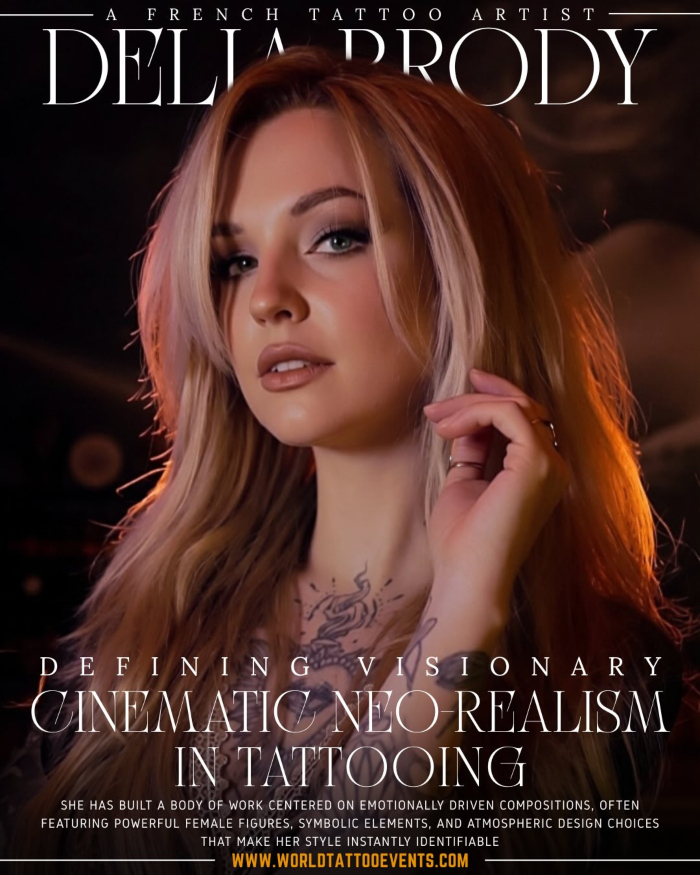
« Today, we are delighted to present Delia Brody: a French tattoo artist whose work has quickly become recognized for its distinctive neo realistic approach, blending painterly realism with illustrative freedom and cinematic storytelling. Based on the French Riviera near Cannes, she has built a body of work centered on emotionally driven compositions, often featuring powerful female figures, symbolic elements, and atmospheric design choices that make her style instantly identifiable.
In a single year (2024), Delia marked a major milestone on the French convention circuit, participating in seven tattoo conventions and earning four Best of Show awards, the highest recognition at an event across all categories, along with multiple placements. Her convention track record, combined with a growing international audience, reflects a level of consistency and artistic authority that continues to attract clients and industry attention. Beyond her own tattooing, she also mentors other tattoo artists through coaching and seminars, an extension of her craft that highlights the professional demand for her approach. »
For the readers who are not familiar with you, how would you introduce yourself?
Hello everyone, I’m Delia Brody, a French tattoo artist with over eleven years of experience.
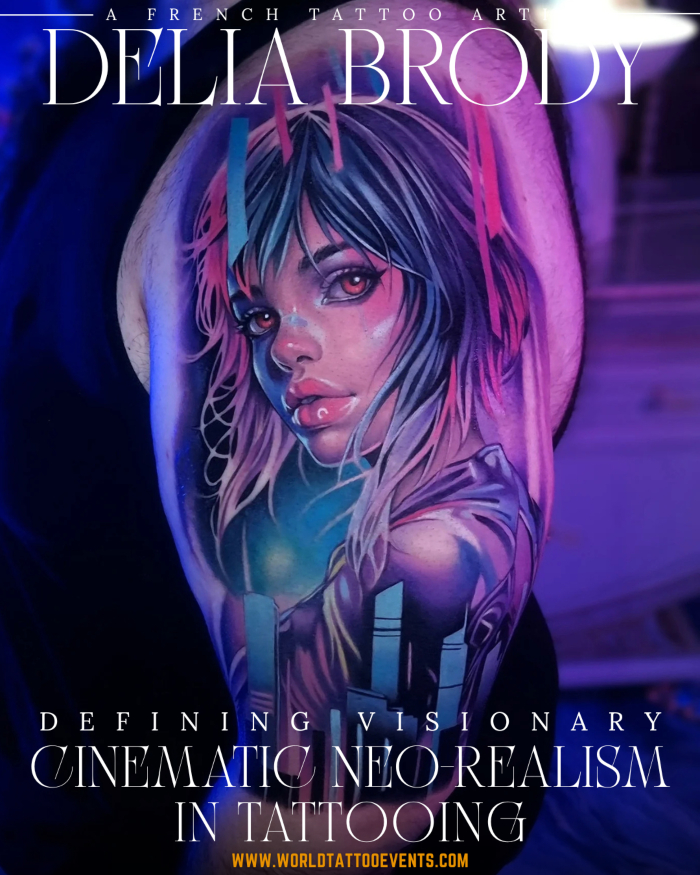
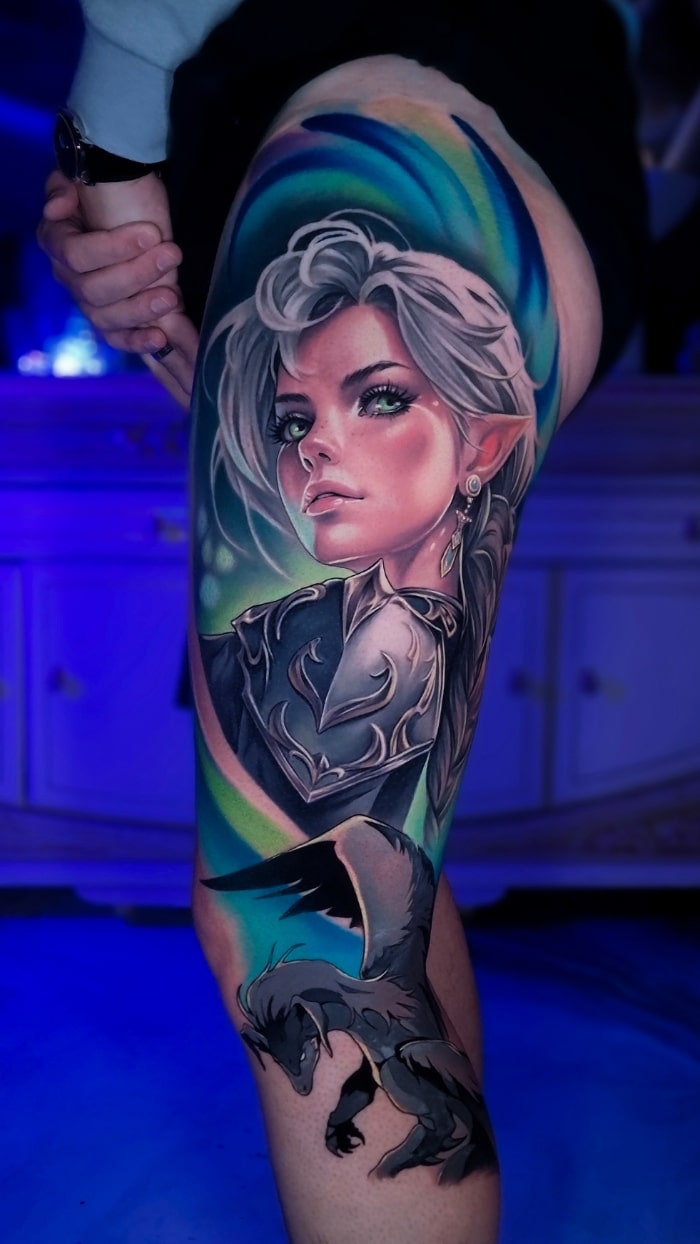
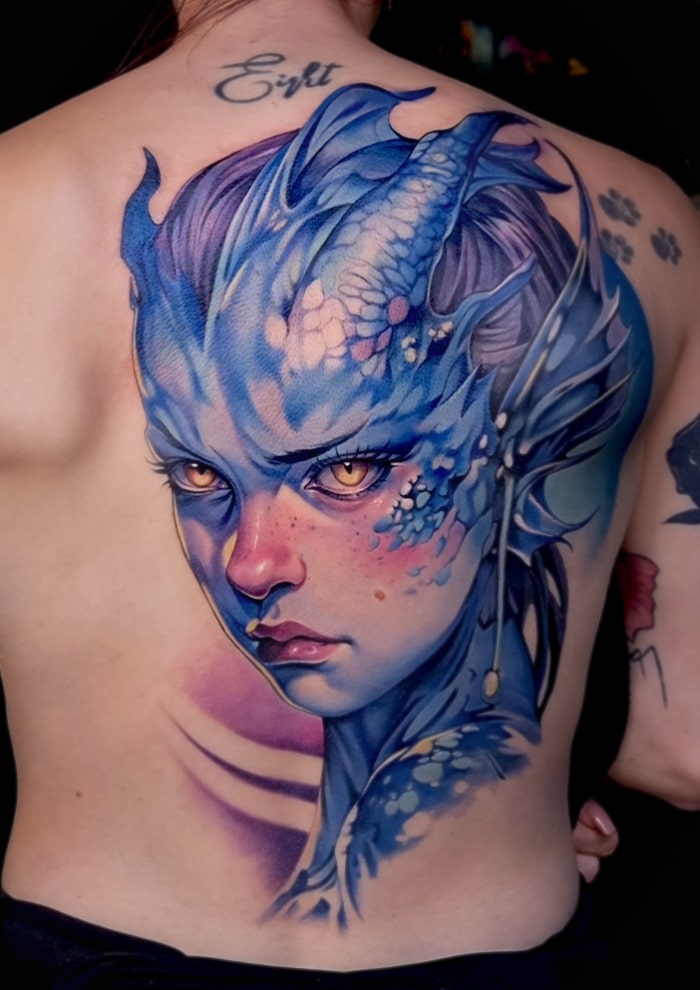
What drives my work is emotion. I’m obsessed with those quiet, subtle feelings that you cannot always put into words, and I try to translate them into portraits that feel poetic, feminine, and strong. Most of my designs are fantasy-inspired, with a touch of mythology and cinema.
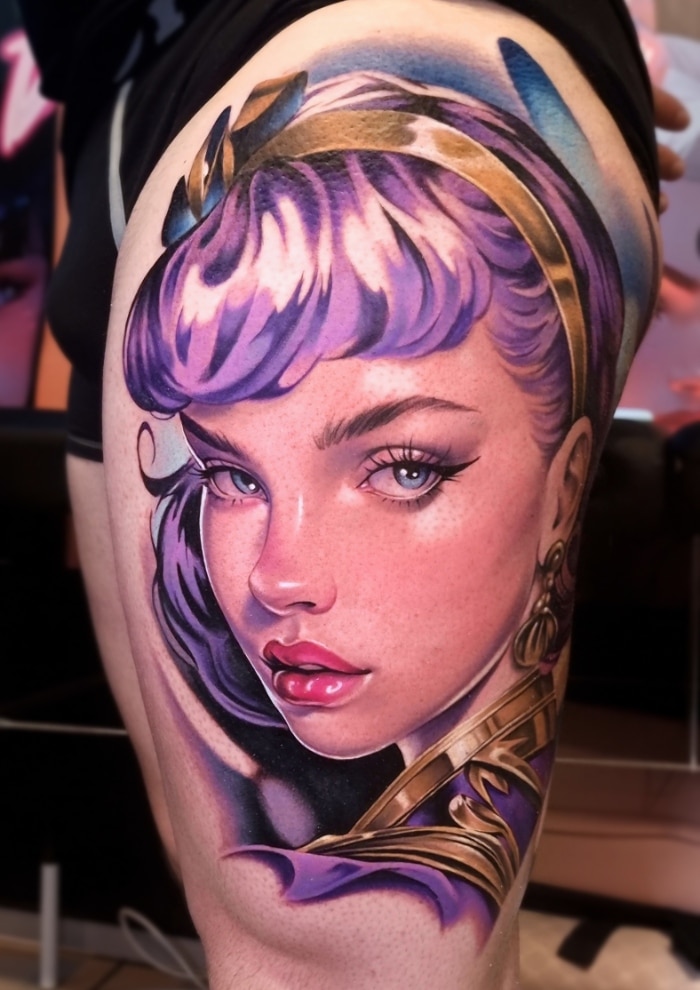
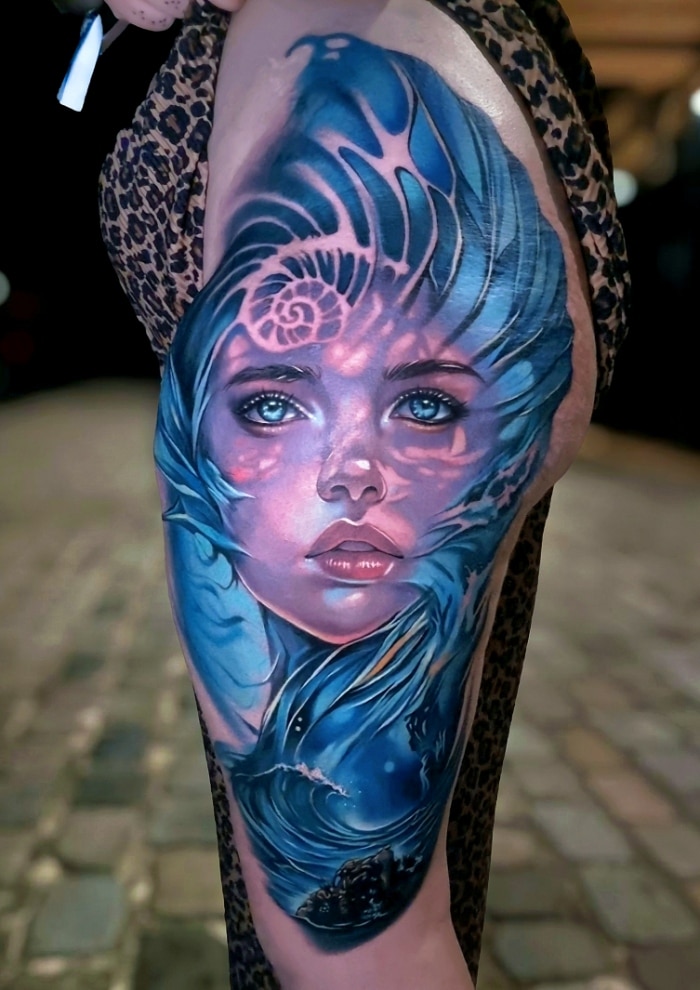
I’ve built a reputation in the industry by creating exceptionally soft, subtle blends and silky gradients. Using highly demanding color palettes participated in giving my work a unique, instantly recognizable atmosphere.
Where did your fascination for tattoos come from?
Art always had to be part of my life. Even as a kid, I was drawn to drawing, music, singing, and theater. My interest in tattooing started in my teenage years, when I was immersed in the rock scene. Tattoos felt like a powerful visual language, identity driven and almost ritualistic.
As I grew up, tattooing became more visible and more understood by the public but what hooked me forever was the nature of the medium. It is living, ever changing and evolving with your body and your story.
It’s private, but it’s also something you choose to show the world. That tension still inspires me.
How and when did you start tattooing?
You could say I was a late bloomer. I only started tattooing at 28, but I was already working in creative worlds. I was a photographer at Disneyland Paris, and on the side I worked events as a fantasy makeup artist and performer, doing face and body art for kids and adults. People loved it and I kept hearing the same thing: “You should be a tattoo artist.”
The desire was already there, but finding an apprenticeship took time. It took me over a year and a half to find a shop willing to take me in. During that period, I was incredibly supported by the person who later became my husband. He even bought me my first tattoo machine, a Micky Sharpz, when I was getting started.
The early years were exhilarating and exhausting at the same time. I learned through relentless practice, perseverance, and a constant need to improve, and that mindset shaped everything that came after.
Where are you based?
I started near Paris, but moved to the French Riviera (southeast of France) six years ago. With my husband, we opened our first studio there, but after five years of intense work we chose to transition into a private studio. We wanted a setting that matched our standards and allowed us to work without compromising on quality or ethics.
I’m now in a peaceful art studio by the sea that really suits me, located near Cannes.
How would you describe the tattoo scene in France these days?
Our tattoo scene is evolving fast and has become more competitive in recent years. It pushes us artists to mature and keep aiming for excellency.
At the same time, the scene is diversifying. Black and grey has long been dominant, but color work is gaining more space than ever. There’s also a growing interest for more personal, story-driven projects. In a challenging environment, having a clear artistic identity and high standards matters even more, and that is something I’ve always built my work around.
How would you define your tattoo style?
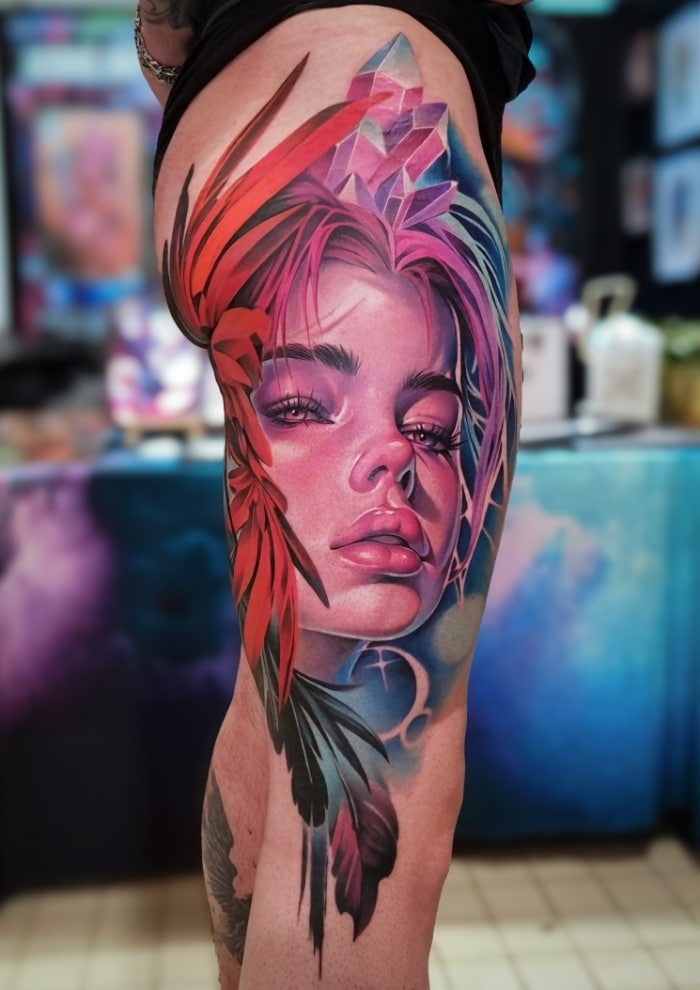
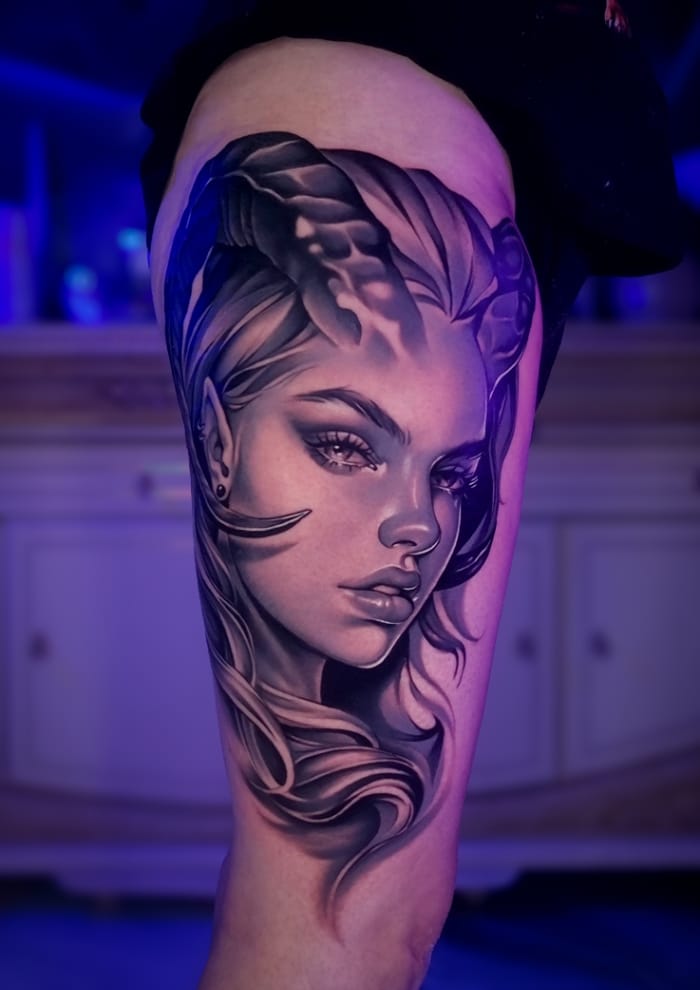
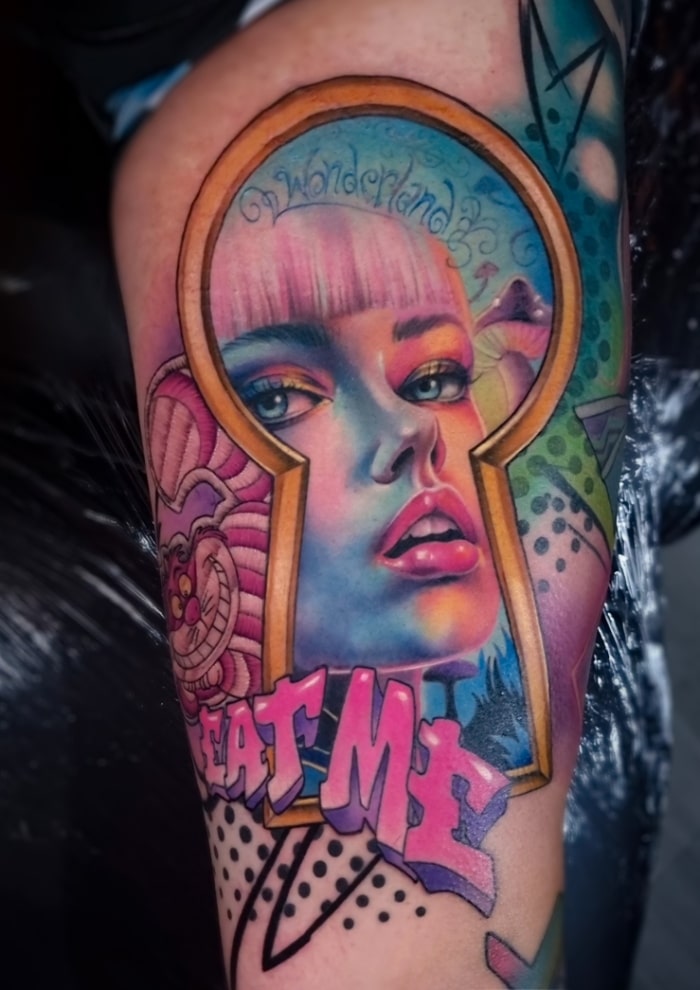
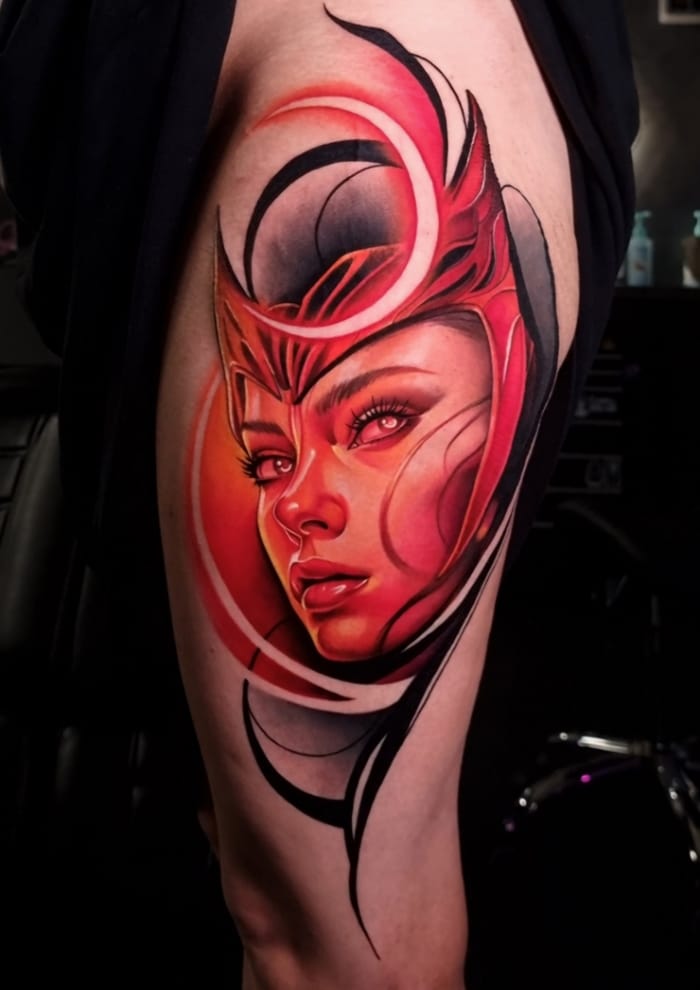
I work in Neo Realism, which for me means living right on the border between realism and illustration. I have always been drawn to illustrative art, storytelling, and stylized beauty, but over the years I wanted to push my work closer to realism because it demands a higher level of observation and control. At the same time, pure realism was never my goal. I did not want to lose my identity or become limited to copying reality.
So I built my own balance: highly realistic, painterly illustrations with a cinematic mood. That is also why I do not tattoo exact portraits of real people. I prefer fictional or imagined faces, because it gives me freedom to create emotion, symbolism, and atmosphere in any way I like.
To me, my style is simply the best of both worlds, realism level rendering with an illustrator’s soul.
What kind of tattoo projects do you like to do the most?
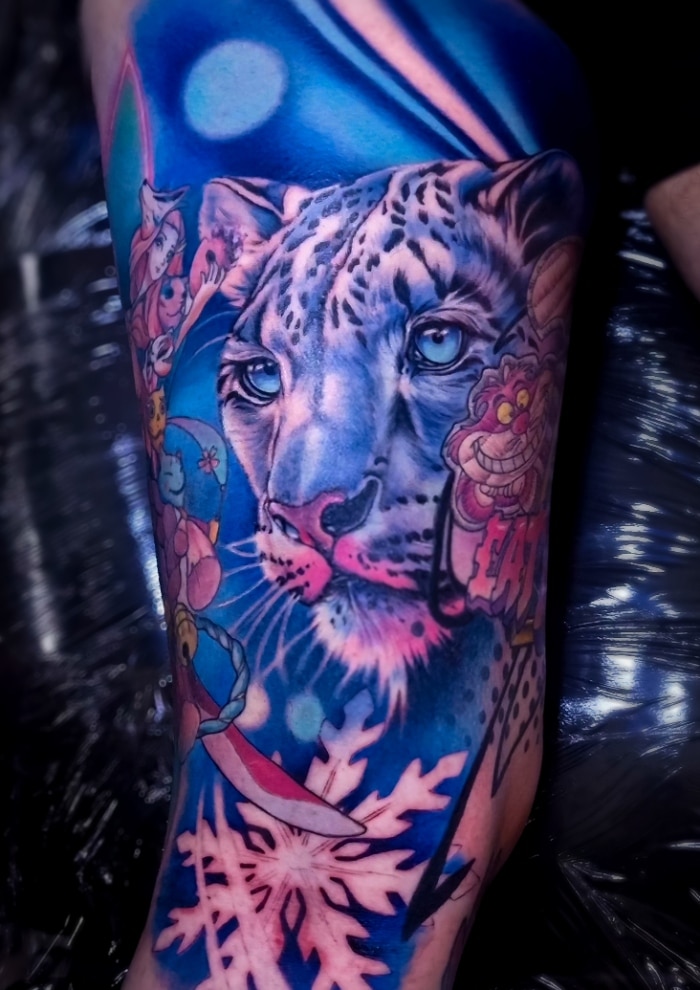
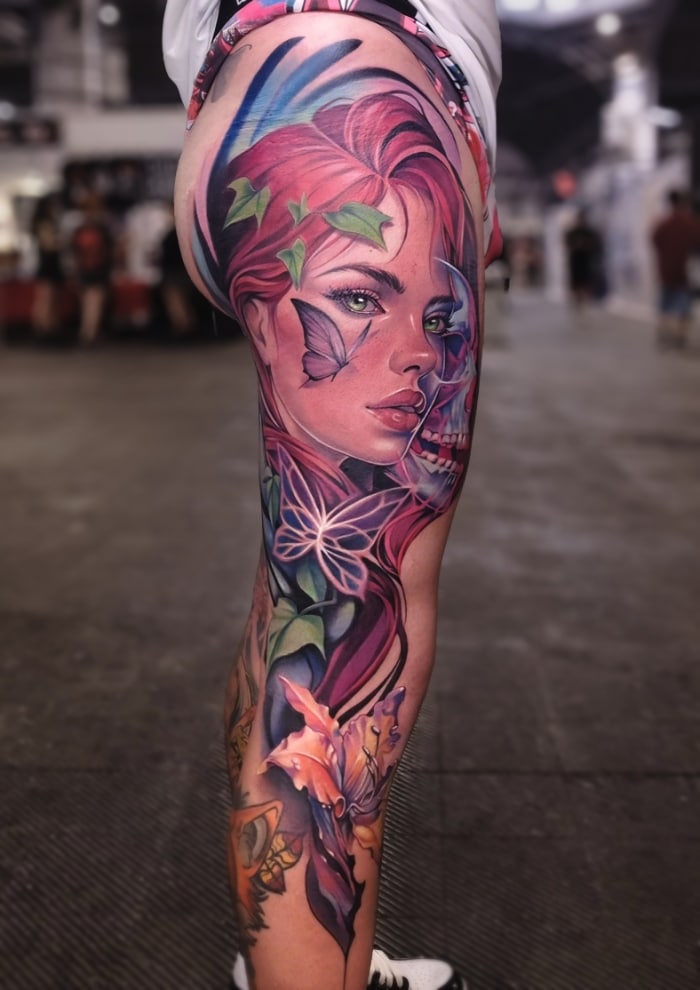
The projects I love most are the ones that feel like a small story told in a single image. Female characters are often at the center of my work because I love portraying femininity in all its complexity. I also love incorporating elements that make a piece feel alive, an animal companion, nature, organic textures, natural elements, meaningful objects, and small symbols that speak without words.
That is why I’m drawn to large, complex compositions. They give me room to build atmosphere and relationships between subjects, and to create a tattoo that is not just beautiful, but emotionally charged and deeply personal for the person wearing it.
What’s the main source of inspiration for your tattoos?
My main inspiration is a sense of realness, even when the subject is imaginary. I’m drawn to simple, universal aesthetics that can fit anything and speak to everyone, regardless of the theme or character. I’m also nourished by the great art periods that shaped visual culture, the history of painting in particular, because I’ve always been fascinated by light and the way it creates mood and presence.
What’s the most challenging aspect of being a tattoo artist in 2026?
The biggest challenge in 2026 is protecting ethics and quality in a world that glorifies going fast. Between social media, constant visibility, and clients discovering tattooing through short-form content, it’s easy for the craft to be reduced to “instant results”. But tattooing, especially large and detailed portraits, demands time, focus and patience. The challenge is staying uncompromising about artistry and quality.
What’s the most rewarding aspect of being a tattoo artist?
The most rewarding part is witnessing the moment someone recognizes themselves, sometimes even more confidently than before. A tattoo can be deeply empowering, especially when it carries meaning, beauty, or personal symbolism. I also love the trust that comes with portrait work: someone lets you translate emotion into something permanent. That responsibility is intense, but it’s also what makes the craft so meaningful.
What’s your experience at tattoo conventions so far?
Conventions have been a major part of my journey. I started attending very early in my career, first at small local events, mostly to observe, learn, and feel the atmosphere. Over time, as I gained experience and confidence, I gradually stepped into more competitive conventions and raised the level year after year.
You participated and competed in many events over your career, what motivated you to do so?
Strangely, I’ve never been naturally competitive, but conventions brought that side out of me. When awards started happening, it reinforced my belief in myself and pushed me to aim higher. Beyond trophies, it’s the energy of the events, the pressure, and the exchanges with artists and visitors that make conventions such an important part of my growth.
Do you remember the first tattoo convention you have ever been to?
I remember it very vividly. Even before I became a tattoo artist, I walked in a local convention and felt this mix of excitement and intimidation, like entering a world that had its own codes. The sound of machines, the concentration on people’s faces, the crowd watching quietly when someone was doing something special. I remember thinking, “This is not just a job, this is a culture.”
What’s your primary reason to attend a tattoo convention?
My primary reason is growth, creativity and networking. Conventions force you to be sharp. You prepare ambitious designs, you execute under stress, and you expose your work to be judged by your peers. They are also where reputation is built upon. I go to bring my best, to challenge myself and to stay connected to the highest level of the tattoo community.
What’s your favorite tattoo convention so far? And why?
It’s hard to choose just one, but I love conventions with a high overall level, strong organization, and a jury that is selective and respected. They push you to bring your best work. Paris, Barcelona, Lyon, and Deauville stand out for me because the crowd is genuinely engaged too. I enjoy meeting visitors, talking about the stories behind my pieces, and seeing real curiosity and emotion in the way people respond to the tattoos.
What advice would you offer to someone considering a career as a tattoo artist?
Build your career around people, not just around your work. Learn how to listen, how to communicate and how to hold someone’s trust. Clients don’t only give you their skin, they give you a piece of their story. Be patient with your growth, and stay close to artists who make you better, not smaller. Above all, protect yourself and your love for the craft.
Tattooing can be intense, so create a life that keeps you inspired, not burned out. Consistency, humility, and kindness will take you further than any shortcut.
Do you like to teach or mentor upcoming artists?
Teaching has actually become one of the most meaningful parts of my career. I mentor and coach tattoo artists through seminars and private courses. I’m grateful that other professionals are willing to invest in themselves by thrusting me with my approach. I share techniques, but also mindset, artistic direction or the discipline needed to build something meaningful for oneself.
Who are the people you admire the most within the tattoo community?
The ones who have a strong vision, but still take time to talk, share, encourage, and uplift others.
I have a lot of respect for the people who build bridges between artists and clients or are trying to bring the community together. That makes tattooing feel like a living art, not just an industry.
What’s the best piece of advice you ever received to improve your tattooing technique?
Slow down and be intentional. Focus on doing better, not doing more. Build in layers, give yourself time to make clean decisions, and never rush the fundamentals. That mindset made my work more consistent, and it’s a big part of how I’ve grown.
What’s your biggest accomplishment as a tattoo artist?
A true turning point started in 2023 after deciding to fully embraced the style I’ve always wanted to make. A year later, I won four Best of Show awards and several other prizes at some of the strongest conventions across France. Awards are not a goal in themselves, but for me they reflected difficult decisions and choices I fully owned at the time. It was a demanding and cathartic year, because the work, the risk, and the sacrifices were genuinely recognized. Beyond the awards, it confirmed I could stay true to myself, commit fully, and build something brighter next.
Do you do other forms of art besides tattooing?
I keep a strong art practice outside tattooing, especially drawing and painting studies, because it keeps my eye trained and my style evolving. Tattooing is where everything comes together, but the foundation is always traditional art: light, forms, texture, composition. That ongoing practice is what allows me to keep pushing realism while staying expressive and personal.
What are your goals or dreams for the near future?
I’d like to travel more internationally and work on even more ambitious projects, connect with artists that inspire me or expand my horizons to new territories. I’m excited for the future, teaching more and connecting with other artists. It’s a rare privilege to see other artists genuinely interested in your approach and trusting your experience Professionally, I wish to keep building a career based on excellence and meaning.
Is there anything else you would like to tell our readers?
Tattooing is about intention, trust and permanence. Take your time choosing an artist whose work you truly connect with and don’t be afraid to aim for quality.
The best tattoos are collaborations built on honesty and respect of the story that lies behind.


Leave A Comment